Margins
Margins
Sign in
Margins
Subscribe to our newsletter
548 Market St PMB 65688, San Francisco California 94104-5401 USA
hello@margins.app
·
+1 (650) 223-5283
Privacy Policy
·
Terms of Use
© 2026 Paratext Inc. All rights reserved
📚 Русская Литература
📚
Русская Литература
The Brothers Karamazov
1880
Fyodor Dostoevsky
The Brothers Karamazov is a murder mystery, a courtroom drama, and an exploration of erotic rivalry in a series of triangular love affairs involving the “wicked and sentimental” Fyodor Pavlovich Karamazov and his three sons―the impulsive and sensual Dmitri; the coldly rational Ivan; and the healthy, red-cheeked young novice Alyosha. Through the gripping events of their story, Dostoevsky portrays the whole of Russian life, is social and spiritual striving, in what was both the golden age and a tragic turning point in Russian culture. This award-winning translation by Richard Pevear and Larissa Volokhonsky remains true to the verbal inventiveness of Dostoevsky’s prose, preserving the multiple voices, the humor, and the surprising modernity of the original. It is an achievement worthy of Dostoevsky’s last and greatest novel.
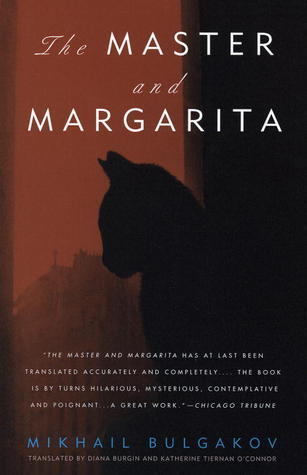
The Master and Margarita
1967
Mikhail Bulgakov
The first complete, annotated English Translation of Mikhail Bulgakov's comic masterpiece. An audacious revision of the stories of Faust and Pontius Pilate, The Master and Margarita is recognized as one of the essential classics of modern Russian literature. The novel's vision of Soviet life in the 1930s is so ferociously accurate that it could not be published during its author's lifetime and appeared only in a censored edition in the 1960s. Its truths are so enduring that its language has become part of the common Russian speech. One hot spring, the devil arrives in Moscow, accompanied by a retinue that includes a beautiful naked witch and an immense talking black cat with a fondness for chess and vodka. The visitors quickly wreak havoc in a city that refuses to believe in either God or Satan. But they also bring peace to two unhappy Muscovites: one is the Master, a writer pilloried for daring to write a novel about Christ and Pontius Pilate; the other is Margarita, who loves the Master so deeply that she is willing literally to go to hell for him. What ensues is a novel of inexhaustible energy, humor, and philosophical depth, a work whose nuances emerge for the first time in Diana Burgin's and Katherine Tiernan O'Connor's splendid English version.
Crime and Punishment
1866
Fyodor Dostoevsky
Raskolnikov, a destitute and desperate former student, wanders through the slums of St Petersburg and commits a random murder without remorse or regret. He imagines himself to be a great man, a Napoleon: acting for a higher purpose beyond conventional moral law. But as he embarks on a dangerous game of cat and mouse with a suspicious police investigator, Raskolnikov is pursued by the growing voice of his conscience and finds the noose of his own guilt tightening around his neck. Only Sonya, a downtrodden sex worker, can offer the chance of redemption.
The Double and The Gambler
1846
Fyodor Dostoevsky
The award-winning translators Richard Pevear and Larissa Volokhonsky have given us the definitive version of Fyodor Dostoevsky’s strikingly original short novels, The Double and The Gambler.The Double is a surprisingly modern hallucinatory nightmare–foreshadowing Kafka and Sartre–in which a minor official named Goliadkin becomes aware of a mysterious doppelganger, a man who has his name and his face and who gradually and relentlessly begins to displace him with his friends and colleagues. The Gambler is a stunning psychological portrait of a young man's exhilarating and destructive addiction to gambling, a compulsion that Dostoevsky–who once gambled away his young wife's wedding ring–knew intimately from his own experience. In chronicling the disastrous love affairs and gambling adventures of Alexei Ivanovich, Dostoevsky explores the irresistible temptation to look into the abyss of ultimate risk that he believed was an essential part of the Russian national character.
The Overcoat
1842
Nikolai Gogol
The Overcoat which is generally acknowledged as the finest of Gogol's memorable Saint Petersburg stories, is a tale of the absurd and misplaced obsessions.
Terrible Revenge
1831
Nikolai Gogol
Die Erzählung führen den Leser in eine frühere Zeit. Es ist die Welt der dörflichen Ukraine, voll praller Lebenslust und Aberglauben. Diese heitere volkstümliche Welt ist aber nur auf den ersten Blick fröhlich, harmonisch und natürlich. Dieser Schein täuscht, denn das harmonische Bild wird durch phantastische Ursachen gestört, die in den heiteren Alltag einbrechen. Nikolai Gogol (1809-1852) war ein russischer Schriftsteller. Im Jahr 1831 lernte Gogol den Dichter Alexander Puschkin kennen, der ihm den Weg in die russische Literatur wies. Puschkin wurde ihm Freund und Förderer. So regte Puschkin an, den Revisor und Die toten Seelen zu schreiben - beide Werke fanden später höchste Anerkennung. Er feierte mit seinen volkstümlichen ukrainischen Erzählungen Abende auf dem Weiler bei Dikanka einen Überraschungserfolg. Es ist die einzigartige Kombination der derben Vertep-Komödiantik mit dem ukrainischen Lokalkolorit und märchenhafter, bisweilen unheimlicher Phantastik, die den Erzählband zum Erfolg machte.
Ivan Fyodorovich Shponka and His Aunt
1832
Nikolai Gogol
Ivan Fyodorovich Shponka and His Aunt is part of the collection Evenings on a Farm Near Dikanka by Nikolai Gogol.
Anna Karenina
1878
Leo Tolstoy
Acclaimed by many as the world's greatest novel, Anna Karenina provides a vast panorama of contemporary life in Russia and of humanity in general. In it Tolstoy uses his intense imaginative insight to create some of the most memorable characters in all of literature. Anna is a sophisticated woman who abandons her empty existence as the wife of Karenin and turns to Count Vronsky to fulfil her passionate nature - with tragic consequences. Levin is a reflection of Tolstoy himself, often expressing the author's own views and convictions. Throughout, Tolstoy points no moral, merely inviting us not to judge but to watch. As Rosemary Edmonds comments, 'He leaves the shifting patterns of the kaleidoscope to bring home the meaning of the brooding words following the title, 'Vengeance is mine, and I will repay.
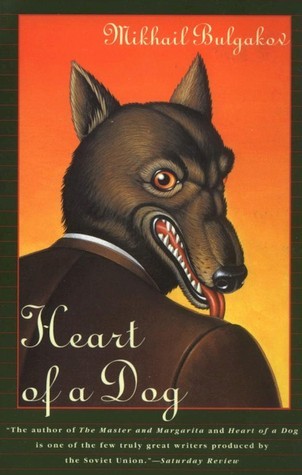
A Dog's Heart
1925
Mikhail Bulgakov
This satirical novel tells the story of the surgical transformation of a dog into a man, and is an obvious criticism of Soviet society, especially the new rich that arose after the Bolshevik revolution.