


Margins
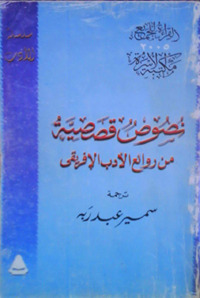
نصوص قصصية من روائع الأدب الإفريقي book cover
نصوص قصصية من روائع الأدب الإفريقي
2004
First Published
3.07
Average Rating
177
Number of Pages

«في اليوم التالي، وفي العمود السادس من الصفحة الرابعة من الجريدة، كان العنوان صغيرًا ومن العسير ملاحظته: «فتاة أفريقية يَغمُرها شوقُ العودة إلى وطنها تقطع رقبتَها في مدينة أنتيب».» الأدب صوتُ المجتمَعات، والأدب الأفريقي صوتُ القارة السمراء، والنصوص التي بين أيدينا طبقاتٌ متنوِّعة من هذا الصوت يتردَّد صداها عبْرَ أرجاءٍ مختلفة من القارة، يجمعها خطٌّ واحد مشترَك يتمثَّل في ثلاثة محاور هي: الهروب الرومانتيكي من الواقع إلى عالم الخيال، والاحتجاج، والسخرية التي هي مزيج من الاحتجاج والقَبول. يغلب على معظم هذه النصوص موضوع تصادُم الحضارتَين الأفريقية والغربية، وهو ما يتجلَّى بوضوح في قصة «امرأة متزوجة حقًّا» ذات الطابع الكوميدي الساخر، وقصة «فتاة سوداء» التي تتناول وضْعَ السودِ داخلَ المجتمَعات الغربية في أوروبا، والانهزامَ النفسي الذي يتعرَّضون له إلى حدٍّ يؤدي أحيانًا إلى الانتحار، وقصة «لقاء في الظلام» التي تتناول نوعًا آخَر من التصادم يتمثَّل في التعليم الغربي. وقد جاءت هذه المجموعة محاوَلةً للإشارة إلى ما حدَث من تطوُّر للشكل الفني للقصة القصيرة الأفريقية.
Avg Rating
3.07
Number of Ratings
41
5 STARS
12%
4 STARS
17%
3 STARS
46%
2 STARS
15%
1 STARS
10%
goodreads

Authors

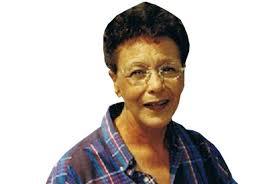
Barbara Kimenye
Barbara Kimenye
Author · 3 books

Barbara Kimenye (19 December 1929 – 12 August 2012), was one of East Africa's most popular and best-selling children's authors. Her books sold more than a million copies, not just in Kenya, Uganda and Tanzania, but throughout English-speaking Africa. She wrote more than 50 titles and is best remembered for her Moses series, about a mischievous student at a boarding school for troublesome boys. A prolific writer widely regarded as "the leading writer of Children's literature in Uganda", Barbara Kimenye was among the first Anglophone Ugandan women writers to be published in Central and East Africa. Her stories were extensively read in Uganda and beyond and were widely used in African schools. Kimenye was born in England, but by her own admission considered herself Ugandan

Es'kia Mphahlele
Author · 2 books

Es’kia Mphahlele, born Ezekiel Mphahlele, the name he used until 1977 (born Dec. 17, 1919, Marabastad, South Africa died Oct. 27, 2008, Lebowakgomo), novelist, essayist, short-story writer, and teacher whose autobiography, Down Second Avenue (1959), is a South African classic. It combines the story of a young man’s growth into adulthood with penetrating social criticism of the conditions forced upon black South Africans by apartheid. Mphahlele grew up in Pretoria and attended St. Peter’s Secondary School in Rosettenville and Adams Teachers Training College in Natal. His early career as a teacher of English and Afrikaans was terminated by the government because of his strong opposition to the highly restrictive Bantu Education Act. In Pretoria he was fiction editor of Drum magazine (1955–57) and a graduate student at the University of South Africa (M.A., 1956). He went into voluntary exile in 1957, first arriving in Nigeria. Thereafter Mphahlele held a number of academic and cultural posts in Africa, Europe, and the United States. He was director of the African program at the Congress for Cultural Freedom in Paris. He was coeditor with Ulli Beier and Wole Soyinka of the influential literary periodical Black Orpheus (1960–64), published in Ibadan, Nigeria; founder and director of Chemchemi, a cultural centre in Nairobi for artists and writers (1963–65); and editor of the periodical Africa Today (1967). He received a doctorate from the University of Denver in 1968. In 1977 he returned to South Africa and became head of the department of African Literature at the University of Witwatersrand in Johannesburg (1983–87). Mphahlele’s critical writings include two books of essays, The African Image (1962) and Voices in the Whirlwind (1972), that address Negritude, the African personality, nationalism, the black African writer, and the literary image of Africa. He helped to found the first independent black publishing house in South Africa, coedited the anthology Modern African Stories (1964), and contributed to African Writing Today (1967). His short stories—collected in part in In Corner B (1967), The Unbroken Song (1981), and Renewal Time (1988)—were almost all set in Nigeria. His later works include the novels The Wanderers (1971) and Chirundu (1979) and a sequel to his autobiography, Afrika My Music (1984). Es’kia (2002) and Es’kia Continued (2005) are collections of essays and other writings. Encyclopædia Britannica.

Ousmane Sembène
Ousmane Sembène
Author · 8 books
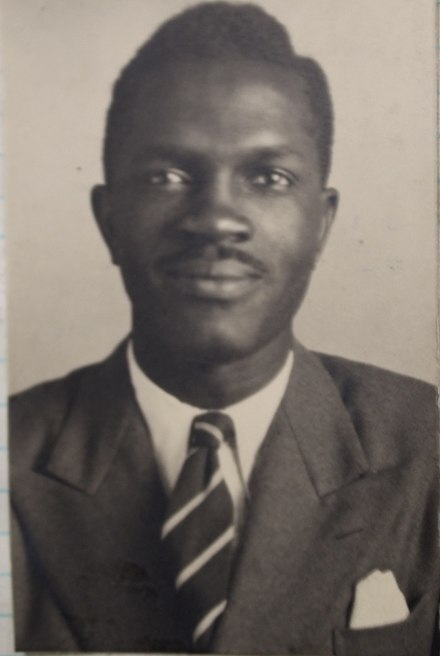
Ousmane Sembène often credited in the French style as Sembène Ousmane in articles and reference works, was a Senegalese film director, producer and writer. The Los Angeles Times considered him one of the greatest authors of Africa and has often been called the "Father of African film."
Ngugi wa Thiong'o
Ngugi wa Thiong'o
Author · 33 books

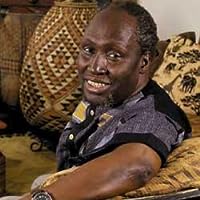
Kenyan teacher, novelist, essayist, and playwright, whose works function as an important link between the pioneers of African writing and the younger generation of postcolonial writers. After imprisonment in 1978, Ngũgĩ abandoned using English as the primary language of his work in favor of Gikuyu, his native tongue. The transition from colonialism to postcoloniality and the crisis of modernity has been a central issues in a great deal of Ngũgĩ's writings. Ngũgĩ wa Thiong'o was born in Kamiriithu, near Limuru, Kiambu District, as the fifth child of the third of his father's four wives. At that time Kenya was under British rule, which ended in 1963. Ngũgĩ's family belonged to the Kenya's largest ethnic group, the Gikuyu. His father, Thiong'o wa Nducu, was a peasant farmer, who was forced to become a squatter after the British Imperial Act of 1915. Ngũgĩ attended the mission-run school at Kamaandura in Limuru, Karinga school in Maanguu, and Alliance High School in Kikuyu. During these years Ngũgĩ became a devout Christian. However, at school he also learned about the Gikuyu values and history and underwent the Gikuyu rite of passage ceremony. Later he rejected Christianity, and changed his original name in 1976 from James Ngũgĩ, which he saw as a sign of colonialism, to Ngũgĩ wa Thiong'o in honor of his Gikuyu heritage. After receiving a B.A. in English at Makerere University College in Kampala (Uganda) in 1963, Ngũgĩ worked briefly as a journalist in Nairobi. He married in 1961. Over the next seventeen years his wife, Nyambura, gave birth to six children. In 1962 Ngũgĩ's play THE BLACK HERMIT was produced in Kampala. In 1964 he left for England to pursue graduate studies at the Leeds University in England. The most prominent theme in Ngũgĩ's early work was the conflict between the individual and the community. As a novelist Ngũgĩ made his debut with WEEP NOT, CHILD (1964), which he started to write while he was at school in England. It was the first novel in English to be published by an East African author. Ngũgĩ used the Bildungsroman form to tell the story of a young man, Njoroge. He loses his opportunity for further education when he is caught between idealistic dreams and the violent reality of the colonial exploitation. THE RIVER BETWEEN (1965) had as its background the Mau Mau Rebellion (1952-1956). The story was set in the late 1920s and 1930s and depicted an unhappy love affair in a rural community divided between Christian converts and non-Christians. A GRAIN OF WHEAT (1967) marked Ngũgĩ's break with cultural nationalism and his embracing of Fanonist Marxism. Ngũgĩ refers in the title to the biblical theme of self-sacrifice, a part of the new birth: "unless a grain of wheat die." The allegorical story of one man's mistaken heroism and a search for the betrayer of a Mau Mau leader is set in a village, which has been destroyed in the war. The author's family was involved in the Mau Mau uprising. Ngũgĩ's older brother had joined the movement, his stepbrother was killed, and his mother was arrested and tortured. Ngũgĩ's village suffered in a campaign. In the 1960s Ngũgĩ was a reporter for the Nairobi Daily Nation and editor of Zuka from 1965 to 1970. He worked as a lecturer at several universities - at the University College in Nairobi (1967-69), at the Makerere University in Kampala (1969-70), and at the Northwestern University in Evanston in the United States (1970-71). Ngũgĩ had resigned from his post at Nairobi University as a protest against government interference in the university, be he joined the faculty in 1973, becoming an associate professor and chairman of the department of literature. It had been formed in response to his and his colleagues' criticism of English - the British government had made in the 1950s instruction in English mandatory. Ngũgĩ had asked in an article, written with Taban lo Liyong and Henry Owuor-Anyumba, "If there is need for a 's

Birago Diop
Birago Diop
Author · 4 books

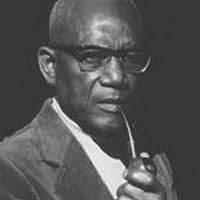
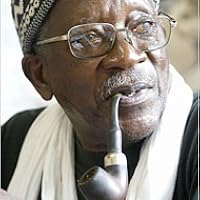
Diop, Birago (1906-1989), écrivain sénégalais d'expression française, qui rendit hommage à la tradition orale de son pays en publiant des contes, notamment ses Contes d'Amadou Koumba. Né près de Dakar, il reçut une formation coranique et suivit simultanément les cours de l'école française. Pendant ses études de médecine vétérinaire à Toulouse, il resta à l'écoute des travaux des africanistes, et s'associa à la fin des années 1930 au mouvement de la Négritude qui comptait alors Senghor, Césaire. C'est à Paris qu'il composa en 1942 les Contes d'Amadou Koumba (publiés en 1947), marquant dès ce premier livre sa prédilection pour la tradition orale des griots, ces conteurs populaires dont il ne cessa jamais d'écouter la voix. Respectueux de l'oralité, il affina un talent original d'écrivain dans les Nouveaux Contes d'Amadou Koumba (1958) et Contes et Lavanes (1963); son recueil de poèmes Leurres et Lueurs (1960) est profondément imprégné de culture française alliée aux sources d'une inspiration purement africaine. Sa carrière diplomatique, après l'indépendance de son pays, et son retour à son premier métier de vétérinaire à Dakar n'entravèrent pas son exploration de la littérature traditionnelle africaine, mais il déclara avoir « cassé sa plume ». Il publia néanmoins la Plume raboutée et quatre autres volumes de mémoires de 1978 à 1989.

Abioseh Nicol
Abioseh Nicol
Author · 1 book
Davidson Sylvester Hector Willoughby Nicol CMG (14 September 1924 – 20 September 1994), also known by his pen name Abioseh Nicol, was a Sierra Leone Creole academic, diplomat, physician, writer and poet. He was able to secure degrees in the arts, science and commercial disciplines and he contributed to science, history, and literature. Nicol was the first African to graduate with first class honours from the University of Cambridge and he was also the first African elected as a fellow of a college of Cambridge University. Nicol also contributed to medical science when he was the first to analyse the breakdown of insulin in the human body, a discovery which was a breakthrough for the treatment of diabetes.
Nadine Gordimer
Nadine Gordimer
Author · 48 books

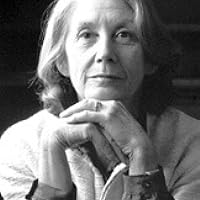
Nadine Gordimer was a South African writer, political activist, and recipient of the 1991 Nobel Prize in Literature. She was recognized as a woman "who through her magnificent epic writing has – in the words of Alfred Nobel – been of very great benefit to humanity". Gordimer's writing dealt with moral and racial issues, particularly apartheid in South Africa. Under that regime, works such as Burger's Daughter and July's People were banned. She was active in the anti-apartheid movement, joining the African National Congress during the days when the organization was banned. She was also active in HIV/AIDS causes.

548 Market St PMB 65688, San Francisco California 94104-5401 USA
© 2026 Paratext Inc. All rights reserved