Margins
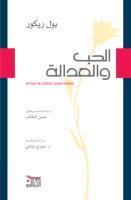
الحب والعدالة book cover
الحب والعدالة
1997
First Published
3.39
Average Rating
112
Number of Pages
La cause est en général entendue : c'est " amour ou justice ", mais non pas " amour et justice ". Dans le langage courant, et même à un niveau de réflexion plus élevé, a fortiori quand les deux concepts sont présentés en conflit, il n'y a pas, il ne peut pas y avoir de ponts entre la pratique individuelle de l'amour du prochain et la pratique collective de la justice qui établit l'égalité et l'équité. Qu'on favorise l'une ou l'autre, l'insistance va à la disproportion entre amour et justice. Toute la réflexion de Paul Ricoeur tend à démontrer la proportion, les liens, la dialectique très profonde, la tension vivante et féconde entre amour et justice qui se fait jour au moment de l'action, que l'un et l'autre revendiquent. Tous deux sont pris clans une économie du don qui déborde de toute part l'éthique dont ils se veulent les figures et dont ils se sentent responsables. Une logique de la surabondance vient toujours mettre au défi, sans jamais la rendre moins nécessaire, une logique de l'équivalence. Publiée d'abord en Allemagne, en édition bilingue, cette réflexion est inédite en français. Elle est complétée par deux articles du Fonds Ricoeur sur des thèmes proches.

Avg Rating
3.39
Number of Ratings
54
5 STARS
19%
4 STARS
31%
3 STARS
22%
2 STARS
26%
1 STARS
2%
goodreads

Author

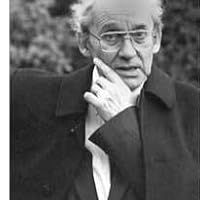
Paul Ricoeur
Paul Ricoeur
Author · 31 books

Paul Ricoeur (1913–2005) is widely recognized as one of the most distinguished philosophers of the twentieth century. In the course of his long career he wrote on a broad range of issues. His books include a multi-volume project on the philosophy of the will: Freedom and Nature: The Voluntary and the Involuntary (1950, Eng. tr. 1966), Fallible Man (1960, Eng. tr. 1967), and The Symbolism of Evil (1960, Eng. tr. 1970); a major study of Freud: Freud and Philosophy: An Essay on Interpretation (1965, Eng. tr. 1970); The Rule of Metaphor (1975, Eng. tr. 1977); Interpretation Theory: Discourse and the Surplus of Meaning (1976); the three-volume Time and Narrative (1983-85, Eng. tr. 1984–88); Lectures on Ideology and Utopia (1986); the published version of his Gifford lectures: Oneself as Another (1990, Eng. tr. 1992); Memory, History, Forgetting (2000, Eng. tr. 2004); and The Course of Recognition (2004, Eng. tr. 2005). In addition to his books, Ricoeur published more than 500 essays, many of which appear in collections in English: History and Truth (1955, Eng. tr. 1965); Husserl: An Analysis of His Phenomenology (1967); The Conflict of Interpretations: Essays in Hermeneutics (1969, Eng. tr. 1974); Political and Social Essays (1974); Essays on Biblical Interpretation (1980); Hermeneutics and the Human Sciences (1981); From Text to Action (1986, Eng. tr. 1991); Figuring the Sacred: Religion, Narrative, and Imagination (1995); The Just (1995, Eng. tr. 2000); On Translation (2004, Eng. tr. 2004); and Reflections on the Just (2001, Eng. tr. 2007). The major theme that unites his writings is that of a philosophical anthropology. This anthropology, which Ricoeur came to call an anthropology of the “capable human being,” aims to give an account of the fundamental capabilities and vulnerabilities that human beings display in the activities that make up their lives. Though the accent is always on the possibility of understanding the self as an agent responsible for its actions, Ricoeur consistently rejects any claim that the self is immediately transparent to itself or fully master of itself. Self-knowledge only comes through our relation to the world and our life with and among others in that world. In the course of developing his anthropology, Ricoeur made a major methodological shift. His writings prior to 1960 were in the tradition of existential phenomenology. But during the 1960s Ricoeur concluded that properly to study human reality he had to combine phenomenological description with hermeneutic interpretation. For this hermeneutic phenomenology, whatever is intelligible is accessible to us in and through language and all deployments of language call for interpretation. Accordingly, “there is no self-understanding that is not mediated by signs, symbols, and texts; in the final analysis self-understanding coincides with the interpretation given to these mediating terms” (Oneself as Another, 15, translation corrected). This hermeneutic or linguistic turn did not require him to disavow the basic results of his earlier investigations. It did, however, lead him not only to revisit them but also to see more clearly their implications.

548 Market St PMB 65688, San Francisco California 94104-5401 USA
© 2026 Paratext Inc. All rights reserved