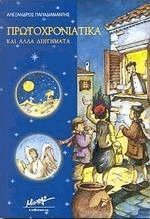



Τα διηγήματα της Πρωτοχρονιάς, όπως και όλα τα εορταστικά διηγήματα του Παπαδιαμάντη -των Χριστουγέννων, των Φώτων, της Λαμπρής- είναι μια ευκαιρία για το συγγραφέα να αντλήσει από τον κόσμο των θρησκευτικών του αναμνήσεων, με την κατανυκτική συνείδηση "ενός παπαδόπαιδου γεμάτου θύμησες και ενός συγγραφέα γεμάτου πίστη". Μέσα από αυτά, το "Γουτού Γουπατού", το "Σημαδιακό", την "Ντελησυφέρω", τα "Λιμανάκια" και άλλα, εορταστικός, πανηγυριστής, θρησκευόμενος, μαζί με τους απλοϊκούς και ανυποψίαστους συντοπίτες του, που στέκουν πάντα ανάμεσα στη φύση, μας απεικονίζει ανάγλυφα την εποχή του και τους ανθρώπους της: ανέμελα παιδιά, ψαράδες και μαυρομαντιλούσες, ορφανά και ταβερνομπακάληδες, ξωμάχους, θαλασσινούς και πονεμένες φτωχομάνες. Στους γιαλούς ή στα σοκάκια της Σκιάθου, στις εκκλησιές ή στη μανία της θάλασσας, στα γραφικά ξωκλήσια, παντού αναζητεί τον άνθρωπο. Και παντού υπάρχει διάχυτη η απλότητα, η ομορφιά και η καλοσύνη.
Authors

Alexandros Papadiamantis (Greek: Αλέξανδρος Παπαδιαμάντης) was an influential Greek novelist and short-story writer. He was born in Greece, on the island of Skiathos, in the western part of the Aegean Sea. The island would figure prominently in his work. His father was a priest. He moved to Athens as a young man to complete his high school studies, and enrolled in the philosophy faculty of Athens University, but never completed his studies. He returned to his native island in later life, and died there. He supported himself by writing throughout his adult life, anything from journalism and short stories to several serialized novels. From a certain point onwards he had become very popular, and newspapers and magazines vied for his writings, offering him substantial fees. Papadiamantis did not care for money, and would often ask for lower fees if he thought they were unfairly high; furthermore he spent his money carelessly and took no care of his clothing and appearance. He never married, and was known to be a recluse, whose only true cares were observing and writing about the life of the poor, and chanting at church: he was referred to as "kosmokalogeros" (κοσμοκαλόγερος, "a monk in the world"). He died of pneumonia.