Authors

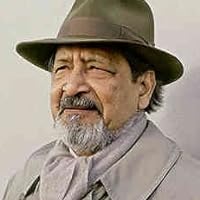
Naipaul was born and raised in Trinidad, to which his grandfathers had emigrated from India as indentured servants. He is known for the wistfully comic early novels of Trinidad, the bleaker novels of a wider world remade by the passage of peoples, and the vigilant chronicles of his life and travels, all written in characteristic, widely admired, prose. At 17, he won a Trinidad Government scholarship to study abroad. In the introduction to the 20th-anniversary edition of A House for Mr. Biswas, he reflected that the scholarship would have allowed him to study any subject at any institution of higher learning in the British Commonwealth, but that he chose to go to Oxford to do a simple degree in English. He went, he wrote, "in order at last to write...." In August 1950, Naipaul boarded a Pan Am flight to New York, continuing the next day by boat to London. 50 years later, Sir Vidiadhar Surajprasad "V. S." Naipaul was awarded the 2001 Nobel Prize in Literature "for having united perceptive narrative and incorruptible scrutiny in works that compel us to see the presence of suppressed histories."

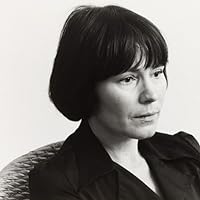
Ágota Kristóf was a Hungarian writer, who lived in Switzerland and wrote in French. Kristof received the European prize for French literature for The Notebook (1986). She won the 2001 Gottfried Keller Award in Switzerland and the Austrian State Prize for European Literature in 2008. Kristof's first steps as a writer were in the realm of poetry and theater (John et Joe, Un rat qui passe), which is a facet of her works that did not have as great an impact as her trilogy. In 1986 Kristof’s first novel, The Notebook appeared. It was the beginning of a moving trilogy. The sequel titled The Proof came 2 years later. The third part was published in 1991 under the title The Third Lie. The most important themes of this trilogy are war and destruction, love and loneliness, promiscuous, desperate, and attention-seeking sexual encounters, desire and loss, truth and fiction. She has received the European prize for French literature for The Notebook. This novel was translated in more than 30 languages. In 1995 she published a new novel, Yesterday. Kristof also wrote a book called L'analphabète (in English The Illiterate) and published in 2004. This is an autobiographical text. It explores her love of reading as a young child, and we travel with her to boarding school, and over the border to Austria, and then to Switzerland. Forced to leave her country due to the failure of the anti-communist rebellion, she hopes for a better life in Zurich. The majority of her works were published by Editions du Seuil in Paris. She has two new short stories published at Mini Zoe collection entitled "Ou es-tu Mathias" and "Line, le temps". The names Mathias and Line are from her previous novels. She died on 27 July 2011 in her Neuchâtel home.

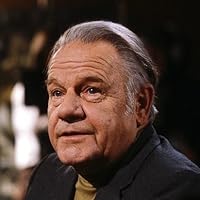
Lawrence George Durrell was a critically hailed and beloved novelist, poet, humorist, and travel writer best known for The Alexandria Quartet novels, which were ranked by the Modern Library as among the greatest works of English literature in the twentieth century. A passionate and dedicated writer from an early age, Durrell’s prolific career also included the groundbreaking Avignon Quintet, whose first novel, Monsieur (1974), won the James Tait Black Memorial Prize, and whose third novel, Constance (1982), was nominated for the Booker Prize. He also penned the celebrated travel memoir Bitter Lemons of Cyprus (1957), which won the Duff Cooper Prize. Durrell corresponded with author Henry Miller for forty-five years, and Miller influenced much of his early work, including a provocative and controversial novel, The Black Book (1938). Durrell died in France in 1990. The time Lawrence spent with his family, mother Louisa, siblings Leslie, Margaret Durrell, and Gerald Durrell, on the island of Corfu were the subject of Gerald's memoirs and have been filmed numerous times for TV.

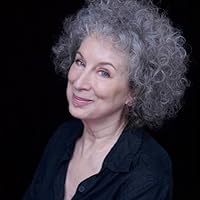
Margaret Atwood was born in 1939 in Ottawa and grew up in northern Ontario, Quebec, and Toronto. She received her undergraduate degree from Victoria College at the University of Toronto and her master's degree from Radcliffe College. Throughout her writing career, Margaret Atwood has received numerous awards and honourary degrees. She is the author of more than thirty-five volumes of poetry, children’s literature, fiction, and non-fiction and is perhaps best known for her novels, which include The Edible Woman (1970), The Handmaid's Tale (1983), The Robber Bride (1994), Alias Grace (1996), and The Blind Assassin, which won the prestigious Booker Prize in 2000. Atwood's dystopic novel, Oryx and Crake, was published in 2003. The Tent (mini-fictions) and Moral Disorder (short stories) both appeared in 2006. Her most recent volume of poetry, The Door, was published in 2007. Her non-fiction book, Payback: Debt and the Shadow Side of Wealth in the Massey series, appeared in 2008, and her most recent novel, The Year of the Flood, in the autumn of 2009. Ms. Atwood's work has been published in more than forty languages, including Farsi, Japanese, Turkish, Finnish, Korean, Icelandic and Estonian. In 2004 she co-invented the Long Pen TM. Margaret Atwood currently lives in Toronto with writer Graeme Gibson. Associations: Margaret Atwood was President of the Writers' Union of Canada from May 1981 to May 1982, and was President of International P.E.N., Canadian Centre (English Speaking) from 1984-1986. She and Graeme Gibson are the Joint Honourary Presidents of the Rare Bird Society within BirdLife International. Ms. Atwood is also a current Vice-President of PEN International.