Margins
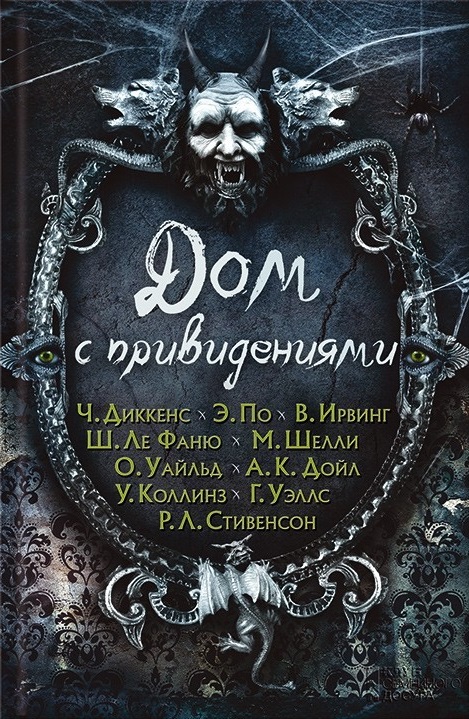
Дом с привидениями book cover
Дом с привидениями
2014
First Published
4.21
Average Rating
896
Number of Pages
Мировая классика! Лучшие истории о призраках от 10 признанных мастеров жанра! Древнее проклятие замка Кентервиль... Загадочный призрак, ищущий свою голову... Таинственная женщина в маске, как две капли воды похожая на покойную жену героя... Чудовище, поднявшее руку на своего создателя... Привидение, обитающее в заброшенном доме... Окунитесь в атмосферу тайны и мистики!

Avg Rating
4.21
Number of Ratings
19
5 STARS
42%
4 STARS
47%
3 STARS
0%
2 STARS
11%
1 STARS
0%
goodreads

Authors

Oscar Wilde
Oscar Wilde
Author · 358 books

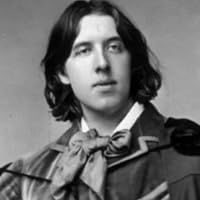
Oscar Fingal O'Flahertie Wills Wilde was an Irish playwright, poet, and author of numerous short stories, and one novel. Known for his biting wit, and a plentitude of aphorisms, he became one of the most successful playwrights of the late Victorian era in London, and one of the greatest celebrities of his day. Several of his plays continue to be widely performed, especially The Importance of Being Earnest. As the result of a widely covered series of trials, Wilde suffered a dramatic downfall and was imprisoned for two years hard labour after being convicted of "gross indecency" with other men. After Wilde was released from prison he set sail for Dieppe by the night ferry. He never returned to Ireland or Britain, and died in poverty.

J. Sheridan Le Fanu
J. Sheridan Le Fanu
Author · 104 books
Joseph Thomas Sheridan Le Fanu was an Irish writer of Gothic tales and mystery novels. He was the leading ghost-story writer of the nineteenth century and was central to the development of the genre in the Victorian era. M.R. James described Le Fanu as "absolutely in the first rank as a writer of ghost stories". Three of his best-known works are Uncle Silas, Carmilla and The House by the Churchyard.
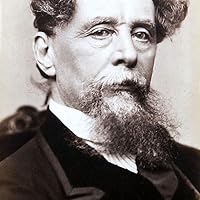
Charles Dickens
Charles Dickens
Author · 429 books

Charles John Huffam Dickens (1812-1870) was a writer and social critic who created some of the world's best-known fictional characters and is regarded as the greatest novelist of the Victorian era. His works enjoyed unprecedented popularity during his lifetime, and by the twentieth century critics and scholars had recognised him as a literary genius. His novels and short stories enjoy lasting popularity. Dickens left school to work in a factory when his father was incarcerated in a debtors' prison. Despite his lack of formal education, he edited a weekly journal for 20 years, wrote 15 novels, five novellas, hundreds of short stories and non-fiction articles, lectured and performed extensively, was an indefatigable letter writer, and campaigned vigorously for children's rights, education, and other social reforms. Dickens was regarded as the literary colossus of his age. His 1843 novella, A Christmas Carol, remains popular and continues to inspire adaptations in every artistic genre. Oliver Twist and Great Expectations are also frequently adapted, and, like many of his novels, evoke images of early Victorian London. His 1859 novel, A Tale of Two Cities, set in London and Paris, is his best-known work of historical fiction. Dickens' creative genius has been praised by fellow writers—from Leo Tolstoy to George Orwell and G. K. Chesterton—for its realism, comedy, prose style, unique characterisations, and social criticism. On the other hand, Oscar Wilde, Henry James, and Virginia Woolf complained of a lack of psychological depth, loose writing, and a vein of saccharine sentimentalism. The term Dickensian is used to describe something that is reminiscent of Dickens and his writings, such as poor social conditions or comically repulsive characters. On 8 June 1870, Dickens suffered another stroke at his home after a full day's work on Edwin Drood. He never regained consciousness, and the next day he died at Gad's Hill Place. Contrary to his wish to be buried at Rochester Cathedral "in an inexpensive, unostentatious, and strictly private manner," he was laid to rest in the Poets' Corner of Westminster Abbey. A printed epitaph circulated at the time of the funeral reads: "To the Memory of Charles Dickens (England's most popular author) who died at his residence, Higham, near Rochester, Kent, 9 June 1870, aged 58 years. He was a sympathiser with the poor, the suffering, and the oppressed; and by his death, one of England's greatest writers is lost to the world." His last words were: "On the ground", in response to his sister-in-law Georgina's request that he lie down. (from Wikipedia)

Arthur Conan Doyle
Arthur Conan Doyle
Author · 779 books

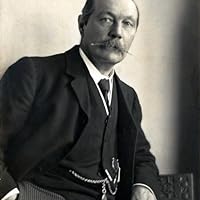
Sir Arthur Ignatius Conan Doyle was born the third of ten siblings on 22 May 1859 in Edinburgh, Scotland. His father, Charles Altamont Doyle, a talented illustrator, was born in England of Irish descent, and his mother, born Mary Foley, was Irish. They were married in 1855. Although he is now referred to as "Conan Doyle", the origin of this compound surname (if that is how he meant it to be understood) is uncertain. His baptism record in the registry of St Mary's Cathedral in Edinburgh gives 'Arthur Ignatius Conan' as his Christian name, and simply 'Doyle' as his surname. It also names Michael Conan as his godfather. At the age of nine Conan Doyle was sent to the Roman Catholic Jesuit preparatory school, Hodder Place, Stonyhurst. He then went on to Stonyhurst College, leaving in 1875. From 1876 to 1881 he studied medicine at the University of Edinburgh. This required that he provide periodic medical assistance in the towns of Aston (now a district of Birmingham) and Sheffield. While studying, Conan Doyle began writing short stories. His first published story appeared in "Chambers' Edinburgh Journal" before he was 20. Following his graduation, he was employed as a ship's doctor on the SS Mayumba during a voyage to the West African coast. He completed his doctorate on the subject of tabes dorsalis in 1885. In 1885 Conan Doyle married Louisa (or Louise) Hawkins, known as "Touie". She suffered from tuberculosis and died on 4 July 1906. The following year he married Jean Elizabeth Leckie, whom he had first met and fallen in love with in 1897. Due to his sense of loyalty he had maintained a purely platonic relationship with Jean while his first wife was alive. Jean died in London on 27 June 1940. Conan Doyle fathered five children. Two with his first wife—Mary Louise (28 January 1889 – 12 June 1976), and Arthur Alleyne Kingsley, known as Kingsley (15 November 1892 – 28 October 1918). With his second wife he had three children—Denis Percy Stewart (17 March 1909 – 9 March 1955), second husband in 1936 of Georgian Princess Nina Mdivani (circa 1910 – 19 February 1987; former sister-in-law of Barbara Hutton); Adrian Malcolm (19 November 1910–3 June 1970) and Jean Lena Annette (21 December 1912–18 November 1997). Conan Doyle was found clutching his chest in the hall of Windlesham, his house in Crowborough, East Sussex, on 7 July 1930. He had died of a heart attack at age 71. His last words were directed toward his wife: "You are wonderful." The epitaph on his gravestone in the churchyard at Minstead in the New Forest, Hampshire, reads: STEEL TRUE BLADE STRAIGHT ARTHUR CONAN DOYLE KNIGHT PATRIOT, PHYSICIAN & MAN OF LETTERS Conan Doyle's house, Undershaw, located in Hindhead, south of London, where he had lived for a decade, had been a hotel and restaurant between 1924 and 2004. It now stands empty while conservationists and Conan Doyle fans fight to preserve it. A statue honours Conan Doyle at Crowborough Cross in Crowborough, where Conan Doyle lived for 23 years. There is also a statue of Sherlock Holmes in Picardy Place, Edinburgh, close to the house where Conan Doyle was born. Series: * Sherlock Holmes

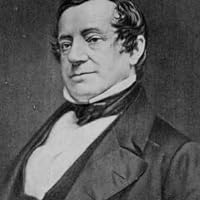
Washington Irving
Washington Irving
Author · 103 books

People remember American writer Washington Irving for the stories " Rip Van Winkle " and " The Legend of Sleepy Hollow ," contained in The Sketch Book (1820). This author, essayist, biographer and historian of the early 19th century wrote newspaper articles under the pseudonym Jonathan Oldstyle to begin his literary career at the age of nineteen years. In 1809, he published The History of New York under his most popular public persona, Diedrich Knickerbocker. Historical works of Irving include a five volume biography of George Washington (after whom he was named) as well as biographies of Oliver Goldsmith, Muhammad, and several histories, dealing with subjects, such as Christopher Columbus, the Moors, and the Alhambra, of 15th-century Spain. John Tyler, president, appointed Irving to serve as the first Spanish speaking United States minister to Spain from 1842 to 1846.

H.G. Wells
H.G. Wells
Author · 303 books

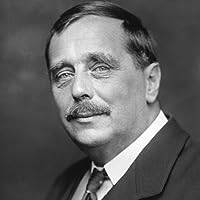
Herbert George Wells was born to a working class family in Kent, England. Young Wells received a spotty education, interrupted by several illnesses and family difficulties, and became a draper's apprentice as a teenager. The headmaster of Midhurst Grammar School, where he had spent a year, arranged for him to return as an "usher," or student teacher. Wells earned a government scholarship in 1884, to study biology under Thomas Henry Huxley at the Normal School of Science. Wells earned his bachelor of science and doctor of science degrees at the University of London. After marrying his cousin, Isabel, Wells began to supplement his teaching salary with short stories and freelance articles, then books, including The Time Machine (1895), The Island of Dr. Moreau (1896), The Invisible Man (1897), and The War of the Worlds (1898). Wells created a mild scandal when he divorced his cousin to marry one of his best students, Amy Catherine Robbins. Although his second marriage was lasting and produced two sons, Wells was an unabashed advocate of free (as opposed to "indiscriminate") love. He continued to openly have extra-marital liaisons, most famously with Margaret Sanger, and a ten-year relationship with the author Rebecca West, who had one of his two out-of-wedlock children. A one-time member of the Fabian Society, Wells sought active change. His 100 books included many novels, as well as nonfiction, such as A Modern Utopia (1905), The Outline of History (1920), A Short History of the World (1922), The Shape of Things to Come (1933), and The Work, Wealth and Happiness of Mankind (1932). One of his booklets was Crux Ansata, An Indictment of the Roman Catholic Church. Although Wells toyed briefly with the idea of a "divine will" in his book, God the Invisible King (1917), it was a temporary aberration. Wells used his international fame to promote his favorite causes, including the prevention of war, and was received by government officials around the world. He is best-remembered as an early writer of science fiction and futurism. He was also an outspoken socialist. Wells and Jules Verne are each sometimes referred to as "The Fathers of Science Fiction". D. 1946. More: http://philosopedia.org/index.php/H.\_... http://www.online-literature.com/well... http://www.hgwellsusa.50megs.com/ http://www.britannica.com/EBchecked/t... http://en.wikipedia.org/wiki/H.\_G.\_Wells

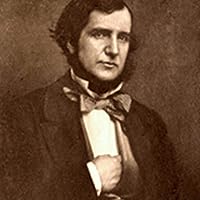
Wilkie Collins
Wilkie Collins
Author · 97 books

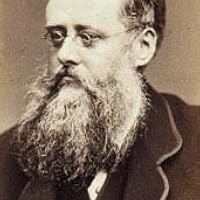
A close friend of Charles Dickens from their meeting in March 1851 until Dickens' death in June 1870, William Wilkie Collins was one of the best known, best loved, and, for a time, best paid of Victorian fiction writers. But after his death, his reputation declined as Dickens' bloomed. Now, Collins is being given more critical and popular attention than he has received for 50 years. Most of his books are in print, and all are now in e-text. He is studied widely; new film, television, and radio versions of some of his books have been made; and all of his letters have been published. However, there is still much to be discovered about this superstar of Victorian fiction. Born in Marylebone, London in 1824, Collins' family enrolled him at the Maida Hill Academy in 1835, but then took him to France and Italy with them between 1836 and 1838. Returning to England, Collins attended Cole's boarding school, and completed his education in 1841, after which he was apprenticed to the tea merchants Antrobus & Co. in the Strand. In 1846, Collins became a law student at Lincoln's Inn, and was called to the bar in 1851, although he never practised. It was in 1848, a year after the death of his father, that he published his first book, 'The Memoirs of the Life of William Collins, Esq., R.A'., to good reviews. The 1860s saw Collins' creative high-point, and it was during this decade that he achieved fame and critical acclaim, with his four major novels, 'The Woman in White' (1860), 'No Name' (1862), 'Armadale' (1866) and 'The Moonstone' (1868). 'The Moonstone', is seen by many as the first true detective novel T. S. Eliot called it "the first, the longest, and the best of modern English detective novels ..." in a genre invented by Collins and not by Poe.

548 Market St PMB 65688, San Francisco California 94104-5401 USA
© 2026 Paratext Inc. All rights reserved