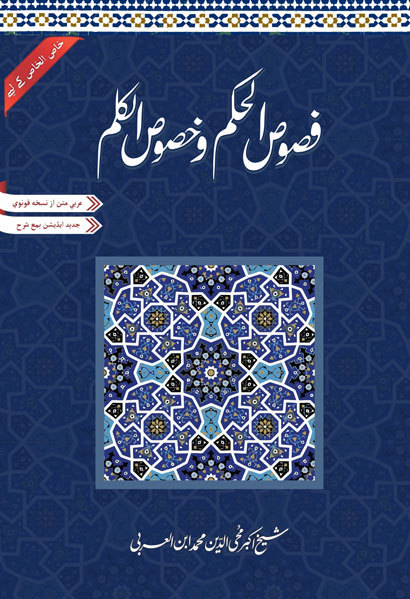



The Fusus al-Hikam is one of the most precious short writings of our Shaykh... One of the last and most complete book sent down upon him, it came to him from the station of Muhammad, the Fountain head of the Essence, and the unitary All-Comprehensiveness. So it contains the epitome of the spiritual perception (dhawq) of our Prophet - God's blessings be upon him - concerning the Knowledge of Allah. It also points to the source of the spiritual perceptions of the prophets mentioned within it. It leads every man of spiritual insight to the gist of their spiritual perceptions, the objects of their intentions and aspirations, the sum of all they achieved, and the outcome of their perfections. So it is like the seal of everything comprised with in the perfections of each of them; it gives news of the source of what they encompassed and what the made manifest. Shaykh Saddruddin al-Qunawi in al-Fukuk
Author

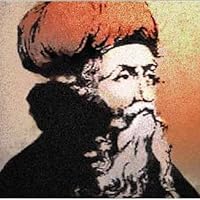
Note to arabic readers : For the original arabic version of the books, check "other editions" in the book that interests you) Universally known by the title of "Muhyi al-Din" (The Reviver of the Religion) and "al-Shaykh al-Akbar" (The Greatest Shaykh) Ibn 'Arabī (Arabic: ابن عربي) (July 28, 1165 - November 10, 1240) was an Arab Sufi Muslim mystic and philosopher. His full name was Abū 'Abdullāh Muḥammad ibn 'Alī ibn Muḥammad ibn al-`Arabī al-Hāṭimī al-Ṭā'ī (أبو عبد الله محمد بن علي بن محمد بن العربي الحاتمي الطائي). Muhammad ibn al-Arabi and his family moved to Seville when he was eight years old. In 1200 CE, at the age of thirty-five, he left Iberia for good, intending to make the hajj to Mecca. He lived in Mecca for some three years, where he began writing his Al-Futūḥāt al-Makkiyya (The Meccan Illuminations). In 1204, he left Mecca for Anatolia with Majd al-Dīn Isḥāq, whose son Ṣadr al-Dīn al-Qunawī (1210-1274) would be his most influential disciple. In 1223, he settled in Damascus, where he lived the last seventeen years of his life. He died at the age of 76 on 22 Rabi' II 638 AH/November 10, 1240CE, and his tomb in Damascus is still an important place of pilgrimage. A vastly prolific writer, Ibn 'Arabī is generally known as the prime exponent of the idea later known as Waḥdat al-Wujūd (literally Unity of Being), though he did not use this term in his writings. His emphasis was on the true potential of the human being and the path to realising that potential and becoming the perfect or complete man (al-insān al-kāmil). Some 800 works are attributed to Ibn 'Arabā, although only some have been authenticated. Recent research suggests that over 100 of his works have survived in manuscript form, although most printed versions have not yet been critically edited and include many errors.