Authors

Arkady Timofeevich Averchenko (Russian: Аркадий Тимофеевич Аверченко; March 27, 1881, Sevastopol – March 12, 1925, Prague), was a Russian playwright and satirist. He published his stories in the journal Satyricon, of which he was also an editor, in the series of "New Satyricon", and other publications. He published a total of around 20 books. Averchenko's satirical writings can be described as liberal. After the Russian Civil War, he emigrated to Central Europe and died in Prague. Averchenko was born on the 27th of March 1881 in Sevastopol. He was the son of a poor merchant, Timofey Petrovich Averchenko. Averchenko completed only two courses at the Gymnasia because of his poor eyesight, which rendered him unable to work on his studies for extended periods. His eye had been damaged by a childhood accident. However, as time went by, his lack of formal education was compensated by his natural intellect, as the writer N.N. Breshko-Breshkovskiy has described. Averchenko started to work at the age of 15, employed by a private transport company. He remained there for slightly over a year before pursuing other employment. In 1897 Averchenko left for Donbass to work as a clerk in the Bryansk mine. He worked there for three years and later wrote several stories about life at the mine, including "In the Evening" and "Lightning." In 1903, at the age of 22, he moved to Kharkiv where his first story appeared in the newspaper "South Territory" on 31 October. During 1906 to 1907 he edited the satirical magazines Bayonet and Sword. Finally in 1907 he was fired from this work, reportedly with the words, "You are a good man, but suitable for nothing." After this, in January 1908 Averchenko left for Saint Petersburg where he was to achieve success in his career. In 1908 Averchenko became secretary of the satirical magazine Dragonfly (later renamed to Satyricon) and in 1913 he became its editor. For many years Averchenko worked successfully as a member of the magazine's staff together with many other notable people, including Nadezhda Teffi, Sasha Chorny, and Aleksey Remizov. His most lauded humorous stories were published in the magazine. During Averchenko's work at the Satyricon it became very popular, and theatrical works based on his stories were put on by many theatres throughout the country. From 1910 to 1912 Averchenko more than once travelled to Europe with his friends and colleagues at the Satyricon (including Aleksey Remizov). These travels served Averchenko as a rich source for his creative work, and inspired his book Expedition of Satyriconers in Western Europe which was published in 1912. Averchenko also wrote many theatre reviews under several pen names. After the October Revolution, Averchenko's life was greatly changed. In August 1918 Bolshevik leaders declared the Satyricon anti-Soviet and suppressed it. Averchenko and all Satyricon staff took a negative position against Soviet authority. Averchenko struggled greatly in attempting to return to his own Sevastopol; in particular, he had to travel through the Ukraine, which was being occupied by Germans. Beginning in June 1919 Averchenko worked for the newspaper South (later the The South of Russia) and urged aid for the Voluntary Army. On the 15th of November 1920 Sevastopol was taken by the Reds. Some days before Averchenko had had time to flee via steamer ship to Constantinople. Averchenko felt comfortable while in Constantinople as there were many other fellow Russian refugees in the city at the time. In 1921 in Paris he published a satirical anthology, A Dozen Knives in the Back of Revolution which Lenin described as "a book of great talent by the embittered to distraction White Guard." He followed this book with a collection of stories, A Dozen Portraits in the Boudoir Format. On the 13th of April 1922 Averchenko moved to Sofia and later moved to Belgrade. Averchenko spent a brief time in both cities before moving again and ta

Vladimir Galaktionovich Korolenko (Russian: Владимир Галактионович Короленко) was journalist, human rights activist and humanitarian. His short stories were known for their harsh description of nature based on his experience of exile in Siberia. Korolenko was a strong critic of the Tsarist regime and in his final years of the Bolsheviks. Korolenko's first short stories were published in 1879. However, his literary career was interrupted that year when he was arrested for revolutionary activity and exiled to the Vyatka region for five years. In 1881 he refused to swear allegiance to the new Tsar Alexander III and was exiled farther, to Yakutia. Upon his return from the exile, he had more stories published. Makar's Dream (Сон Макара, Son Makara) established his reputation as a writer when it was published in 1885. The story, based on a dying peasant's dream of heaven, was translated and published in English in 1892. Korolenko settled in Nizhniy Novgorod shortly afterwards and continued publishing popular short stories. He published a novel Слепой музыкант (Slepoi Musykant) in 1886, which was published in English as The Blind Musician in 1896-1898. After visiting the Chicago exhibition during 1893, Korolenko wrote the story Without Language (Без языка, Bez Yazyka) based on what happens to a Ukrainian peasant who immigrates to the USA. His final story Мгновение (Mgnovenie, "Blink of an Eye"), was published in 1900. By then, Korolenko was well established among Russian writers. He was a member of the Russian Academy of Sciences but resigned in 1902 when Maxim Gorky was expelled as a member because of his revolutionary activities. (Anton Chekhov resigned from the Academy for the same reason). In 1895, Korolenko became the editor of the periodical Russkoe Bogatstvo (Russian Wealth) and used this position to criticise alleged injustices occurring under the tsar. He also used his position to publish reviews of important pieces of literature such as Chekhov's final play The Cherry Orchard in 1904. Vladimir Korolenko was a lifetime opponent of Czarism and reservedly welcomed the Russian Revolution of 1917. However, he soon opposed the Bolsheviks as their despotic nature became evident. During the Russian Civil War that ensued, he criticized both Red Terror and White Terror. He worked on an autobiography История моего современника (Istoria moego sovremenika The History of My Contemporary. Korolenko advocated for human rights and against injustices and persecutions on the basis of social class by his essay В Голодный год (During The Starving Year, 1891–1892), nationalism in his article Мултанское дело (The Multanskoye Affair, 1895–1896), and criticised[1] the anti-Semitic Beilis trial (in his Call to the Russian People in regard to the blood libel of the Jews, 1911–1913). He died in Poltava in the Ukrainian Soviet Socialist Republic on December 25, 1921.

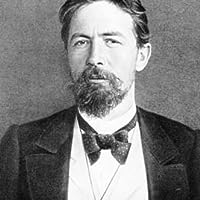
Anton Pavlovich Chekhov (Russian: Антон Павлович Чехов ) was born in the small seaport of Taganrog, southern Russia, the son of a grocer. Chekhov's grandfather was a serf, who had bought his own freedom and that of his three sons in 1841. He also taught himself to read and write. Yevgenia Morozova, Chekhov's mother, was the daughter of a cloth merchant. "When I think back on my childhood," Chekhov recalled, "it all seems quite gloomy to me." His early years were shadowed by his father's tyranny, religious fanaticism, and long nights in the store, which was open from five in the morning till midnight. He attended a school for Greek boys in Taganrog (1867-68) and Taganrog grammar school (1868-79). The family was forced to move to Moscow following his father's bankruptcy. At the age of 16, Chekhov became independent and remained for some time alone in his native town, supporting himself through private tutoring. In 1879 Chekhov entered the Moscow University Medical School. While in the school, he began to publish hundreds of comic short stories to support himself and his mother, sisters and brothers. His publisher at this period was Nicholas Leikin, owner of the St. Petersburg journal Oskolki (splinters). His subjects were silly social situations, marital problems, farcical encounters between husbands, wives, mistresses, and lovers, whims of young women, of whom Chekhov had not much knowledge – the author was shy with women even after his marriage. His works appeared in St. Petersburg daily papers, Peterburskaia gazeta from 1885, and Novoe vremia from 1886. Chekhov's first novel, Nenunzhaya pobeda (1882), set in Hungary, parodied the novels of the popular Hungarian writer Mór Jókai. As a politician Jókai was also mocked for his ideological optimism. By 1886 Chekhov had gained a wide fame as a writer. His second full-length novel, The Shooting Party, was translated into English in 1926. Agatha Christie used its characters and atmosphere in her mystery novel The Murder of Roger Ackroyd (1926). Chekhov graduated in 1884, and practiced medicine until 1892. In 1886 Chekhov met H.S. Suvorin, who invited him to become a regular contributor for the St. Petersburg daily Novoe vremya. His friendship with Suvorin ended in 1898 because of his objections to the anti-Dreyfus campaign conducted by paper. But during these years Chechov developed his concept of the dispassionate, non-judgmental author. He outlined his program in a letter to his brother Aleksandr: "1. Absence of lengthy verbiage of political-social-economic nature; 2. total objectivity; 3. truthful descriptions of persons and objects; 4. extreme brevity; 5. audacity and originality; flee the stereotype; 6. compassion." Chekhov's first book of stories (1886) was a success, and gradually he became a full-time writer. The author's refusal to join the ranks of social critics arose the wrath of liberal and radical intelligentsia and he was criticized for dealing with serious social and moral questions, but avoiding giving answers. However, he was defended by such leading writers as Leo Tolstoy and Nikolai Leskov. "I'm not a liberal, or a conservative, or a gradualist, or a monk, or an indifferentist. I should like to be a free artist and that's all..." Chekhov said in 1888. The failure of his play The Wood Demon (1889) and problems with his novel made Chekhov to withdraw from literature for a period. In 1890 he travelled across Siberia to remote prison island, Sakhalin. There he conducted a detailed census of some 10,000 convicts and settlers condemned to live their lives on that harsh island. Chekhov hoped to use the results of his research for his doctoral dissertation. It is probable that hard conditions on the island also weakened his own physical condition. From this journey was born his famous travel book T

Aleksandr Kuprin (Russian: Александр Иванович Куприн; 7 September 1870 in the village of Narovchat in the Penza Oblast - August 25, 1938 in Leningrad) was a Russian writer, pilot, explorer and adventurer who is perhaps best known for his story The Duel (1905). Other well-known works include Moloch (1896), Olesya (1898), Junior Captain Rybnikov (1906), Emerald (1907), and The Garnet Bracelet (1911) (which was made into a 1965 movie). Vladimir Nabokov styled him the Russian Kipling for his stories about pathetic adventure-seekers, who are often "neurotic and vulnerable." Kuprin was a son of Ivan Ivanovich Kuprin, a minor government official who died of cholera during 1871 at the age of thirty-seven years. His mother, Liubov' Alekseevna Kuprina, Tatar princess (of the Kulunchakovs), like many other nobles in Russia, had lost most of her wealth during the 19th century. Kuprin attended the Razumovsky boarding school during 1876, and during 1880 finished his education in the Second Moscow Military High School (Cadet Corps) and Alexander Military School, spending a total of ten years in these elite military institutions. His first short story, The Last Debut, was published during 1889 in a satirical periodical. "In February 1902, Kuprin and Maria Karlovna Davydova were married, their daughter Lidia born in 1903." Kuprin's mother died during 1910. Kuprin ended military service during 1894, after which he tried many types of job, including provincial journalism, dental care, land surveying, acting, circus performer, church singer, doctor, hunter, fisher, etc. Reportedly, "all of these were subsequently reflected in his fiction." His first essays were published in Kiev in two collections. Reportedly, "although he lived in an age when writers were carried away by literary experiments, Kuprin did not seek innovation and wrote only about the things he himself had experienced and his heroes are the next generation after Chekhov's pessimists." Although the 1896 short story Moloch first made his name known as a writer, it was his novel The Duel (1905) which made him famous. "Kuprin was highly praised by fellow writers including Anton Chekhov, Maxim Gorky, Leonid Andreyev, Nobel Prize-winning Ivan Bunin" and Leo Tolstoy who acclaimed him a true successor to Chekhov. After publication of The Duel he paid less and less interest to fancy literature and began to spend time in pubs and brothels. His sensationalist novel about the lurid life of prostitutes, The Pit (1915), was accused by Russian critics of excessive Naturalism. Although not a conservative, he did not agree with Bolshevism. While working for a brief time with Maxim Gorky at the World Literature publishing company, he criticized the Soviet regime. During spring 1919, from Gatchina near Petrograd, Kuprin left the country for France. He lived in Paris for most of the next 17 years, succumbing to alcoholism. He wrote about this in much of his work. He eventually returned to Moscow on May 31, 1937, just a year before his death, at the height of the Great Purge. His return earned publication of his works within the Soviet Union. Kuprin died during the spring of 1938 in Leningrad and is interred near his fellow writers at the Literaturskiye Mostki in the Volkovo Cemetery (Volkovskoye Memorial Cemetery) in Leningrad. A minor planet 3618 Kuprin, discovered by Soviet astronomer Nikolai Stepanovich Chernykh in 1979 is named after him. Reportedly, "even today, Alexander Kuprin remains one of the widest read classics in Russian literature", with many films based on his works, "which are also read over the radio", partly due to "his vivid stories of the lives of ordinary people and unhappy love, his descriptions of the military and brothels, making him a writer for all times and places."

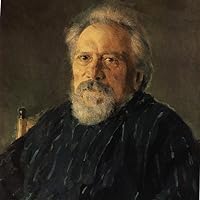
also: Николай Лесков Nikolaj S. Leskow Nikolai Leskov Nikolai Lesskow Nikolaj Semënovič Leskov Nikolaĭ Semenovich Leskov Nikolai Ljeskow Н. С. Лѣсков-Стебницкий Микола Лєсков Nikolai Semyonovich Leskov (Russian: Николай Семёнович Лесков; 16 February 1831 — 5 March 1895) was a Russian novelist, short story writer, playwright, and journalist who also wrote under the pseudonym M. Stebnitsky. Praised for his unique writing style and innovative experiments in form, and held in high esteem by Leo Tolstoy, Anton Chekhov and Maxim Gorky among others, Leskov is credited with creating a comprehensive picture of contemporary Russian society using mostly short literary forms. His major works include Lady Macbeth of Mtsensk (1865) (which was later made into an opera by Shostakovich), The Cathedral Clergy (1872), The Enchanted Wanderer (1873), and "The Tale of Cross-eyed Lefty from Tula and the Steel Flea" (1881). Leskov was born at his parent's estate in Oryol Gubernia in 1831. He received his formal education at the Oryol Lyceum. In 1847 Leskov joined the Oryol criminal court office, later transferring to Kiev where he worked as a clerk, attended university lectures, mixed with local people, and took part in various student circles. In 1857 Leskov quit his job as a clerk and went to work for the private trading company Scott & Wilkins owned by Alexander Scott, his aunt's English husband. He spent several years traveling throughout Russia on company business. It was in these early years that Leskov learned local dialects and became keenly interested in the customs and ways of the different ethnic and regional groups of Russian peoples. His experiences during these travels provided him with material and inspiration for his future as a writer of fiction. Leskov's literary career began in the early 1860s with the publication of his short story "The Extinguished Flame" (1862), and his novellas Musk-Ox (May 1863) and The Life of a Peasant Woman (September, 1863). His first novel No Way Out was published under the pseudonym M. Stebnitsky in 1864. From the mid 1860s to the mid 1880s Leskov published a wide range of works, including journalism, sketches, short stories, and novels. Leskov's major works, many of which continue to be published in modern versions, were written during this time. A number of his later works were banned because of their satirical treatment of the Russian Orthodox Church and its functionaries. In his last years Leskov suffered from angina pectoris and asthma. He died on 5 March 1895. He was interred in the Volkovo Cemetery in Saint Petersburg, in the section reserved for literary figures.

Russian: Владимир Владимирович Набоков . Vladimir Vladimirovich Nabokov, also known by the pen name Vladimir Sirin, was a Russian-American novelist. Nabokov wrote his first nine novels in Russian, then rose to international prominence as a master English prose stylist. He also made significant contributions to lepidoptery, and had a big interest in chess problems. Nabokov's Lolita (1955) is frequently cited as his most important novel, and is at any rate his most widely known one, exhibiting the love of intricate wordplay and descriptive detail that characterized all his works. Lolita was ranked fourth in the list of the Modern Library 100 Best Novels; Pale Fire (1962) was ranked 53rd on the same list, and his memoir, Speak, Memory (1951), was listed eighth on the publisher's list of the 20th century's greatest nonfiction. He was also a finalist for the National Book Award for Fiction seven times.

Ivan Alekseyevich Bunin (Russian: Иван Алексеевич Бунин) was the first Russian writer to win the Nobel Prize for Literature. He was noted for the strict artistry with which he carried on the classical Russian traditions in the writing of prose and poetry. The texture of his poems and stories, sometimes referred to as "Bunin brocade", is considered to be one of the richest in the language. Best known for his short novels The Village (1910) and Dry Valley (1912), his autobiographical novel The Life of Arseniev (1933, 1939), the book of short stories Dark Avenues (1946) and his 1917–1918 diary ( Cursed Days, 1926), Bunin was a revered figure among anti-communist White emigres, European critics, and many of his fellow writers, who viewed him as a true heir to the tradition of realism in Russian literature established by Leo Tolstoy and Anton Chekhov. He died November 8, 1953 in Paris.