Margins
گراکوس شکارچی‌ و داستان‌های دیگر book cover
گراکوس شکارچی‌ و داستان‌های دیگر
2007
First Published
3.36
Average Rating
160
Number of Pages
Avg Rating
3.36
Number of Ratings
70
5 STARS
19%
4 STARS
23%
3 STARS
39%
2 STARS
16%
1 STARS
4%
goodreads

Authors

Jean-Paul Sartre
Jean-Paul Sartre
Author · 105 books

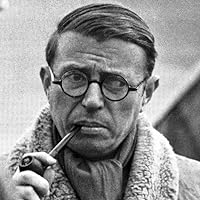
Jean-Paul Charles Aymard Sartre, normally known simply as Jean-Paul Sartre, was a French existentialist philosopher and pioneer, dramatist and screenwriter, novelist and critic. He was a leading figure in 20th century French philosophy. He declined the award of the 1964 Nobel Prize in Literature "for his work which, rich in ideas and filled with the spirit of freedom and the quest for truth, has exerted a far-reaching influence on our age." In the years around the time of his death, however, existentialism declined in French philosophy and was overtaken by structuralism, represented by Levi-Strauss and, one of Sartre's detractors, Michel Foucault.

Anton Chekhov
Anton Chekhov
Author · 507 books

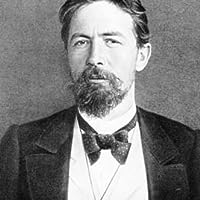
Anton Pavlovich Chekhov (Russian: Антон Павлович Чехов ) was born in the small seaport of Taganrog, southern Russia, the son of a grocer. Chekhov's grandfather was a serf, who had bought his own freedom and that of his three sons in 1841. He also taught himself to read and write. Yevgenia Morozova, Chekhov's mother, was the daughter of a cloth merchant. "When I think back on my childhood," Chekhov recalled, "it all seems quite gloomy to me." His early years were shadowed by his father's tyranny, religious fanaticism, and long nights in the store, which was open from five in the morning till midnight. He attended a school for Greek boys in Taganrog (1867-68) and Taganrog grammar school (1868-79). The family was forced to move to Moscow following his father's bankruptcy. At the age of 16, Chekhov became independent and remained for some time alone in his native town, supporting himself through private tutoring. In 1879 Chekhov entered the Moscow University Medical School. While in the school, he began to publish hundreds of comic short stories to support himself and his mother, sisters and brothers. His publisher at this period was Nicholas Leikin, owner of the St. Petersburg journal Oskolki (splinters). His subjects were silly social situations, marital problems, farcical encounters between husbands, wives, mistresses, and lovers, whims of young women, of whom Chekhov had not much knowledge – the author was shy with women even after his marriage. His works appeared in St. Petersburg daily papers, Peterburskaia gazeta from 1885, and Novoe vremia from 1886. Chekhov's first novel, Nenunzhaya pobeda (1882), set in Hungary, parodied the novels of the popular Hungarian writer Mór Jókai. As a politician Jókai was also mocked for his ideological optimism. By 1886 Chekhov had gained a wide fame as a writer. His second full-length novel, The Shooting Party, was translated into English in 1926. Agatha Christie used its characters and atmosphere in her mystery novel The Murder of Roger Ackroyd (1926). Chekhov graduated in 1884, and practiced medicine until 1892. In 1886 Chekhov met H.S. Suvorin, who invited him to become a regular contributor for the St. Petersburg daily Novoe vremya. His friendship with Suvorin ended in 1898 because of his objections to the anti-Dreyfus campaign conducted by paper. But during these years Chechov developed his concept of the dispassionate, non-judgmental author. He outlined his program in a letter to his brother Aleksandr: "1. Absence of lengthy verbiage of political-social-economic nature; 2. total objectivity; 3. truthful descriptions of persons and objects; 4. extreme brevity; 5. audacity and originality; flee the stereotype; 6. compassion." Chekhov's first book of stories (1886) was a success, and gradually he became a full-time writer. The author's refusal to join the ranks of social critics arose the wrath of liberal and radical intelligentsia and he was criticized for dealing with serious social and moral questions, but avoiding giving answers. However, he was defended by such leading writers as Leo Tolstoy and Nikolai Leskov. "I'm not a liberal, or a conservative, or a gradualist, or a monk, or an indifferentist. I should like to be a free artist and that's all..." Chekhov said in 1888. The failure of his play The Wood Demon (1889) and problems with his novel made Chekhov to withdraw from literature for a period. In 1890 he travelled across Siberia to remote prison island, Sakhalin. There he conducted a detailed census of some 10,000 convicts and settlers condemned to live their lives on that harsh island. Chekhov hoped to use the results of his research for his doctoral dissertation. It is probable that hard conditions on the island also weakened his own physical condition. From this journey was born his famous travel book T

Franz Kafka
Franz Kafka
Author · 263 books

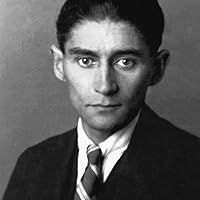
Prague-born writer Franz Kafka wrote in German, and his stories, such as " The Metamorphosis " (1916), and posthumously published novels, including The Trial (1925), concern troubled individuals in a nightmarishly impersonal world. Jewish middle-class family of this major fiction writer of the 20th century spoke German. People consider his unique body of much incomplete writing, mainly published posthumously, among the most influential in European literature. His stories include "The Metamorphosis" (1912) and " In the Penal Colony " (1914), whereas his posthumous novels include The Trial (1925), The Castle (1926) and Amerika (1927). Despite first language, Kafka also spoke fluent Czech. Later, Kafka acquired some knowledge of the French language and culture from Flaubert, one of his favorite authors. Kafka first studied chemistry at the Charles-Ferdinand University of Prague but after two weeks switched to law. This study offered a range of career possibilities, which pleased his father, and required a longer course of study that gave Kafka time to take classes in German studies and art history. At the university, he joined a student club, named Lese- und Redehalle der Deutschen Studenten, which organized literary events, readings, and other activities. In the end of his first year of studies, he met Max Brod, a close friend of his throughout his life, together with the journalist Felix Weltsch, who also studied law. Kafka obtained the degree of doctor of law on 18 June 1906 and performed an obligatory year of unpaid service as law clerk for the civil and criminal courts. Writing of Kafka attracted little attention before his death. During his lifetime, he published only a few short stories and never finished any of his novels except the very short "The Metamorphosis." Kafka wrote to Max Brod, his friend and literary executor: "Dearest Max, my last request: Everything I leave behind me ... in the way of diaries, manuscripts, letters (my own and others'), sketches, and so on, [is] to be burned unread." Brod told Kafka that he intended not to honor these wishes, but Kafka, so knowing, nevertheless consequently gave these directions specifically to Brod, who, so reasoning, overrode these wishes. Brod in fact oversaw the publication of most of work of Kafka in his possession; these works quickly began to attract attention and high critical regard. Max Brod encountered significant difficulty in compiling notebooks of Kafka into any chronological order as Kafka started writing in the middle of notebooks, from the last towards the first, et cetera. Kafka wrote all his published works in German except several letters in Czech to Milena Jesenská.

548 Market St PMB 65688, San Francisco California 94104-5401 USA
© 2025 Paratext Inc. All rights reserved