


پیدا کردن وجه اشتراک میان داستانهایی که در این کتاب گرد آمدهاند شاید کاری غیر ممکن باشد. داستانها نه به لحاظ زمانی، نه سبکی و نه محتوایی یکان نیستند. بازهی زمانیشان از دهههای آغازین قرن بیستم تا سالهای اخیر را در بر میگیرد. نویسندگان از لحاظ مکانی نیز اشتراک ندارند گروهی تمام عمر در روسیه و شوروی به سر بردهاند و عدهای دیگر، به دلایل مختلف مهاجرت را برگزیده و آثارشان را در سرزمینی دیگر خلق کردهاند. در میان داستانها به لحاظ سبکی هم نثر ساده و نزدیک به زبان کوچه و خیابان میخاییل روشنکو و واسیلی شوکشین یافت میشود هم سبک آوانگارد و پرآرایه و پیچیدهی یوگنی زامیاتین و یوری تینیانوف محتوایشان از جستارهای خاطره مانند از قبیل داستانهای نینا بربروا و یوگنی و ادالازکین تا آثار کاملاً تخیلی مانند داستانهای سیگیز موند کرژیژانوفسکی در تغییر است. همه سنخ قهرمانی هم در میانشان هست از کشیش آزاد منش تا مأمور اعدام از نزار پتر اول تا تروریست عاجز از سربریدن خروس. سخن مترجم
Authors

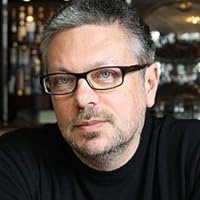
Andrei Platonov, August 28, 1899 – January 5, 1951, was the pen name of Andrei Platonovich Klimentov, a Soviet author whose works anticipate existentialism. Although Platonov was a Communist, his works were banned in his own lifetime for their skeptical attitude toward collectivization and other Stalinist policies. From 1918 through 1921, his most intensive period as a writer, he published dozens of poems (an anthology appeared in 1922), several stories, and hundreds of articles and essays, adopting in 1920 the Platonov pen-name by which he is best-known. With remarkably high energy and intellectual precocity he wrote confidently across a wide range of topics including literature, art, cultural life, science, philosophy, religion, education, politics, the civil war, foreign relations, economics, technology, famine, and land reclamation, amongst others. His famous works include the novels The Foundation Pit and Chevengur.

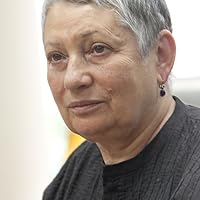
Mikhail Pavlovich Shishkin (Russian: Михаил Павлович Шишкин, born 18 January 1961) is a Russian writer. Mikhail Shishkin was born in 1961 in Moscow. Shishkin studied English and German at Moscow State Pedagogical Institute. After graduation he worked as a street sweeper, road worker, journalist, school teacher, and translator. He debuted as a writer in 1993, when his short story "Calligraphy Lesson" was published in Znamya magazine. Since 1995 he has lived in Zurich, Switzerland. He averages one book every five years. Shishkin openly opposes the current Russian government, calling it a "corrupt, criminal regime, where the state is a pyramid of thieves" when he pulled out of representing Russia at the 2013 Book Expo in the United States. Shishkin's books have been translated into more than ten languages. His prose is universally praised for style, e.g., "Shishkin's language is wonderfully lucid and concise. Without sounding archaic, it reaches over the heads of Tolstoy and Dostoevsky (whose relationship with the Russian language was often uneasy) to the tradition of Pushkin." He deals with universal themes like death, resurrection, and love. Shishkin has been compared to numerous great writers, including Anton Chekhov, Vladimir Nabokov and James Joyce, while he admits to being influenced by Chekhov along with Leo Tolstoy and Ivan Bunin, saying "Bunin taught me not to compromise, and to go on believing in myself. Chekhov passed on his sense of humanity – that there can’t be any wholly negative characters in your text. And from Tolstoy I learned not to be afraid of being naïve."

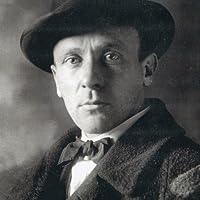
Mikhail Bulgakov was born in Kyiv, Russian Empire (today part of modern Ukraine) on 3/15 May 1891. He studied and briefly practised medicine and, after indigent wanderings through revolutionary Russia and the Caucasus, he settled in Moscow in 1921. His sympathetic portrayal of White characters in his stories, in the plays The Days of the Turbins (The White Guard), which enjoyed great success at the Moscow Art Theatre in 1926, and Flight (1927), and his satirical treatment of the officials of the New Economic Plan, led to growing criticism, which became violent after the play, The Purple Island. His later works treat the subject of the artist and the tyrant under the guise of historical characters, with plays such as Molière, staged in 1936, Don Quixote, staged in 1940, and Pushkin, staged in 1943. He also wrote a brilliant biography, highly original in form, of his literary hero, Molière, but The Master and Margarita, a fantasy novel about the devil and his henchmen set in modern Moscow, is generally considered his masterpiece. Fame, at home and abroad, was not to come until a quarter of a century after his death in Moscow in 1940. Detailed Version Mikhaíl Afanasyevich Bulgakov (Russian: Михаил Афанасьевич Булгаков) was the first of six children in the family of a theology professor. His family belonged to the intellectual elite of Kyiv. Bulgakov and his brothers took part in the demonstration commemorating the death of Leo Tolstoy. Bulgakov later graduated with honors from the Medical School of Kyiv University in 1915. He married his classmate Tatiana Lappa, who became his assistant at surgeries and in his doctor's office. He practiced medicine, specializing in venereal and other infectious diseases, from 1915 to 1919 (he later wrote about the experience in "Notes of a Young Doctor.") He joined the anti-communist White Army during the Russian Civil War. After the Civil War, he tried (unsuccesfully) to emigrate from Russia to reunite with his brother in Paris. Several times he was almost killed by opposing forces on both sides of the Russian Civil War, but soldiers needed doctors, so Bulgakov was left alive. He provided medical help to the Chehchens, Caucasians, Cossacs, Russians, the Whites, and the Reds. In 1921, Bulgakov moved to Moscow. There he became a writer and became friends with Valentin Katayev, Yuri Olesha, Ilya Ilf, Yevgeni Petrov, and Konstantin Paustovsky. Later, he met Mikhail Zoschenko, Anna Akhmatova, Viktor Ardov, Sergei Mikhalkov, and Kornei Chukovsky. Bulgakov's plays at the Moscow Art Theatre were directed by Stanislavsky and Vladimir Nemirovich-Danchenko. Bugakov's own way of life and his witty criticism of the ugly realities of life in the Soviet Union caused him much trouble. His story "Heart of a Dog" (1925) is a bitter satire about the loss of civilized values in Russia under the Soviet system. Soon after, Bulgakov was interrogated by the Soviet secret service, OGPU. After interrogations, his personal diary and several unfinished works were confiscated by the secret service. His plays were banned in all theaters, which terminated his income. Destitute, he wrote to his brother in Paris about his terrible life and poverty in Moscow. Bulgakov distanced himself from the Proletariat Writer's Union because he refused to write about the peasants and proletariat. He adapted "Dead Souls" by Nikolai Gogol for the stage; it became a success but was soon banned. He took a risk and wrote a letter to Joseph Stalin with an ultimatum: "Let me out of the Soviet Union, or restore my work at the theaters." On the 18th of April of 1930, Bulgakov received a telephone call from Joseph Stalin. The dictator told the writer to fill an employment application at the Moscow Art Theater. Gradually, Bulgakov's plays were back in the repertoire of the Moscow Art Theatre. But most other theatres were in fear and did not stage any of th

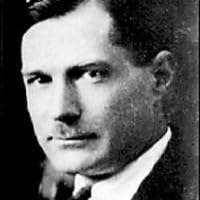
Yevgeny Zamyatin (Russian: Евгений Замятин, sometimes also seen spelled Eugene Zamiatin) Russian novelist, playwright, short story writer, and essayist, whose famous anti-utopia (1924, We) prefigured Aldous Huxley's Brave New World (1932), and inspired George Orwell's 1984 (1949). The book was considered a "malicious slander on socialism" in the Soviet Union, and it was not until 1988 when Zamyatin was rehabilitated. In the English-speaking world We has appeared in several translations. "And then, just the way it was this morning in the hangar, I saw again, as though right then for the first time in my life, I saw everything: the unalterably straight streets, the sparkling glass of the sidewalks, the divine parallelepipeds of the transparent dwellings, the squared harmony of our gray-blue ranks. And so I felt that I - not generations of people, but I myself - I had conquered the old God and the old life, I myself had created all this, and I'm like a tower, I'm afraid to move my elbow for fear of shattering the walls, the cupolas, the machines..." (from We, trans. by Clarence Brown) Yevgeny Ivanovich Zamyatin was born in the provincial town of Lebedian, some two hundred miles south of Moscow. His father was an Orthodox priest and schoolmaster, and his mother a musician. He attended Progymnasium in Lebedian and gymnasium in Voronezh. From 1902 to 1908 he studied naval engineering at St. Petersburg Polytechnic Institute. While still a student, he joined the Bolshevik Party. In 1905 he made a study trip in the Near East. Due to his revolutionary activities Zamyatin was arrested in 1905 and exiled. His first short story, 'Odin' (1908), was drew on his experiences in prison. Zamyatin applied to Stalin for permission to emigrate in 1931 and lived in Paris until his death.

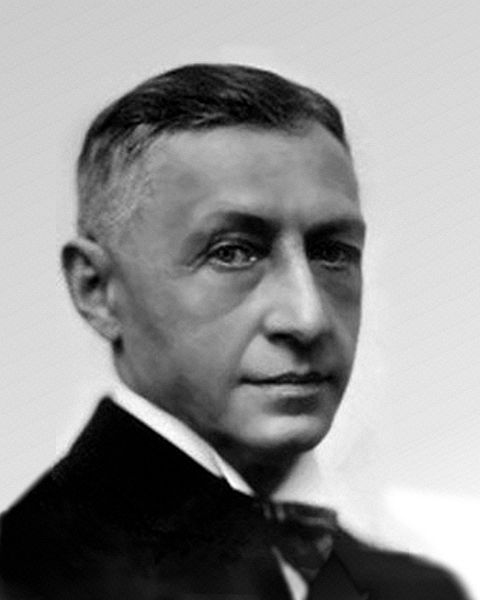
Ivan Alekseyevich Bunin (Russian: Иван Алексеевич Бунин) was the first Russian writer to win the Nobel Prize for Literature. He was noted for the strict artistry with which he carried on the classical Russian traditions in the writing of prose and poetry. The texture of his poems and stories, sometimes referred to as "Bunin brocade", is considered to be one of the richest in the language. Best known for his short novels The Village (1910) and Dry Valley (1912), his autobiographical novel The Life of Arseniev (1933, 1939), the book of short stories Dark Avenues (1946) and his 1917–1918 diary ( Cursed Days, 1926), Bunin was a revered figure among anti-communist White emigres, European critics, and many of his fellow writers, who viewed him as a true heir to the tradition of realism in Russian literature established by Leo Tolstoy and Anton Chekhov. He died November 8, 1953 in Paris.

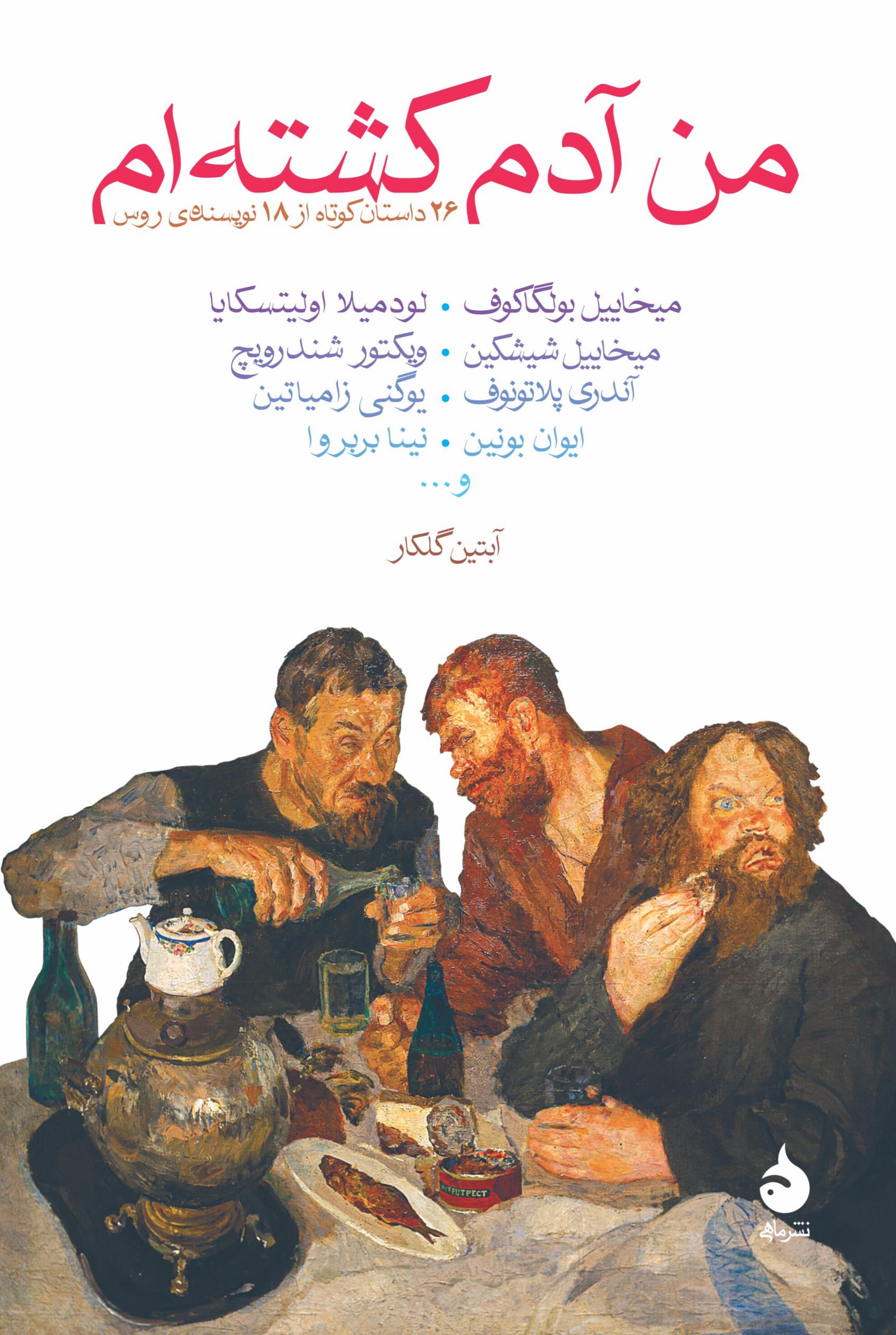
RUS: Людмила Евгеньевна Улицкая Lyudmila Ulitskaya is a critically acclaimed modern Russian novelist and short-story writer. She was born in the town of Davlekanovo in Bashkiria in 1943. She grew up in Moscow where she studied biology at the Moscow State University. Having worked in the field of genetics and biochemistry, Ulitskaya began her literary career by joining the Jewish drama theatre as a literary consultant. She was the author of two movie scripts produced in the early 1990s—The Liberty Sisters (Сестрички Либерти, 1990) and A Woman for All (Женщина для всех, 1991). Ulitskaya's first novel Sonechka (Сонечка) published in Novy Mir in 1992 almost immediately became extremely popular, and was shortlisted for the Russian Booker Award. Nowadays her works are much admired by the reading public and critics in Russia and many other countries. Her works have been translated into several languages and received several international and Russian literary awards, including the Russian Booker for Kukotsky's Case (2001). Lyudmila Ulitskaya currently resides in Moscow. Ulitskaya's works have been translated into many foreign languages. In Germany her novels have been added to bestseller list thanks to features of her works in a television program hosted by literary critic Elke Heidenreich.