Margins
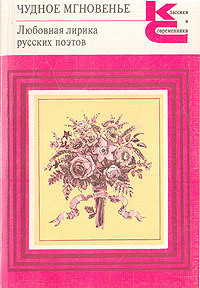
Чудное мгновенье. Любовная лирика русских поэтов. В двух томах. Книга 2 book cover

Чудное мгновенье. Любовная лирика русских поэтов. В двух томах. Книга 2

1988
First Published
5.00
Average Rating
431
Number of Pages
Во второй том сборника «Чудное мгновенье» входят поэтические произведения В. Брюсова, В. Маяковского, С. Есенина, А. Ахматовой, Н. Заболоцкого, С. Гудзенко, В. Высоцкого и других.
Avg Rating
5.00
Number of Ratings
3
5 STARS
100%
4 STARS
0%
3 STARS
0%
2 STARS
0%
1 STARS
0%
goodreads

Authors

Andrei Bely
Andrei Bely
Author · 8 books

Boris Bugaev was born in Moscow, into a prominent intellectual family. His father, Nikolai Bugaev, was a leading mathematician who is regarded as a founder of the Moscow school of mathematics. His mother was not only highly intelligent but a famous society beauty, and the focus of considerable gossip. Young Boris was a polymath whose interests included mathematics, music, philosophy, and literature. He would go on to take part in both the Symbolist movement and the Russian school of neo-Kantianism. Nikolai Bugaev was well known for his influential philosophical essays, in which he decried geometry and probability and trumpeted the virtues of hard analysis. Despite—or because of—his father's mathematical tastes, Boris Bugaev was fascinated by probability and particularly by entropy, a notion to which he frequently refers in works such as Kotik Letaev. Bely's creative works notably influenced—and were influenced by—several literary schools, especially symbolism. They feature a striking mysticism and a sort of moody musicality. The far-reaching influence of his literary voice on Russian writers (and even musicians) has frequently been compared to the impact of James Joyce in the English-speaking world. The novelty of his sonic effects has also been compared to the innovative music of Charles Ives.[citation needed] As a young man, Bely was strongly influenced by his acquaintance with the family of philosopher Vladimir Solovyov, especially Vladimir's younger brother Mikhail, described in his long autobiographical poem The First Encounter (1921); the title is a reflection of Vladimir Solovyov's Three Encounters. Bely's symbolist novel Petersburg (1916; 1922) is generally considered to be his masterpiece. The book employs a striking prose method in which sounds often evoke colors. The novel is set in the somewhat hysterical atmosphere of turn-of-the-century Petersburg and the Russian Revolution of 1905. To the extent that the book can be said to possess a plot, this can be summarized as the story of the hapless Nikolai Apollonovich, a ne'er-do-well who is caught up in revolutionary politics and assigned the task of assassinating a certain government official—his own father. At one point, Nikolai is pursued through the Petersburg mists by the ringing hooves of the famous bronze statue of Peter the Great.[citation needed] In his later years Bely was influenced by Rudolf Steiner’s anthroposophy[3][4] and became a personal friend of Steiner's. He died, aged 53, in Moscow. Bely was one of the major influences on the theater of Vsevolod Meyerhold.[citation needed] The Andrei Bely Prize (Russian: Премия Андрея Белого), one of the most important prizes in Russian literature, was named after him. His poems were set on music and frequently performed by Russian singer-songwriters.

Sergei Yesenin
Sergei Yesenin
Author · 15 books

Sergei Alexandrovich Yesenin [Сергей Александрович Есенин], 1895-1925, sometimes spelled as Esenin, was a Russian lyric poet. He is one of the most popular and well-known Russian poets of the 20th century, known for "his lyrical evocations of and nostalgia for the village life of his childhood - no idyll, presented in all its rawness, with an implied curse on urbanisation and industrialisation." Born of peasant parents, he received very little formal education, and although he later traveled quite extensively it was the pre-revolution countryside of his youth that served as inspiration for most of his poetry. Yesenin initially supported the Bolshevik revolution, thinking that it would prove beneficial to the peasant class, but he became disenchanted when he saw that it would lead only to the industrialization of Russia. A longing for a return to the simplicity of the peasant lifestyle characterizes his work, as does his innovative use of images drawn from village lore. He is credited with helping to establish the Imaginist movement in Russian literature. Yesenin led an erratic, unconventional life that was punctuated by bouts of drunkenness and insanity. Before hanging himself in a Leningrad hotel, Yesenin slit his wrists, and, using his own blood, wrote a farewell poem.

Nikolai Klyuev
Nikolai Klyuev
Author · 1 book

Nikolai Alekseevich Klyuev Russian: Николай Алексеевич Клюев (occasionally transliterated from the Cyrillic alphabet as Kliuev, Kluev, Klyuyev, or Kluyev) (October 10, 1884 - between October 23 and 25, 1937), was a notable Russian poet. He was influenced by the symbolist movement, intense nationalism, and a love of Russian folklore. Born in the village of Koshtugi near the town of Vytegra, Kluyev rose to prominence in the early twentieth century as the leader of the so-called "peasant poets". Kluyev was a close friend and mentor of Sergei Yesenin. Arrested in 1933 for contradicting Soviet ideology, he was shot in 1937 and rehabilitated posthumously in 1957.

Alexandr Blok
Alexandr Blok
Author · 17 books

Aleksandr Blok (Russian: Александр Александрович Блок) was born in Saint Petersburg, into a sophisticated and intellectual family. Some of his relatives were men of letters, his father being a law professor in Warsaw, and his maternal grandfather the rector of Saint Petersburg State University. After his parents' separation, Blok lived with aristocratic relatives at the Shakhmatovo manor near Moscow, where he discovered the philosophy of Vladimir Solovyov, and the verse of then-obscure 19th-century poets, Fyodor Tyutchev and Afanasy Fet. These influences would be fused and transformed into the harmonies of his early pieces, later collected in the book Ante Lucem. He fell in love with Lyubov (Lyuba) Dmitrievna Mendeleeva (daughter of the renowned chemist Dmitri Mendeleev) and married her in 1903. Later, she would involve him in a complicated love-hate relationship with his fellow Symbolist Andrey Bely. To Lyuba he dedicated a cycle of poetry that brought him fame, Stikhi o prekrasnoi Dame (Verses About the Beautiful Lady, 1904). In it, he transformed his humble wife into a vision of the feminine soul and eternal womanhood (The Greek Sophia of Solovyov's teaching). Blok's few relatives currently live in Moscow, Riga, Rome and England. During the last period of his life, Blok concentrated primarily on political themes, pondering the messianic destiny of his country (Vozmezdie, 1910-21; Rodina, 1907-16; Skify, 1918). Influenced by Solovyov's doctrines, he was full of vague apocalyptic apprehensions and often vacillated between hope and despair. "I feel that a great event was coming, but what it was exactly was not revealed to me," he wrote in his diary during the summer of 1917. Quite unexpectedly for most of his admirers, he accepted the October Revolution as the final resolution of these apocalyptic yearnings. By 1921 Blok had become disillusioned with the Russian Revolution. He did not write any poetry for three years. Blok complained to Maksim Gorky that he had given up his "faith in the wisdom of humanity". He explained to his friend Korney Chukovsky why he could not write poetry any more: "All sounds have stopped. Can't you hear that there are no longer any sounds?".[2]. Within a few days Blok became sick. His doctors requested him to be sent for medical treatment abroad, but he was not allowed to leave the country. Gorky pleaded for a visa. On 29 May 1921, he wrote to Anatoly Lunacharsky: "Blok is Russia's finest poet. If you forbid him to go abroad, and he dies, you and your comrades will be guilty of his death". Blok received permission only on 10 August, after his death.[2] Several months earlier, Blok had delivered a celebrated lecture on Pushkin, whom he believed to be an iconic figure capable of uniting White and Red Russia. His death and the execution of his fellow poet Nikolai Gumilev by Cheka in 1921 were seen by many as the end of the entire generation of Russians [2]. Nina Berberova, then a young girl, recalled about the mood at his funeral: "I was suddenly and sharply orphaned... The end is coming. We are lost." http://russiapedia.rt.com/prominent-r...

Sergey Gorodetsky
Sergey Gorodetsky
Author · 1 book

Sergey Mitrofanovich Gorodetsky (Серге́й Митрофа́нович Городе́цкий) - (January 17 [O.S. January 5] 1884 – June 8, 1967) was a Russian poet, one of the founders (together with Nikolay Gumilev) of Guild of Poets ("Цех поэтов"). He was born in Saint Petersburg, and died in Obninsk. Gorodetsky entered the literary scene as a Symbolist, developing friendships with Alexander Blok, Vyacheslav Ivanov, and Valery Briusov. Following his brief stint with Symbolists, Gorodetsky began to associate with younger poets, forming the Acmeist group with Nikolai Gumilev, Anna Akhmatova, and Osip Mandelshtam. Subsequently, abandoning yet another group, he welcomed the Bolshevik revolution as a Soviet poet.

Anna Akhmatova
Anna Akhmatova
Author · 40 books

also known as: Анна Ахматова Personal themes characterize lyrical beauty of noted work of Russian poet Anna Akhmatova, pseudonym of Anna Andreevna Gorenko; the Soviet government banned her books between 1946 and 1958. People credit this modernist of the most acclaimed writers in the canon. Her writing ranges from short lyrics to universalized, ingeniously structured cycles, such as Requiem (1935-40), her tragic masterpiece about the Stalinist terror. Her work addresses a variety of themes including time and memory, the fate of creative women, and the difficulties of living and writing in the shadow of Stalinism. She has been widely translated into many languages, and is one of the best-known Russian poets of 20th century. In 1910, she married the poet, Nikolay Gumilyov, who very soon left her for lion hunting in Africa, the battlefields of World War I, and the society of Parisian grisettes. Her husband did not take her poems seriously, and was shocked when Alexander Blok declared to him that he preferred her poems to his. Their son, Lev, born in 1912, was to become a famous Neo-Eurasianist historian. Nikolay Gumilyov was executed in 1921 for activities considered anti-Soviet; Akhmatova then married a prominent Assyriologist Vladimir Shilejko, and then an art scholar, Nikolay Punin, who died in the Stalinist Gulag camps. After that, she spurned several proposals from the married poet, Boris Pasternak. After 1922, Akhmatova was condemned as a bourgeois element, and from 1925 to 1940, her poetry was banned from publication. She earned her living by translating Leopardi and publishing essays, including some brilliant essays on Pushkin, in scholarly periodicals. All of her friends either emigrated or were repressed. Her son spent his youth in Stalinist gulags, and she even resorted to publishing several poems in praise of Stalin to secure his release. Their relations remained strained, however. Akhmatova died at the age of 76 in St. Peterburg. She was interred at Komarovo Cemetery. There is a museum devoted to Akhmatova at the apartment where she lived with Nikolai Punin at the garden wing of the Fountain House (more properly known as the Sheremetev Palace) on the Fontanka Embankment, where Akhmatova lived from the mid 1920s until 1952.

Ilya Ehrenburg
Ilya Ehrenburg
Author · 16 books

Ilya Grigoryevich Ehrenburg (Russian: Илья Григорьевич Эренбург) was a Soviet writer, journalist, translator, and cultural figure. Ehrenburg is among the most prolific and notable authors of the Soviet Union; he published around one hundred titles. He became known first and foremost as a novelist and a journalist - in particular, as a reporter in three wars (First World War, Spanish Civil War and the Second World War). His articles on the Second World War have provoked intense controversies in West Germany, especially during the sixties. The novel The Thaw (Оттепель) gave its name to an entire era of Soviet cultural politics, namely, the liberalization after the death of Joseph Stalin. Ehrenburg's travel writing also had great resonance, as did to an arguably greater extent his autobiography People, Years, Life, which may be his best known and most discussed work. The Black Book, edited by him and Vassily Grossman, has special historical significance; detailing the genocide on Soviet citizens of Jewish ancestry, it is the first great documentary work on the Holocaust. In addition, Ehrenburg wrote a succession of works of poetry.

Валентин Катаев
Валентин Катаев
Author · 4 books

Русский советский писатель, драматург, поэт. See Valentin Kataev

Сергей Клычков
Сергей Клычков
Author · 1 book

Серге́й Анто́нович Клычко́в (деревенское прозвище семьи, использовавшееся иногда как псевдоним, — Лешенков; 1 (13) июля 1889, Дубровки, Тверская губерния — 8 октября 1937) — русский и советский поэт, прозаик и переводчик. Родился в деревне Дубровки Тверской губернии в семье сапожника-старообрядца. Участвовал в революции 1905 года, в 1906 году написал ряд стихов на революционные темы. Ранние стихи Клычкова были одобрены С. М. Городецким. В 1908 году с помощью М. И. Чайковского выехал в Италию, где познакомился с Максимом Горьким. Поэт учился на историко-филологическом факультете Московского университета (а после — на юридическом; исключён в 1913 году), затем, во время Первой мировой войны, отправился на фронт; войну окончил в звании прапорщика. В 1919—1921 годах жил в Крыму, где едва не был расстрелян (махновцами, затем белогвардейцами). В 1921 году переехал в Москву, где сотрудничал в основном в журнале «Красная новь». Стихи ранних поэтических сборников Клычкова («Песни: Печаль-Радость. Лада. Бова», 1911; «Потаённый сад», 1913) во многом созвучны со стихами поэтов «новокрестьянского» направления — Есенина, Клюева, Ганина, Орешина и др. Некоторые из стихов Клычкова были размещены в «Антологии» издательства «Мусагет». Ранние клычковские темы были углублены и развиты в последующих сборниках «Дубравна» (1918), «Домашние песни» (1923), «Гость чудесный» (1923), «В гостях у журавлей» (1930), в стихах которых отразились впечатления Первой мировой войны, разрушение деревни; одним из основных образов становится образ одинокого, бездомного странника. В поэзии Клычкова появились ноты отчаяния, безысходности, вызванные гибелью под натиском «машинной» цивилизации сошедшей с пути Природы старой Руси.

Nikolai Aseev
Nikolai Aseev
Author · 1 book
Nikolai Nikolaievich Aseev (Russian: Никола́й Никола́евич Асе́ев) July 10, 1889 - July 16, 1963) was a Russian Futurist poet and writer.
Maximilian Voloshin
Maximilian Voloshin
Author · 2 books
Maximilian Alexandrovich Kirienko-Voloshin (Russian: Максимилиан Александрович Кириенко-Волошин) (May 28, 1877 - November 8, 1932) was a Russian poet and famous Freemason. He was one of the significant representatives of the Symbolist movement in Russian culture and literature. He became famous as a poet and a critic of literature and the arts, being published in many contemporary magazines of the early 20th century, including "Vesy" ('Libra'), "Zolotoye runo" ('The Golden Fleece') and "Apollon". He was also known for his brilliant translations of a number of French poetic and prose works into Russian.
Лев Озеров
Лев Озеров
Author · 1 book

Лев Адольфович Озеров (настоящая фамилия — Гольдберг; 23 августа 1914, Киев — 18 марта 1996, Москва) — русский поэт и переводчик. Первоначально публиковался под собственным именем Лев Гольдберг, а также литературными псевдонимами Лев Берг и Л. Корнев. Родился в семье фармацевта Адольфа (Айзика) Григорьевича и Софьи Григорьевна Гольдбергов. В 1934 перебрался в Москву. Закончил МИФЛИ (1939) и его аспирантуру (1941), защитил кандидатскую диссертацию. Участник Великой Отечественной войны, военный журналист. С 1943 г. до последних дней жизни преподавал в Литературном институте, профессор (с 1979 г.) кафедры художественного перевода. Доктор филологических наук. Первая публикация стихов в 1932 г., первая книга издана в 1940 г. Выпустил более 20 прижизненных сборников. Опубликовал множество стихотворных переводов, главным образом с украинского (Т. Шевченко и другие), литовского (К. Борута, А. Венцлова, Э. Межелайтис и другие), идиш (С. Галкин и другие) и других языков народов СССР. Автор ряда книг и статей о русской и украинской поэзии, в том числе о творчестве Ф. И. Тютчева, А. А. Фета, Пастернака, а также мемуарных очерков, в том числе об А. А. Ахматовой, Н. А. Заболоцком и других. Статья Озерова «Стихотворения Анны Ахматовой», опубликованная 23 июня 1959 года в «Литературной газете», представляет собой первый отзыв о её поэзии после долгих лет молчания. Лев Озеров также много сделал для сохранения творческого наследия и для публикации поэтов своего поколения, погибших на войне или в годы сталинских репрессий, или просто рано умерших (в том числе, Ильи Сельвинского, Александра Кочеткова, Дмитрия Кедрина, Георгия Оболдуева). Заслуженный деятель культуры Литовской ССР (1980), лауреат премии журнала «Арион» (1994).

Marina Tsvetaeva
Marina Tsvetaeva
Author · 51 books

Марина Цветаева Marina Ivanovna Tsvetaeva was born in Moscow. Her father, Ivan Tsvetaev, was a professor of art history and the founder of the Museum of Fine Arts. Her mother Mariya, née Meyn, was a talented concert pianist. The family travelled a great deal and Tsvetaeva attended schools in Switzerland, Germany, and at the Sorbonne, Paris. Tsvetaeva started to write verse in her early childhood. She made her debut as a poet at the age of 18 with the collection Evening Album, a tribute to her childhood. In 1912 Tsvetaeva married Sergei Efron, they had two daughters and one son. Magic Lantern showed her technical mastery and was followed in 1913 by a selection of poems from her first collections. Tsvetaeva's affair with the poet and opera librettist Sofiia Parnok inspired her cycle of poems called Girlfriend. Parnok's career stopped in the late 1920s when she was no longer allowed to publish. The poems composed between 1917 and 1921 appeared in 1957 under the title The Demesne of the Swans. Inspired by her relationship with Konstantin Rodzevich, an ex-Red Army officer she wrote Poem of the Mountain and Poem of the End. After 1917 Revolution Tsvetaeva was trapped in Moscow for five years. During the famine one of her own daughters died of starvation. Tsvetaeva's poetry reveals her growing interest in folk song and the techniques of the major symbolist and poets, such as Aleksander Blok and Anna Akhmatova. In 1922 Tsvetaeva emigrated with her family to Berlin, where she rejoined her husband, and then to Prague. This was a highly productive period in her life - she published five collections of verse and a number of narrative poems, plays, and essays. During her years in Paris Tsvetaeva wrote two parts of the planned dramatic trilogy. The last collection published during her lifetime, After Russia, appeared in 1928. Its print, 100 numbered copies, were sold by special subscription. In Paris the family lived in poverty, the income came almost entirely from Tsvetaeva's writings. When her husband started to work for the Soviet security service, the Russian community of Paris turned against Tsvetaeva. Her limited publishing ways for poetry were blocked and she turned to prose. In 1937 appeared MOY PUSHKIN, one of Tsvetaeva's best prose works. To earn extra income, she also produced short stories, memoirs and critical articles. In exile Tsvetaeva felt more and more isolated. Friendless and almost destitute she returned to the Soviet Union in 1938, where her son and husband already lived. Next year her husband was executed and her daughter was sent to a labor camp. Tsvetaeva was officially ostracized and unable to publish. After the USSR was invaded by German Army in 1941, Tsvetaeva was evacuated to the small provincial town of Elabuga with her son. In despair, she hanged herself ten days later on August 31, 1941. source: http://www.poemhunter.com/marina-ivan...

Boris Pasternak
Boris Pasternak
Author · 31 books

Boris Leonidovich Pasternak was born in Moscow to talented artists: his father a painter and illustrator of Tolstoy's works, his mother a well-known concert pianist. Though his parents were both Jewish, they became Christianized, first as Russian Orthodox and later as Tolstoyan Christians. Pasternak's education began in a German Gymnasium in Moscow and was continued at the University of Moscow. Under the influence of the composer Scriabin, Pasternak took up the study of musical composition for six years from 1904 to 1910. By 1912 he had renounced music as his calling in life and went to the University of Marburg, Germany, to study philosophy. After four months there and a trip to Italy, he returned to Russia and decided to dedicate himself to literature. Pasternak's first books of verse went unnoticed. With My Sister Life, 1922, and Themes and Variations, 1923, the latter marked by an extreme, though sober style, Pasternak first gained a place as a leading poet among his Russian contemporaries. In 1924 he published Sublime Malady, which portrayed the 1905 revolt as he saw it, and The Childhood of Luvers, a lyrical and psychological depiction of a young girl on the threshold of womanhood. A collection of four short stories was published the following year under the title Aerial Ways. In 1927 Pasternak again returned to the revolution of 1905 as a subject for two long works: "Lieutenant Schmidt", a poem expressing threnodic sorrow for the fate of the Lieutenant, the leader of the mutiny at Sevastopol, and "The Year 1905", a powerful but diffuse poem which concentrates on the events related to the revolution of 1905. Pasternak's reticent autobiography, Safe Conduct, appeared in 1931, and was followed the next year by a collection of lyrics, Second Birth, 1932. In 1935 he published translations of some Georgian poets and subsequently translated the major dramas of Shakespeare, several of the works of Goethe, Schiller, Kleist, and Ben Jonson, and poems by Petöfi, Verlaine, Swinburne, Shelley, and others. In Early Trains, a collection of poems written since 1936, was published in 1943 and enlarged and reissued in 1945 as Wide Spaces of the Earth. In 1957 Doctor Zhivago, Pasternak's only novel - except for the earlier "novel in verse", Spektorsky (1926) - first appeared in an Italian translation and has been acclaimed by some critics as a successful attempt at combining lyrical-descriptive and epic-dramatic styles. Pasternak lived in Peredelkino, near Moscow, until his death in 1960.

Mikhail Kuzmin
Mikhail Kuzmin
Author · 6 books
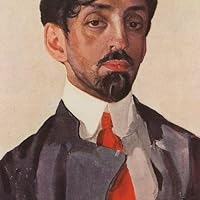
Mikhail Alekseevich Kuzmin (Russian: Михаил Алексеевич Кузмин) was a Russian poet, musician and novelist, a prominent contributor to the Silver Age of Russian Poetry.
Василий Казин
Василий Казин
Author · 1 book
Васи́лий Васи́льевич Ка́зин (25 июля (6 августа) 1898 года, Москва — 1 октября 1981) — русский советский поэт, редактор.
Valery Bryusov
Valery Bryusov
Author · 9 books
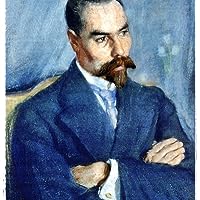
Valery Yakovlevich Bryusov (Russian: Валерий Яковлевич Брюсов; December 13, 1873 – October 9, 1924) was a Russian poet, prose writer, dramatist, translator, critic and historian. He was one of the principal members of the Russian Symbolist movement.
Вильгельм Зоргенфрей
Author · 1 book
Вильге́льм Алекса́ндрович Зоргенфре́й (30 августа (11 сентября) 1882 — 21 сентября 1938) — русский поэт Серебряного века, переводчик.
Павел Антокольский
Павел Антокольский
Author · 1 book
Па́вел Григо́рьевич Антоко́льский (19 июня (1 июля) 1896, Санкт-Петербург — 9 октября 1978, Москва) — русский советский поэт, переводчик и драматург.
Igor Severyanin
Igor Severyanin
Author · 2 books
Igor Severyanin (Russian: И́горь Северя́нин; pen name, real name Igor Vasilyevich Lotaryov: И́горь Васи́льевич Лотарёв; May 16, 1887 – December 20, 1941) was a Russian poet who presided over the circle of the so-called Ego-Futurists.
Samuil Marshak
Samuil Marshak
Author · 13 books
Samuil Yakovlevich Marshak (Russian: Самуил Маршак; 3 November 1887 – 4 June 1964) was a Russian and Soviet writer, translator and children's poet. Among his Russian translations are William Shakespeare's sonnets, poems by William Blake and Robert Burns, and Rudyard Kipling's stories. Maxim Gorky proclaimed Marshak to be "the founder of Russia's (Soviet) children's literature."
Николай Тихонов
Николай Тихонов
Author · 1 book

Librarian Note: There is more than one author in the Goodreads database with this name. This is soviet writer Nikolai Tikhonov. Николай Семёнович Тихонов (4 декабря 1896 — 8 февраля 1979) — русский советский поэт. Герой Социалистического Труда (1966). Лауреат Международной Ленинской «За укрепление мира между народами» (1957), Ленинской (1970) и трех Сталинских премий первой степени (1942, 1949, 1952).

Nikolay Gumilyov
Nikolay Gumilyov
Author · 6 books

Николай Гумилев An influential Russian poet, literary critic, traveler, and military officer. He was the cofounder of the Acmeist movement. Nikolay Gumilev was arrested and executed by the Cheka, the secret Soviet police force, in 1921.

Vladimir Mayakovsky
Vladimir Mayakovsky
Author · 50 books

Vladimir Mayakovsky (Владимир Владимирович Маяковский) was born the last of three children in Baghdati, Russian Empire (now in Georgia) where his father worked as a forest ranger. His father was of Ukrainian Cossack descent and his mother was of Ukrainian descent. Although Mayakovsky spoke Georgian at school and with friends, his family spoke primarily Russian at home. At the age of 14 Mayakovsky took part in socialist demonstrations at the town of Kutaisi, where he attended the local grammar school. After the sudden and premature death of his father in 1906, the family—Mayakovsky, his mother, and his two sisters—moved to Moscow, where he attended School No. 5. In Moscow, Mayakovsky developed a passion for Marxist literature and took part in numerous activities of the Russian Social Democratic Labour Party; he was to later become an RSDLP (Bolshevik) member. In 1908, he was dismissed from the grammar school because his mother was no longer able to afford the tuition fees. Around this time, Mayakovsky was imprisoned on three occasions for subversive political activities but, being underage, he avoided transportation. During a period of solitary confinement in Butyrka prison in 1909, he began to write poetry, but his poems were confiscated. On his release from prison, he continued working within the socialist movement, and in 1911 he joined the Moscow Art School where he became acquainted with members of the Russian Futurist movement. He became a leading spokesman for the group Gileas (Гилея), and a close friend of David Burlyuk, whom he saw as his mentor. The 1912 Futurist publication A Slap in the Face of Public Taste (Пощёчина общественному вкусу) contained Mayakovsky's first published poems: Night (Ночь) and Morning (Утро). Because of their political activities, Burlyuk and Mayakovsky were expelled from the Moscow Art School in 1914. His work continued in the Futurist vein until 1914. His artistic development then shifted increasingly in the direction of narrative and it was this work, published during the period immediately preceding the Russian Revolution, which was to establish his reputation as a poet in Russia and abroad. Mayakovsky was rejected as a volunteer at the beginning of WWI, and during 1915-1917 worked at the Petrograd Military Automobile School as a draftsman. At the onset of the Russian Revolution, Mayakovsky was in Smolny, Petrograd. There he witnessed the October Revolution. After moving back to Moscow, Mayakovsky worked for the Russian State Telegraph Agency (ROSTA) creating—both graphic and text—satirical Agitprop posters. In 1919, he published his first collection of poems Collected Works 1909-1919 (Все сочиненное Владимиром Маяковским). In the cultural climate of the early Soviet Union, his popularity grew rapidly. As one of the few Soviet writers who were allowed to travel freely, his voyages to Latvia, Britain, Germany, the United States, Mexico and Cuba influenced works like My Discovery of America (Мое открытие Америки, 1925). He also travelled extensively throughout the Soviet Union. The relevance of Mayakovsky's influence cannot be limited to Soviet poetry. While for years he was considered the Soviet poet par excellence, he also changed the perceptions of poetry in wider 20th century culture. His political activism as a propagandistic agitator was rarely understood and often looked upon unfavourably by contemporaries, even close friends like Boris Pasternak. Near the end of the 1920s, Mayakovsky became increasingly disillusioned with the course the Soviet Union was taking under Joseph Stalin: his satirical plays The Bedbug (Клоп, 1929) and The Bathhouse (Баня, 1930), which deal with the Soviet philistinism and bureaucracy, illustrate this development. On the evening of April 14, 1930, Mayakovsky shot himself.

Osip Mandelstam
Osip Mandelstam
Author · 28 books
Osip Emilyevich Mandelstam (also spelled Osip Mandelshtam, Ossip Mandelstamm) (Russian: Осип Эмильевич Мандельштам) was a Russian poet and essayist who lived in Russia during and after its revolution and the rise of the Soviet Union. He was one of the foremost members of the Acmeist school of poets. He was arrested by Joseph Stalin's government during the repression of the 1930s and sent into internal exile with his wife Nadezhda. Given a reprieve of sorts, they moved to Voronezh in southwestern Russia. In 1938 Mandelstam was arrested again and sentenced to a camp in Siberia. He died that year at a transit camp.
548 Market St PMB 65688, San Francisco California 94104-5401 USA
© 2026 Paratext Inc. All rights reserved