Margins




548 Market St PMB 65688, San Francisco California 94104-5401 USA
© 2026 Paratext Inc. All rights reserved
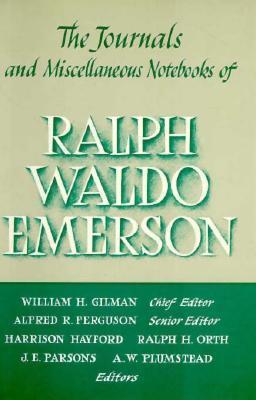
Emerson's journals of 1847-1848 deal primarily with his second visit to Europe, occasioned by a British lecture tour that began at Manchester and Liverpool in November of 1847, took him to Scotland in the following February, and concluded in London during June after he had spent a month as a sightseer in Paris. The journals of these years, along with associated notebooks and letters, recorded the materials for lectures that Emerson composed while abroad, for additional lectures on England and the English that he wrote shortly after his return to Concord, and ultimately, for English Traits, the book growing out of his travels that he was to publish in 1856. Travel abroad provided a needed change for Emerson in 1847 as it had done on previous occasions, though with his usual discounting of the values of mere change of place he was slow in deciding to make the trip. Discouragement with the prevailing political climate at the time of the Mexican War and the old uncertainty about his own proper role in the "Lilliput" of American society were much on his mind as the year began. In March he thought of withdrawing temporarily "from all domestic & accustomed relations"—preferably to enjoy "an absolute leisure with books," though he also recognized the want of some "stated task" to stimulate his flagging vitality; in July he finally agreed to accept a long-standing invitation to visit England as a lecturer. As matters turned out, a full schedule of lectures and travel, unexpectedly heavy social engagements along the way, and proliferating correspondence left Emerson little time for reading but did not prevent him from filling his journals with sharp observations on the passing scene. As Emerson moved about England his acknowledged admiration for the English rose every day, though he was careful to distinguish their less admirable qualities. The Englishman's "stuff or substance seems to be the best of the world," he told Margaret Fuller. "I forgive him all his pride. My respect is the more generous that I have no sympathy with him, only an admiration." He took a wry amusement from the new experience of being lionized by his hosts. In his journals are lively portraits of those who entertained him, such as Richard Monckton Milnes, his particular sponsor in the society of London and Paris, and sketches of literary notables including Rogers, Dc Quincey, Wilson, Tennyson, and Dickens. He renewed acquaintance with Wordsworth and recorded in detail the pronouncements of his old friend Carlyle. Settling in London in March and April of 1848, he divided his time between work at his desk, visits to nearby points of interest, and the mixed pleasures of a busy social life. In May he went to France just as an abortive uprising against the new provisional government was brewing. Four weeks in Paris served to correct his old "prejudice" against the French, who on closer acquaintance rose in his estimation just as the English had done. In June he returned to London to lecture, and in July, after visiting Stonehenge with Carlyle, he sailed home. As the journals reveal, he reached Concord refreshed and renewed by the change of scene, the new acquaintance, and the generous reception that the trip had brought him, and with an enlarged perspective that revealed to him once again the "proper glory" of his own country.