Margins
Margins
Sign in
Margins
Subscribe to our newsletter
548 Market St PMB 65688, San Francisco California 94104-5401 USA
hello@margins.app
·
+1 (650) 223-5283
Privacy Policy
·
Terms of Use
© 2026 Paratext Inc. All rights reserved
📚 2026
📚
2026
The Devil to Pay in the Backlands
1956
João Guimarães Rosa
Lively reminiscences of bandit warfare in the sertao, the still primitive Brazilian back country, told by a wise, retired outlaw chief. ~Worldcat.org Grande Sertão: Veredas (Portuguese for "Great Backlands: Tracks"; English translation: The Devil to Pay in the Backlands) is a novel published in 1956 by the Brazilian writer João Guimarães Rosa. The original title refers to the veredas - small paths through wetlands usually located at higher altitudes characterized by the presence of grasses and buritizais, groups of the buriti palm-tree (Mauritia flexuosa), that criss-cross the Sertão region in northern Minas Gerais, Southeast Brazil - as a labyrinthine net where an outsider can easily get lost, and where there is no single way to a certain place, since all paths interconnect in such a way that any road can lead anywhere. The English title refers to a later episode in the book involving an attempt to make a deal with the Devil. Most of the book's spirit is however lost in translation, as the Portuguese original is written in a register that is both archaic and colloquial, making it a very difficult book to translate. The combination of its size, linguistic oddness and polemic themes caused a shock when it was published, but now it is considered one of the most important novels of South American literature. In a 2002 poll of 100 noted writers conducted by Norwegian Book Clubs, the book was named among the top 100 books of all time.
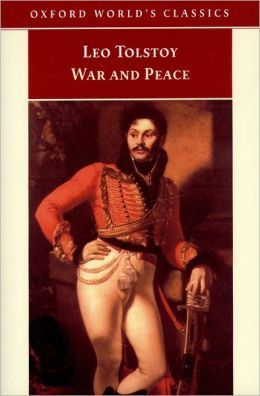
War and Peace
1867
Leo Tolstoy
In Russia's struggle with Napoleon, Tolstoy saw a tragedy that involved all mankind. War and Peace broadly focuses on Napoleon’s invasion of Russia in 1812 and follows three of the most well-known characters in literature: Pierre Bezukhov, the illegitimate son of a count who is fighting for his inheritance and yearning for spiritual fulfillment; Prince Andrei Bolkonsky, who leaves his family behind to fight in the war against Napoleon; and Natasha Rostov, the beautiful young daughter of a nobleman who intrigues both men. As Napoleon’s army invades, Tolstoy brilliantly follows characters from diverse backgrounds—peasants and nobility, civilians and soldiers—as they struggle with the problems unique to their era, their history, and their culture. And as the novel progresses, these characters transcend their specificity, becoming some of the most moving—and human—figures in world literature. Tolstoy gave his personal approval to this translation, published here in a new single volume edition, which includes an introduction by Henry Gifford, and Tolstoy's important essay `Some Words about War and Peace'.
Die, My Love
2012
Ariana Harwicz
In a forgotten patch of French countryside, a woman is battling her demons embracing exclusion yet wanting to belong, craving freedom whilst feeling trapped, yearning for family life but at the same time wanting to burn the entire house down. Given surprising leeway by her family for her increasingly erratic behaviour, she nevertheless feels ever more stifled and repressed. Motherhood, womanhood, the banality of love, the terrors of desire, the inexplicable brutality of another person carrying your heart forever Die, My Love faces all this with a raw intensity. It's not a question of if a breaking point will be reached, but rather when and how violent a form will it take?