Margins




548 Market St PMB 65688, San Francisco California 94104-5401 USA
© 2026 Paratext Inc. All rights reserved

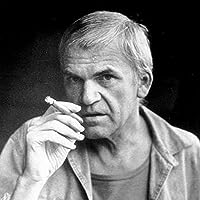
Two newly translated works from one of the greatest literary writers and thinkers of the modern age, available together in English for the first time. Translating a work from its original language can be complicated; it’s a complex art that can easily mar and twist the intent and meaning of a writer’s words. Precise translations were of particular importance to Milan Kundera, who did not live to see all his books published in his native Czech language. Words, for Kundera, were the object of constant scrutiny. This fascinating volume includes two Kundera works from the 1980s, originally written for the now defunct French magazine Le Debat, which have never been available in in English. In “89 Words,” Kundera wryly recounts the many pitfalls in reading his own poorly translated works. When a friend of Kundera’s asked him about the words he considered the most—the ones he fretted over and loved—Kundera created a personal dictionary—his “89 Words.” This discerning essay, steeped in his signature barbed cheekiness, showcases his casually gutting philosophical reflections on what it means to be a writer in translation—the exile of life and art in another language. In the second work, “ A Disappearing Poem,” Kundera writes with a wistfulness and despair for his ever-more-distant home, offering an intimate look at the specificity of his native the richness of a heritage born in a “small nation” but whose significance is universal. Here, like in A Kidnapped West, we find the double condemnation of “Soviet civilization,” which had suffocated and persecuted Czech culture, and of Western Europe, which refused to neither acknowledge Kundera’s culture or understand it. Prefaced by lauded French historian Pierre Nora and translated from the French by award-winning Matt Reeck, these two texts return us to Kundera’s much-missed living presence. Subtle, alive, and full of wit and irony, 89 Words followed by A Poem that Disappears is an homage to a literary legend and a reminder of just how prescient his words and insights are today.