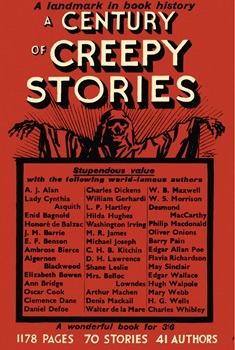
Contents 15 • The Snow • (1929) • short story by Hugh Walpole 25 • The Tarn • (1923) • short story by Hugh Walpole 39 • A Little Ghost • (1922) • short story by Hugh Walpole 53 • Mrs. Lunt • (1926) • short story by Hugh Walpole [as by Sir Hugh Walpole] 69 • The Islington Mystery • (1927) • short story by Arthur Machen 81 • The Cosy Room • (1929) • short story by Arthur Machen 87 • Opening the Door • (1931) • short story by Arthur Machen 101 • Munitions of War • (1926) • short story by Arthur Machen 107 • The Red Turret • (1931) • short story by Christine Campbell Thomson [as by Flavia Richardson] 119 • When Glister Walked • (1928) • short story by Oscar Cook (variant of The Sacred Jars 1927) 137 • Si Urag of the Tail • (1923) • short story by Oscar Cook 153 • The Great White Fear • (1925) • short story by Oscar Cook 169 • Boomerang • (1931) • short story by Oscar Cook 181 • The Apple Tree • (1931) • short story by Elizabeth Bowen 190 • Telling • (1927) • short story by Elizabeth Bowen 201 • The Cat Jumps • (1929) • short story by Elizabeth Bowen 213 • Crewe • (1929) • novelette by Walter de la Mare 237 • A Recluse • (1926) • novelette by Walter de la Mare 269 • Two Trifles • short story by Oliver Onions 281 • The Smile of Karen • (1927) • novelette by Oliver Onions 317 • "John Gladwin Says ..." • (1928) • short story by Oliver Onions 331 • The Hanging of Alfred Wadham • (1928) • short story by E. F. Benson 347 • As in a Glass Dimly • (1931) • short story by Shane Leslie 359 • The Hospital Nurse • (1928) • short story by Shane Leslie 369 • The Lord-in-Waiting • (1929) • short story by Shane Leslie 389 • A Considerable Murder • (1928) • short story by Barry Pain 401 • The Lovely Voice • (1927) • novelette by Cynthia Asquith 419 • The Playfellow • (1929) • novelette by Cynthia Asquith 443 • "God Grante That She Lye Stille" • (1931) • novelette by Cynthia Asquith 475 • The Corner Shop • (1926) • short story by Cynthia Asquith 493 • Shall We Join the Ladies? • (1928) • short fiction by J. M. Barrie 513 • The Rocking-Horse Winner • (1926) • short story by D. H. Lawrence 529 • The Lovely Lady • (1927) • novelette by D. H. Lawrence 551 • Rats • (1929) • short story by M. R. James 559 • The Killing-Bottle • (1927) • novelette by L. P. Hartley 597 • The Travelling Grave • (1929) • novelette by L. P. Hartley 619 • A Visitor from Down Under • (1926) • short story by L. P. Hartley 637 • The Cotillon • (1931) • short story by L. P. Hartley 659 • The Prince • (1928) • short story by W. B. Maxwell 665 • The Last Man In • (1910) • short story by W. B. Maxwell 685 • Dispossession • (1929) • short story by C. H. B. Kitchin 703 • Beauty and the Beast • (1931) • novelette by C. H. B. Kitchin 729 • Those Whom the Gods Love • (1929) • short story by Hilda Hughes 737 • The Birthright • (1931) • short story by Hilda Hughes 749 • The Haunted Man and the Ghost's Bargain • [Christmas Books] • (1848) • novella by Charles Dickens 837 • The Villa Désirée • (1921) • short story by May Sinclair 851 • The Duenna • (1926) • short story by Marie Belloc Lowndes [as by Mrs. Belloc Lowndes] 864 • The Unbolted Door • (1931) • short story by Marie Belloc Lowndes [as by Mrs. Belloc Lowndes] 873 • The Apparition of Mrs. Veal • (1919) • short story by Daniel Defoe (variant of A True Relation of the Apparition of One Mrs. Veal the Next Day After Her Death to One Mrs. Bargrave at Canterbury the 8th of September 1705 1706) 881 • The Lost Tragedy • (1926) • short story by Denis Mackail 899 • Spinster's Rest • (1926) • novelette by Clemence Dane 925 • Circumstantial Evidence • (1928) • short story by Edgar Wallace 941 • A Descent Into the Maelström? • (1841) • short story by Edgar Allan Poe 957 • The Fall of the House of Usher • (1839) • novelette by Edgar Allan Poe 975 • The Black Cat • (1843) • short story by Edgar Allan Poe 987 • Twelve O'Clock • (1926) • short story by Charles Whibley 995 • The Amorous Ghost • (1926) • short story by Enid Bagnold 1003 • Pargiton and Harby • (1926) • short story by Desmond MacCarthy 1019 • The Country of the Blind • (1904) • novelette by H. G. Wells 1045 • The Spectre Bridegroom • (1819) • short story by Washington Irving 1061 • Mr. Tallent's Ghost • (1926) • short story by Mary Webb 1073 • The Buick Saloon • (1930) • short story by Ann Bridge 1091 • The Horns of the Bull • (1931) • short story by W. S. Morrison 1107 • The Man Who Came Back • (1931) • short story by William Gerhardi 1113 • Our Feathered Friends • (1931) • short story by Philip MacDonald 1125 • The Stranger • (1909) • short story by Ambrose Bierce 1133 • The Yellow Cat • (1924) • short story by Michael Joseph 1145 • My Adventure in Norfolk • (1924) • short story by A. J. Alan 1155 • The Mysterious Mansion • non-genre • short story by Honoré de Balzac? (trans. of La Grande Bretèche 1832) 1165 • The Stranger • (1927) • short story by Algernon Blackwood
Authors

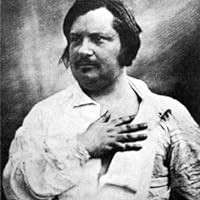
Honoré de Balzac was a nineteenth-century French novelist and playwright. His magnum opus was a sequence of almost 100 novels and plays collectively entitled La Comédie humaine, which presents a panorama of French life in the years after the fall of Napoléon Bonaparte in 1815. Due to his keen observation of fine detail and unfiltered representation of society, Balzac is regarded as one of the founders of realism in European literature. He is renowned for his multi-faceted characters; even his lesser characters are complex, morally ambiguous and fully human. Inanimate objects are imbued with character as well; the city of Paris, a backdrop for much of his writing, takes on many human qualities. His writing influenced many famous authors, including the novelists Marcel Proust, Émile Zola, Charles Dickens, Gustave Flaubert, Henry James and Jack Kerouac, as well as important philosophers such as Friedrich Engels. Many of Balzac's works have been made into films, and they continue to inspire other writers. An enthusiastic reader and independent thinker as a child, Balzac had trouble adapting himself to the teaching style of his grammar school. His willful nature caused trouble throughout his life, and frustrated his ambitions to succeed in the world of business. When he finished school, Balzac was apprenticed as a legal clerk, but he turned his back on law after wearying of its inhumanity and banal routine. Before and during his career as a writer, he attempted to be a publisher, printer, businessman, critic, and politician. He failed in all of these efforts. La Comédie Humaine reflects his real-life difficulties, and includes scenes from his own experience. Balzac suffered from health problems throughout his life, possibly due to his intense writing schedule. His relationship with his family was often strained by financial and personal drama, and he lost more than one friend over critical reviews. In 1850, he married Ewelina Hańska, his longtime paramour; he passed away five months later.
William Babington Maxwell (1866–1938) was a British novelist. Born on June 4, 1866, he was the third surviving child and second eldest son of novelist Mary Elizabeth Braddon. Though nearly 50 years old at the outbreak of the First World War, he was accepted as a lieutenant in the Royal Fusiliers and served in France until 1917. He wrote The Last Man In, a drama, produced 14 March 1910, at the Royalty Theatre, Glasgow, by the Scottish Repertory Company; and, with George Paston (i. e., Emily Morse Symonds), a farce, The Naked Truth, which was first played at Wyndham's Theatre, London, in April, 1910, and in which Charles Hawtrey played Bernard Darrell.

William Alexander Gerhardie (21 November 1895 – 15 July 1977)[1] was a British (Anglo-Russian) novelist and playwright. William Gerhardie by Norman Ivor Lancashire (1927-2004). Photograph by Stella Harpley Gerhardie (or Gerhardi: he added the 'e' in later years as an affectation) was one of the most critically acclaimed English novelists of the 1920s (Evelyn Waugh told him 'I have talent, but you have genius'). H.G. Wells also championed his work. His first novel, Futility, was written while he was at Worcester College, Oxford and drew on his experiences in Russia fighting (or attempting to fight) the Bolsheviks, along with his childhood experiences visiting pre-revolutionary Russia. Some say that it was the first work in English to fully explore the theme of 'waiting' later made famous by Samuel Beckett in Waiting for Godot, but it is probably more apt to recognize a common comic nihilism between those two figures. His next novel, The Polyglots, is probably his masterpiece (although some argue for Doom). Again it deals with Russia (Gerhardie was strongly influenced by the tragi-comic style of Russian writers such as Chekhov about whom he wrote a study while in College). He collaborated with Hugh Kingsmill on the biography The Casanova Fable, his friendship with Kingsmill being both a source of conflict over women and a great intellectual stimulus. After World War II Gerhardie's star waned, and he became unfashionable. Although he continued to write, he published no new work after 1939. After a period of poverty-stricken oblivion, he lived to see two 'definitive collected works' published by Macdonald (in 1947-49 and then revised again in 1970-74). An idiosyncratic study of world history between 1890 and 1940 ("God's Fifth Column") was discovered among his papers and published posthumously. More recently, both Prion and New Directions Press have been reissuing his works.

Clemence Dane was the pseudonym of Winifred Ashton. Clemence Dane (name for the London church, St Clement Danes) was the pseudonym of Winifred Ashton, an English novelist and playwright (1888-1965). Between World Wars I and II, she was arguably Britain’s most successful all-round writer, with a unique place in literary, stage and cinematic history. Dane won an Oscar for her screenplay “Vacation from Marriage,”. School teacher, novelist, playwright and magazine editor, Dane wrote at least 30 plays and 16 novels. One series she was famous for was The Babyons, by Clemence Dane. Four long stories strung together by a supernatural thread and chronicling the family history of the Babyons over a period of about 200 years. The ghostly thread is introduced in the first story, “Third Personal Singular,” a tale of 1750. James Babyon, engaged to marry his cousin Hariot, becomes suddenly averse from her and breaks the engagement within a month of the date set for the wedding. In a passionate scene in which the probable madness of Hariot is subtly suggested she pleads with him and, finding him adamant, cries that they are already married in soul and are inseparable. That his cousin actually is subject to fits of madness he does not learn until he is wedded to her companion Menella. He and Menella go to Europe to find everywhere that people have a curious fear of them; a fear which spreads to their servants and, when he learns that Hariot committed suicide, to Babyon himself. He regards himself directly responsible for her death, becomes obsessed with the belief that she haunts him, and the tragedy ends with his madness. The second story is dated 1775, the third 1820-1873, and the last 1902-1906. These stories are lighter than the first stark tragedy, and they end with peace at last given to the Babyons. Through them all runs the influence of Hariot, that strange, wildly passionate woman of 1750. Fine, dramatic work of large conception.—The Australian Woman's Mirror 29 May 1928.

Blackwood was born in Shooter's Hill (today part of south-east London, but then part of northwest Kent) and educated at Wellington College. His father was a Post Office administrator who, according to Peter Penzoldt, "though not devoid of genuine good-heartedness, had appallingly narrow religious ideas." Blackwood had a varied career, farming in Canada, operating a hotel, as a newspaper reporter in New York City, and, throughout his adult life, an occasional essayist for various periodicals. In his late thirties, he moved back to England and started to write stories of the supernatural. He was very successful, writing at least ten original collections of short stories and eventually appearing on both radio and television to tell them. He also wrote fourteen novels, several children's books, and a number of plays, most of which were produced but not published. He was an avid lover of nature and the outdoors, and many of his stories reflect this. Lovecraft wrote of Blackwood: "He is the one absolute and unquestioned master of weird atmosphere." His powerful story "The Willows," which effectively describes another dimension impinging upon our own, was reckoned by Lovecraft to be not only "foremost of all" Blackwood's tales but the best "weird tale" of all time. Among his thirty-odd books, Blackwood wrote a series of stories and short novels published as John Silence, Physician Extraordinary (1908), which featured a "psychic detective" who combined the skills of a Sherlock Holmes and a psychic medium. Blackwood also wrote light fantasy and juvenile books. The son of a preacher, Blackwood had a life-long interest in the supernatural, the occult, and spiritualism, and firmly believed that humans possess latent psychic powers. The autobiography Episodes Before Thirty (1923) tells of his lean years as a journalist in New York. In the late 1940s, Blackwood had a television program on the BBC on which he read . . . ghost stories!

Edward Frederic "E. F." Benson was an English novelist, biographer, memoirist, archaeologist and short story writer. E. F. Benson was the younger brother of A.C. Benson, who wrote the words to "Land of Hope and Glory", Robert Hugh Benson, author of several novels and Roman Catholic apologetic works, and Margaret Benson, an author and amateur Egyptologist. Benson died during 1940 of throat cancer at the University College Hospital, London. He is buried in the cemetery at Rye, East Sussex. Last paragraph from Wikipedia

British writer of novels and plays, best known for National Velvet and The Chalk Garden. For more information, please see http://en.wikipedia.org/wiki/Enid\_Bag...

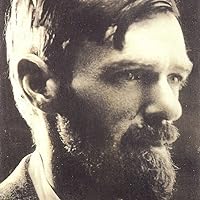
David Herbert Richards Lawrence was an English writer of the 20th century, whose prolific and diverse output included novels, short stories, poems, plays, essays, travel books, paintings, translations, literary criticism, and personal letters. His collected works represent an extended reflection upon the dehumanizing effects of modernity and industrialisation. In them, Lawrence confronts issues relating to emotional health and vitality, spontaneity, human sexuality and instinct. Lawrence's opinions earned him many enemies and he endured official persecution, censorship, and misrepresentation of his creative work throughout the second half of his life, much of which he spent in a voluntary exile he called his "savage pilgrimage." At the time of his death, his public reputation was that of a pornographer who had wasted his considerable talents. E. M. Forster, in an obituary notice, challenged this widely held view, describing him as "the greatest imaginative novelist of our generation." Later, the influential Cambridge critic F. R. Leavis championed both his artistic integrity and his moral seriousness, placing much of Lawrence's fiction within the canonical "great tradition" of the English novel. He is now generally valued as a visionary thinker and a significant representative of modernism in English literature. http://en.wikipedia.org/wiki/D.H.\_Law...
Leslie Harrison Lambert, known as A.J. Alan, was an English magician, intelligence officer, short story writer and radio broadcaster. Lambert contacted a member of the then British Broadcasting Company to suggest he might tell one of his own short stories on the radio. This was accepted and so, as A. J. Alan, he broadcast My Adventure in Jermyn Street, on 31 January 1924. Following his immediate success, he quickly became one of the most popular broadcasting personalities of the time. He went to considerable trouble over writing each story, taking a couple of months over each one, and only broadcasting about five times a year. He carefully constructed an apparently extemporary, conversational, style making his stories seem like anecdotes concerning strange events that had happened to him. The endings were whimsical and unexpected. Contrary to the common belief that his stories were told "off the cuff", Lambert took immense care over his broadcasts which were, of course, live. He used cards rather than papers to avoid rustling noises and kept a candle lit in case the lights failed.[1][8] He always wore a dinner jacket and Stuart Hibberd described him as "a neat figure in perfectly cut evening dress, with eye glass and a slim black brief case". It was known that "A. J. Alan" was not his true name but only once, in 1933, was his identity guessed when an old school friend, by then living in Jamaica, recognised his voice. Many of his stories were subsequently printed in newspapers and magazines and were included in anthologies of short stories. Three collections of his stories have been published. From 1937 his health was not good so he reduced his radio work and made his last broadcast on 21 March 1940. [https://en.m.wikipedia.org/wiki/A.\_J....]

Sir Shane Leslie, Bt., KCSG A prolific figure in Irish literature and a man of letters, Leslie achieved success on both sides of the Atlantic. Christened "John Randolph" in honour of his father John and his maternal uncle by marriage and godfather Lord Randolph Spencer Churchill (who had married his maternal aunt Jennie Jerome). He was a graduate of Eton and received his degree from King's College, University of Cambridge. An Irish Nationalist and supporter of Home Rule for Ireland, he changed his name to Shane - an Irish equivalent of John. A convert to Roman Catholicism, many of his literary works reflect his Catholic faith. In 1910 he narrowly lost election to Parliament as representative for Derry City. His own political ambitions were not fulfilled, but his family was politically well-connected as his maternal first cousin was Sir Winston Leonard Spencer Churchill. He wrote novels, poetry, biographies, studies of Celtic legend and folklore, apologetics, histories, and several volumes of memoirs. In 1916, he became editor of the prestigious 'Dublin Review.' A frequent visitor and lecturer in the United States (he was half-American, via his mother), he was the earliest literary mentor of F. Scott Fitzgerald who later dedicated his novel 'The Beautiful and Damned' (1922) to him. During World War One, before the entry of the United States in the war, Leslie volunteered for service with the American Ambulance Corps and was wounded. He was later engaged by the British government to visit the United States (1916 to 1917) and assist the British Ambassador, Sir Cecil Arthur Spring-Rice, in gauging the attitudes of Irish-Americans toward the Great War and forming an alliance with Great Britain. As an Anglo-Irish aristocrat who was also a Catholic and half-American, he was well-suited for the role in helping to sway the majority of Catholic Irish-American opinion toward support of Britain in the war. During World War Two, he volunteered for service in the British Army's Home Guard and was duly commissioned. He was stationed in the West End of London where he served as a captain during the Blitz. Upon his father's death in 1944, he became the third Baronet (Leslie of Glaslough). He promoted the teaching of the Irish language in schools, was a strong advocate for reforestation in Ireland, and encouraged conservation. Proud of his American heritage, in 1947 he became a member of the Sons of the American Revolution. He was awarded an honorary degree of Doctor of Laws by the University of Notre Dame, was an Associate Member of the Irish Academy of Letters, invested a Knight Commander of the Order of Saint Gregory the Great (KCSG) in 1960, and was appointed Privy Chamberlain of the Sword & Cape to Pope Pius XI. Proud of his half-American ancestry, as well as his English and Anglo-Irish heritage, he was a member of the Sons of the American Revolution. Leslie and his work have been the focus of several biographical and critical studies. His papers are in collections held by Eton College, University of Cambridge, Georgetown University, Boston College, University of Notre Dame, the National Library of Ireland, and the Public Record Office of Northern Ireland. - Biographical sketch provided courtesy of its researcher.

Walter John de la Mare was an English poet, short story writer and novelist, probably best remembered for his works for children and The Listeners. He was descended from a family of French Huguenots, and was educated at St Paul's School. His first book, Songs of Childhood, was published under the name Walter Ramal. He worked in the statistics department of the London office of Standard Oil for eighteen years while struggling to bring up a family, but nevertheless found enough time to write, and, in 1908, through the efforts of Sir Henry Newbolt he received a Civil List pension which enabled him to concentrate on writing; One of de la Mare's special interests was the imagination, and this contributed both to the popularity of his children's writing and to his other work occasionally being taken less seriously than it deserved. De la Mare also wrote some subtle psychological horror stories; "Seaton's Aunt" and "Out of the Deep" are noteworthy examples. His 1921 novel, Memoirs of a Midget, won the James Tait Black Memorial Prize for fiction.

C.H.B. (Clifford Henry Benn) Kitchin was born in Yorkshire in 1895. He attended Exeter College, Oxford, and published his first book, a collection of poems, in 1919. His first novel, Streamers Waving, appeared in 1925, and he scored his first success with the mystery novel Death of My Aunt (1929), which has been frequently reprinted and translated into a number of foreign languages. Kitchin was a man of many interests and talents, being called to the bar in 1924 and later amassing a small fortune in the stock market. He was also, at various times, a farmer and a schoolmaster, and his many talents included playing the piano, chess, and bridge. He was also an avid collector of antiques and objets d'art. Kitchin was a lifelong friend of L. P. Hartley, with whose works Kitchin’s were often compared, and was also a friend and mentor to Francis King, who later acted as Kitchin’s literary executor. In his introduction to the Valancourt edition of Kitchin’s The Book of Life, King recalls meeting Kitchin after the two wrote fan letters to one another in 1958 that crossed in the mail: King had written in praise of Ten Pollitt Place, while Kitchin’s letter had expressed admiration for the younger novelist’s The Man on the Rock (1957). King wrote, ‘[B]y the time that I met him, his fate was that of many elderly, once famous writers in England. Instead of lead reviews, he now got two or three paragraphs at the bottom of a page. Increasingly critics would apply the dread word “veteran” to him, much to his annoyance.’ This frustration is echoed in his novel Ten Pollitt Place, where Kitchin portrays himself in the character of the aging novelist Justin Bray. Kitchin, who was gay, lived with his partner Clive Preen, an accountant, from 1930 until Preen’s death in 1944. C.H.B. Kitchin died in 1967.

Sir (Charles Otto) Desmond MacCarthy (1877–1952) was an English literary critic. MacCarthy was born in Plymouth, Devon, and educated at Eton College and Trinity College, Cambridge. At Cambridge he got to know Lytton Strachey, Bertrand Russell and G. E. Moore and though often thought to be a member of the "Bloomsbury Group" he in fact had a wider circle of friends including Logan Pearsall Smith. He became a journalist in 1903 with moderate success and during World War I spent some time in Naval Intelligence. He joined the New Statesman as drama critic in 1917 and in 1920 became its literary editor. He wrote a weekly column under the pen-name "The Affable Hawk". During this time he recruited Cyril Connolly to the paper. By 1928 he was losing interest in the New Statesman, and became the first editor of Life and Letters. Other periodicals he was associated with were New Quarterly and Eye Witness. MacCarthy became a literary critic for the Sunday Times, and several volumes of his collected criticism were published. He was author of the short ghost story "Pargiton and Harby", reprinted in the Fourth Fontana Book of Great Ghost Stories. MacCarthy married Mollie, the daughter of Francis Warre Warre-Cornish. She was a highly respected literary figure in her own right. Her sister Cecilia married William Wordsworth Fisher. The MacCarthys' daughter Rachel married Lord David Cecil; their son is the actor Jonathan Cecil. He is buried at the Parish of the Ascension Burial Ground in Cambridge.

Herbert George Wells was born to a working class family in Kent, England. Young Wells received a spotty education, interrupted by several illnesses and family difficulties, and became a draper's apprentice as a teenager. The headmaster of Midhurst Grammar School, where he had spent a year, arranged for him to return as an "usher," or student teacher. Wells earned a government scholarship in 1884, to study biology under Thomas Henry Huxley at the Normal School of Science. Wells earned his bachelor of science and doctor of science degrees at the University of London. After marrying his cousin, Isabel, Wells began to supplement his teaching salary with short stories and freelance articles, then books, including The Time Machine (1895), The Island of Dr. Moreau (1896), The Invisible Man (1897), and The War of the Worlds (1898). Wells created a mild scandal when he divorced his cousin to marry one of his best students, Amy Catherine Robbins. Although his second marriage was lasting and produced two sons, Wells was an unabashed advocate of free (as opposed to "indiscriminate") love. He continued to openly have extra-marital liaisons, most famously with Margaret Sanger, and a ten-year relationship with the author Rebecca West, who had one of his two out-of-wedlock children. A one-time member of the Fabian Society, Wells sought active change. His 100 books included many novels, as well as nonfiction, such as A Modern Utopia (1905), The Outline of History (1920), A Short History of the World (1922), The Shape of Things to Come (1933), and The Work, Wealth and Happiness of Mankind (1932). One of his booklets was Crux Ansata, An Indictment of the Roman Catholic Church. Although Wells toyed briefly with the idea of a "divine will" in his book, God the Invisible King (1917), it was a temporary aberration. Wells used his international fame to promote his favorite causes, including the prevention of war, and was received by government officials around the world. He is best-remembered as an early writer of science fiction and futurism. He was also an outspoken socialist. Wells and Jules Verne are each sometimes referred to as "The Fathers of Science Fiction". D. 1946. More: http://philosopedia.org/index.php/H.\_... http://www.online-literature.com/well... http://www.hgwellsusa.50megs.com/ http://www.britannica.com/EBchecked/t... http://en.wikipedia.org/wiki/H.\_G.\_Wells

People remember American writer Washington Irving for the stories " Rip Van Winkle " and " The Legend of Sleepy Hollow ," contained in The Sketch Book (1820). This author, essayist, biographer and historian of the early 19th century wrote newspaper articles under the pseudonym Jonathan Oldstyle to begin his literary career at the age of nineteen years. In 1809, he published The History of New York under his most popular public persona, Diedrich Knickerbocker. Historical works of Irving include a five volume biography of George Washington (after whom he was named) as well as biographies of Oliver Goldsmith, Muhammad, and several histories, dealing with subjects, such as Christopher Columbus, the Moors, and the Alhambra, of 15th-century Spain. John Tyler, president, appointed Irving to serve as the first Spanish speaking United States minister to Spain from 1842 to 1846.

Richard Horatio Edgar Wallace (1875-1932) was a prolific British crime writer, journalist and playwright, who wrote 175 novels, 24 plays, and countless articles in newspapers and journals. Over 160 films have been made of his novels, more than any other author. In the 1920s, one of Wallace's publishers claimed that a quarter of all books read in England were written by him. He is most famous today as the co-creator of "King Kong", writing the early screenplay and story for the movie, as well as a short story "King Kong" (1933) credited to him and Draycott Dell. He was known for the J. G. Reeder detective stories, The Four Just Men, the Ringer, and for creating the Green Archer character during his lifetime.

Ambrose Gwinnett Bierce (1842-1914) was an American editorialist, journalist, short story writer, fabulist and satirist. Today, he is best known for his short story, An Occurrence at Owl Creek Bridge and his satirical lexicon, The Devil's Dictionary. The sardonic view of human nature that informed his work – along with his vehemence as a critic, with his motto "nothing matters" – earned him the nickname "Bitter Bierce." Despite his reputation as a searing critic, however, Bierce was known to encourage younger writers, including poet George Sterling and fiction writer W. C. Morrow. Bierce employed a distinctive style of writing, especially in his stories. This style often embraces an abrupt beginning, dark imagery, vague references to time, limited descriptions, the theme of war, and impossible events. Bierce disappeared in December 1913 at the age of 71. He is believed to have traveled to Mexico to gain a firsthand perspective on that country's ongoing revolution. Despite an abundance of theories, Bierce's ultimate fate remains a mystery. He wrote in one of his final letters: "Good-bye. If you hear of my being stood up against a Mexican stone wall and shot to rags, please know that I think it is a pretty good way to depart this life. It beats old age, disease, or falling down the cellar stairs. To be a Gringo in Mexico—ah, that is euthanasia!"

Marie Adelaide Elizabeth Rayner Lowndes, née Belloc (5 August 1868 – 14 November 1947), was a prolific English novelist. Active from 1898 until her death, she had a literary reputation for combining exciting incident with psychological interest. Two of her works were adapted for the screen. Born in Marylebone, London and raised in La Celle-Saint-Cloud, France, Mrs Belloc Lowndes was the only daughter of French barrister Louis Belloc and English feminist Bessie Parkes. Her younger brother was Hilaire Belloc, whom she wrote of in her last work, The Young Hilaire Belloc (published posthumously in 1956). Her paternal grandfather was the French painter Jean-Hilaire Belloc, and her maternal great-great-grandfather was Joseph Priestley. In 1896, she married Frederick Sawrey A. Lowndes (1868–1940). Her mother died in 1925, 53 years after her father. She published a biography, H.R.H. The Prince of Wales: An Account of His Career, in 1898. From then on, she published novels, reminiscences, and plays at the rate of one per year until 1946. In the memoir, I, too, Have Lived in Arcadia (1942), she told the story of her mother's life, compiled largely from old family letters and her own memories of her early life in France. A second autobiography Where love and friendship dwelt, appeared posthumously in 1948. She died 14 November 1947 at the home of her elder daughter, Countess Iddesleigh (wife of the third Earl) in Eversley Cross, Hampshire, an was interred in France, in La Celle-Saint-Cloud near Versailles, where she spent her youth. (from Wikipedia)

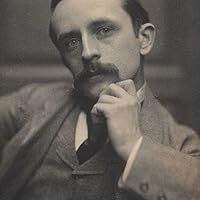
Sir James Matthew Barrie, 1st Baronet, OM was a Scottish author and dramatist, best remembered today as the creator of Peter Pan. The son of a weaver, Barrie studied at the University of Edinburgh. He took up journalism, worked for a Nottingham newspaper, and contributed to various London journals before moving to London in 1885. His early works, Auld Licht Idylls (1889) and A Window in Thrums (1889), contain fictional sketches of Scottish life and are commonly seen as representative of the Kailyard school. The publication of The Little Minister (1891) established his reputation as a novelist. During the next 10 years Barrie continued writing novels, but gradually his interest turned toward the theatre. In London he met the Llewelyn Davies boys who inspired him in writing about a baby boy who has magical adventures in Kensington Gardens (included in The Little White Bird), then to write Peter Pan, or The Boy Who Wouldn't Grow Up, a "fairy play" about this ageless boy and an ordinary girl named Wendy who have adventures in the fantasy setting of Neverland. This play quickly overshadowed his previous work and although he continued to write successfully, it became his best-known work, credited with popularising the name Wendy, which was very uncommon previously. Barrie unofficially adopted the Davies boys following the deaths of their parents. Before his death, he gave the rights to the Peter Pan works to Great Ormond Street Hospital, which continues to benefit from them.


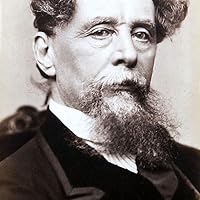
Charles John Huffam Dickens (1812-1870) was a writer and social critic who created some of the world's best-known fictional characters and is regarded as the greatest novelist of the Victorian era. His works enjoyed unprecedented popularity during his lifetime, and by the twentieth century critics and scholars had recognised him as a literary genius. His novels and short stories enjoy lasting popularity. Dickens left school to work in a factory when his father was incarcerated in a debtors' prison. Despite his lack of formal education, he edited a weekly journal for 20 years, wrote 15 novels, five novellas, hundreds of short stories and non-fiction articles, lectured and performed extensively, was an indefatigable letter writer, and campaigned vigorously for children's rights, education, and other social reforms. Dickens was regarded as the literary colossus of his age. His 1843 novella, A Christmas Carol, remains popular and continues to inspire adaptations in every artistic genre. Oliver Twist and Great Expectations are also frequently adapted, and, like many of his novels, evoke images of early Victorian London. His 1859 novel, A Tale of Two Cities, set in London and Paris, is his best-known work of historical fiction. Dickens' creative genius has been praised by fellow writers—from Leo Tolstoy to George Orwell and G. K. Chesterton—for its realism, comedy, prose style, unique characterisations, and social criticism. On the other hand, Oscar Wilde, Henry James, and Virginia Woolf complained of a lack of psychological depth, loose writing, and a vein of saccharine sentimentalism. The term Dickensian is used to describe something that is reminiscent of Dickens and his writings, such as poor social conditions or comically repulsive characters. On 8 June 1870, Dickens suffered another stroke at his home after a full day's work on Edwin Drood. He never regained consciousness, and the next day he died at Gad's Hill Place. Contrary to his wish to be buried at Rochester Cathedral "in an inexpensive, unostentatious, and strictly private manner," he was laid to rest in the Poets' Corner of Westminster Abbey. A printed epitaph circulated at the time of the funeral reads: "To the Memory of Charles Dickens (England's most popular author) who died at his residence, Higham, near Rochester, Kent, 9 June 1870, aged 58 years. He was a sympathiser with the poor, the suffering, and the oppressed; and by his death, one of England's greatest writers is lost to the world." His last words were: "On the ground", in response to his sister-in-law Georgina's request that he lie down. (from Wikipedia)

Philip MacDonald (who some give as 1896 or 1899 as his date of birth) was the grandson of the writer George MacDonald and son of the author Ronald MacDonald and the actress Constance Robertson. During World War I he served with the British cavalry in Mesopotamia, later trained horses for the army, and was a show jumper. He also raised Great Danes. After marrying the writer F. Ruth Howard, he moved to Hollywood in 1931. He was one of the most popular mystery writers of the 1930s, and between 1931 and 1963 wrote many screenplays along with a few radio and television scripts. His detective novels, particularly those featuring his series detective Anthony Gethryn, are primarily "whodunnits" with the occasional locked room mystery. His first detective novel was 'The Rasp' (1924), in which he introduced his character Anthony Gethryn. In later years MacDonald wrote television scripts for Alfred Hitchcock Presents ('Malice Domestic', 1957) and Perry Mason ('The Case of the Terrified Typist', 1958). He twice received an Edgar Award for Best Short Story: in 1953, for 'Something to Hide', and in 1956, for 'Dream No More'. Indeed many critics felt that his short story writing was superior to his novels and they did win five second prizes in the annual contests held by 'Ellery Queen's Mystery Magazine'. He also wrote under the pseudonyms Oliver Fleming, Anthony Lawless, Martin Porlock, W.J. Stuart and Warren Stuart.