Margins




548 Market St PMB 65688, San Francisco California 94104-5401 USA
© 2026 Paratext Inc. All rights reserved
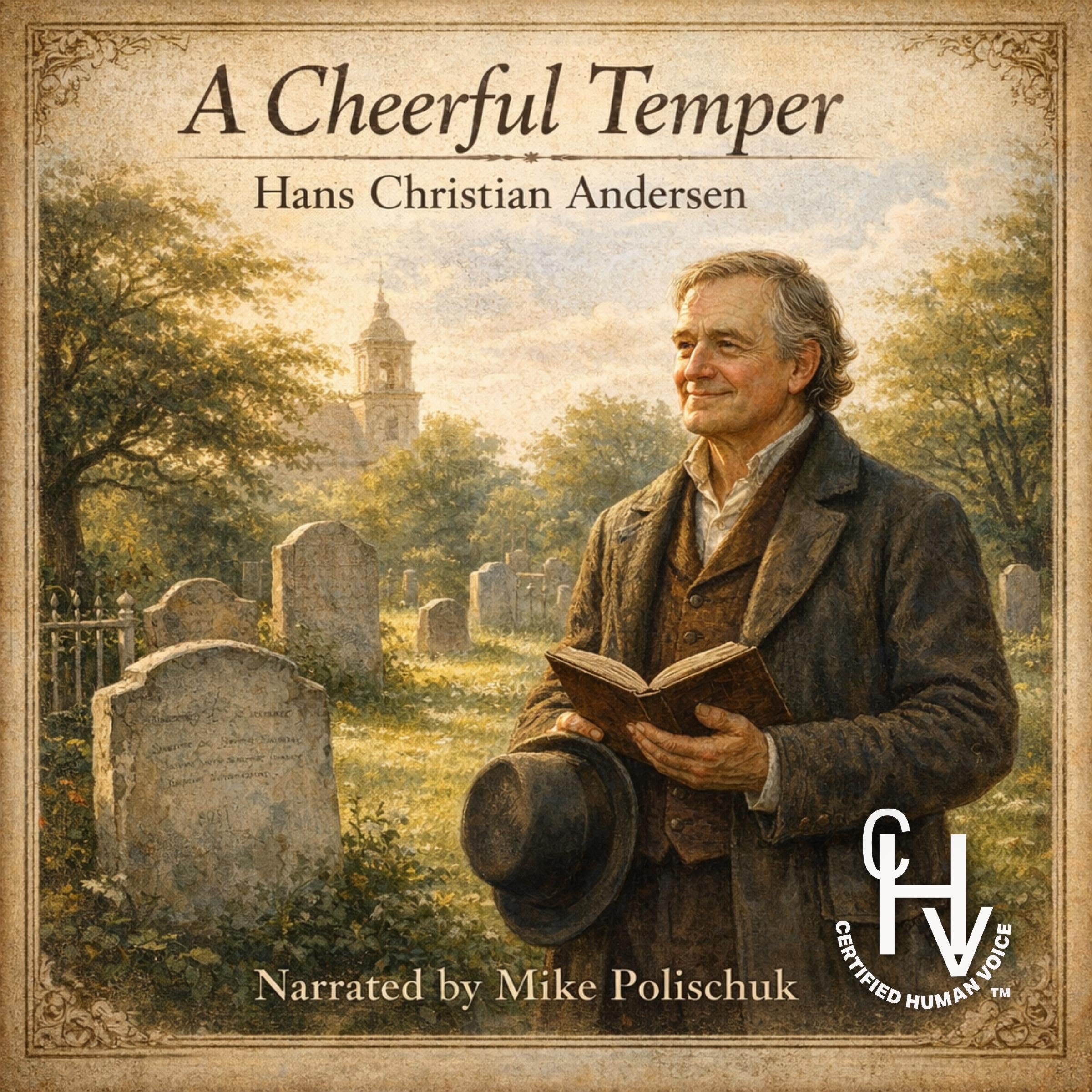
In this quietly ironic and warmly reflective tale, Hans Christian Andersen turns his attention from fairy kingdoms to the everyday theater of human character. A Cheerful Temper is the story of a man who inherits from his father not wealth, nor status, but something far rarer—a disposition inclined toward good humor. The father, a hearse driver who led funeral processions with a round, sunlike face that discouraged despair, leaves behind a legacy of perspective rather than property. The narrator wanders between two the newspaper and the churchyard. In the pages of the Intelligencer, he observes the bustling vanities of society. Among the gravestones, he studies the quiet conclusions of human folly—the irritable critic, the ornamental aristocrat, the miser, the gossip, the dreamer who died clutching an idea no one ever heard. With gentle satire and philosophical calm, Andersen invites the listener to view life from a steadier vantage point. What irritates in the moment fades in the long view. What seems monumental shrinks with time. Good temper, the narrator suggests, is not naïveté—it is wisdom practiced daily. Narrated with warmth and clarity by Mike Polischuk, this timeless meditation blends humor and reflection in a way only Andersen can achieve. This audiobook is presented as a Certified Human Voice production, performed entirely by a human narrator with full consent and without artificial voice generation.