Margins
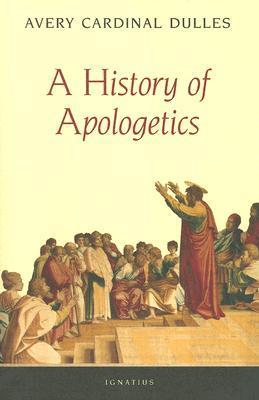
A History of Apologetics book cover
A History of Apologetics
2005
First Published
3.94
Average Rating
316
Number of Pages
Making the case for the Christian faith—apologetics—has always been part of the Church's mission. Yet Christians sometimes have had different approaches to defending the faith, responding to the needs of their respective times and framing their arguments to address the particular issues of their day. Cardinal Avery Dulles' A History of Apologetics provides a masterful overview of Christian apologetics, from its beginning in the New Testament through the Middle Ages and on to the present resurgence of apologetics among Catholics and Protestants. Dulles shows how Christian apologists have at times both criticized and drawn from their intellectual surroundings to present the reasonableness of Christian belief. Written by one of Catholicism's leading American theologians, A History of Apologetics also examines apologetics in the 20th and early 21st centuries including its decline among Catholics following Vatican II and its recent revival, as well as the contributions of contemporary Evangelcal Protestant apologists. Dulles also considers the growing Catholic-Protestant convergence in apologetics. No student of apologetics and contemporary theology should be without this superb and masterful work.

Avg Rating
3.94
Number of Ratings
95
5 STARS
25%
4 STARS
46%
3 STARS
26%
2 STARS
1%
1 STARS
1%
goodreads

Author

Avery Dulles
Avery Dulles
Author · 10 books

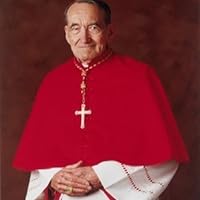
Avery Robert Dulles, S.J. (1918-2008) was a Jesuit priest, theologian, cardinal of the Roman Catholic Church and served as the Laurence J. McGinley Professor of Religion and Society at Fordham University from 1988 to 2008. He was an internationally known author and lecturer. Dulles was born in Auburn, New York, the son of future U.S. Secretary of State John Foster Dulles (for whom Washington Dulles International Airport is named) and Janet Pomeroy Avery Dulles. His uncle was Director of Central Intelligence Allen Welsh Dulles. Both his great-grandfather John W. Foster and great-uncle Robert Lansing also served as U.S. Secretary of State. He received his primary school education in New York City at the St. Bernard's School and attended secondary schools in Switzerland and The Choate School (now Choate Rosemary Hall) in Wallingford, Connecticut. Dulles was raised a Presbyterian but had become an agnostic by the time he began college at Harvard in 1936. His religious doubts were diminished during a personally profound moment when he stepped out into a rainy day and saw a tree beginning to flower along the Charles River; after that moment he never again "doubted the existence of an all-good and omnipotent God." He noted how his theism turned toward conversion to Catholicism: "The more I examined, the more I was impressed with the consistency and sublimity of Catholic doctrine." He converted to Catholicism in the fall of 1940. After graduating from Harvard College in 1940, he spent a year and a half in Harvard Law School, where he also founded the "St. Benedict Center" (which would become well-known due to the controversial Fr. Leonard Feeney S.J.), before serving in the United States Navy, emerging with the rank of Lieutenant. For his liaison work with the French Navy, he was awarded the French Croix de guerre.

548 Market St PMB 65688, San Francisco California 94104-5401 USA
© 2026 Paratext Inc. All rights reserved