Margins
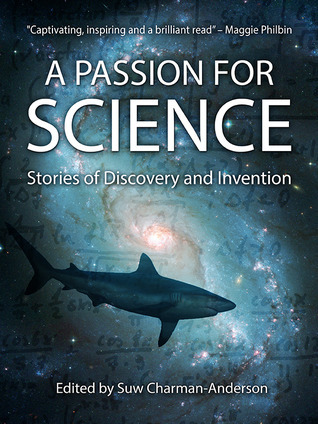
A Passion for Science book cover
A Passion for Science
Stories of Discovery and Invention
2013
First Published
4.50
Average Rating
250
Number of Pages

From the identification of the Horsehead Nebula to the creation of the computer program, from the development of in vitro fertilisation to the detection of pulsars, A Passion for Science: Stories of Discovery and Invention brings together inspiring stories of how we achieved some of the most important breakthroughs in science and technology. But it’s not just the inventors and the pioneers whose stories we hear in this volume, we also hear about the equally important users of technology: The Polish radio girl who risked her life in World War II to feed intelligence to the resistance via her illegal radio set, and the family of refugees who fled to the UK and whose most treasured possession was a sewing machine. This might be everyday technology, but these are not everyday stories. Only one thing unites these stories, whether it is the ground-breaking use of scuba diving to study sharks, or the remarkable posse of ‘Trowelblazers’ spearheading the study of archaeology, geology and palaeontology—all our protagonists are women. Find out about scuba-diving ichthyologist Eugenie Clarke, known as The Shark Lady, and Dame Jocelyn Bell Burnell, whose discovery revolutionised our understanding of how stars could behave. We also hear about Chien-Shiung Wu whose decision to study physics in America just prior to World War II had not just a profound effect on her life but also on the success of the Manhattan Project, and Joan Feynman, whose work on the solar wind not only helps explain auroras, it is also still used by the satellite industry. And, of course, no FindingAda.com book would be complete without a look Ada Lovelace herself, the first computer programmer and mother of computer science. Frequently unsung, often underpaid and under-appreciated, and sometimes misrepresented, these women defied social convention and endemic sexism to excel. They persevered, even when the outlook was bleak and the barriers were high, and they achieved greatness. Available only from http://findingada.com/book/
Avg Rating
4.50
Number of Ratings
10
5 STARS
70%
4 STARS
10%
3 STARS
20%
2 STARS
0%
1 STARS
0%
goodreads

Authors

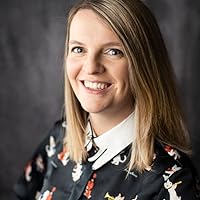
Rebecca Wragg Sykes
Rebecca Wragg Sykes
Author · 2 books

Dr Rebecca Wragg Sykes is an archaeologist, author and Honorary Fellow in the School of Archaeology, Classics and Egyptology at the University of Liverpool. Her critically acclaimed and bestselling first book KINDRED: Neanderthal Life, Love, Death and Art is a deep dive into the 21st century science and understanding of these ancient relatives. Winner of the 2021 PEN Hessell-Tiltman prize for history; awarded Book of the Year by Current Archaeology; selected as one of 2021's 100 Notable Books by The New York Times, a Book of the Year by The Sunday Times, Book of the Week by The Times and Book of the Day by The Guardian, KINDRED is being translated into 19 languages so far. Alongside her academic expertise and consultancy work, Rebecca has earned a reputation for exceptional public communication, with her writing featuring in The New York Times, The Times, The Guardian, Aeon and elsewhere. She is a popular speaker, appearing on a variety of radio and podcast programmes including for the BBC and NPR.

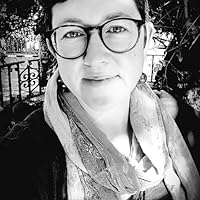
Kat Arney
Author · 5 books

Kat Arney is an award-winning science writer, broadcaster and public speaker, and is the founder and Creative Director of science communications and media consultancy First Create The Media. She is the author of 'Rebel Cell: Cancer, evolution and the science of life' (BenBella Books, 2020), 'How to Code a Human' (Andre Deutsch, 2017, republished as 'The Compact Guide: DNA') and the critically acclaimed 'Herding Hemingway's Cats: Understanding how our genes work' (Bloomsbury Sigma, 2016). Kat holds a bachelor's degree in natural sciences and a PhD in developmental genetics from Cambridge University, and has spent more than 15 years working in science journalism and communication. She was a key part of the science communications team at Cancer Research UK for more than a decade, co-founding the charity's award-winning Science Blog, and acting as a principal national and international media spokesperson. Her writing has featured in Wired, BBC Online, the Daily Mail, the Times Educational Supplement, The Guardian Online, Nature, Mosaic, the New Scientist and more. Kat presents the popular Genetics Unzipped podcast for The Genetics Society and has fronted several BBC Radio 4 science documentaries, including the recent series 'Ingenious' looking at the stories behind our genes and comedy factual series 'Did the Victorians Ruin the World?' with her sister, comedian Helen Arney. She was a co-host of the Naked Scientists radio show and podcast, and presented the Naked Genetics podcast for many years.

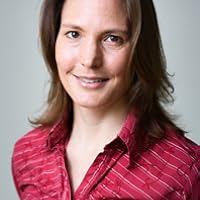
Helen Czerski
Helen Czerski
Author · 4 books
Helen Czerski is a physicist at University College London’s Department of Mechanical Engineering and a science presenter for BBC. She writes a monthly column for BBC Focus magazine called “Everyday Science” that was shortlisted for a Professional Publishers Association Award.
Helen Scales
Helen Scales
Author · 19 books

In their review of my first book, Poseidon’s Steed, the Economist called me “The aptly named Helen Scales” and I guess they’re right. I do have a bit of a thing about fish (get it?). Across the airways and in print, I’m noted for my distinctive and occasionally offbeat voice that combines a scuba diver’s devotion to exploring the oceans, a scientist’s geeky attention to detail, a conservationist’s angst about the state of the planet, and a storyteller’s obsession with words and ideas. I have a Cambridge PhD and a monofin, I’ve drunk champagne with David Attenborough and talked seahorse sex on the Diane Rehm show. I spent four years (on and off) chasing after big fish in Borneo and another year cataloguing marine life surrounding 100 Andaman Sea islands. These days I write books and articles, I make podcasts and radio, travel the world in search of stories, and do my best to spend as much time as I can in the sea as a scuba diver, free diver and rookie surfer. I’m a fellow of the Royal Geographical Society and a member of the steering committee for the Museum of Curiosity. I’m also a proud aunt, I sew dresses, grow organic vegetables, put on high heels and dance Argentine tango, play piano, sing in the shower, and make a mess in a printmaking studio.

Georgina Ferry
Author · 5 books

Born in Hong Kong in 1955, Ferry had a peripatetic childhood as one of five children of an army officer. She went to Ellerslie School in Great Malvern from 1966–73, then to Lady Margaret Hall, Oxford: she graduated in Experimental Psychology in 1976. She worked briefly for a science publisher before joining New Scientist magazine as a section editor. Soon afterwards she began to present science programmes on BBC Radio 4. She married David Long in 1981. They settled in Oxford, and sons Ed and Will were born in 1982 and 1985. Since then she has worked mostly as a freelance writer, editor and broadcaster.

548 Market St PMB 65688, San Francisco California 94104-5401 USA
© 2026 Paratext Inc. All rights reserved