


Margins
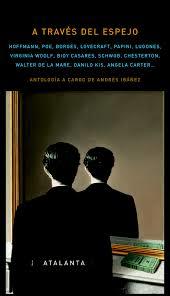
A través del espejo book cover
A través del espejo
2016
First Published
4.67
Average Rating
391
Number of Pages

Desde el reflejo de nuestros ancestros en las aguas tranquilas de un lago hasta los primeros azogues de cobre o la imagen que de nuestro propio rostro recibimos a diario, el espejo ha sido siempre un objeto cautivante cuyo poder nos fascina y nos somete. Los espejos deforman e invierten, pero también revelan lo que somos y duplican lo que vemos. La literatura y las diversas mitologías de la Antigüedad nos abrieron puertas a otros mundos como el de Alicia o el escudo contra la Medusa. De la vanidad medieval al autoconocimiento renacentista, de la superstición al infinito establecido entre dos espejos enfrentados, esta antología recorre las luces y sombras de nuestra naturaleza al descubierto. Ordenada cronológicamente, esta selección de textos, que tiene en cuenta la ficción, el ensayo y otras disciplinas, arranca, tras uno de los Sonetos a Orfeo de Rilke, con el mito de Narciso que Ovidio asentó hace dos mil años. A continuación viene el espejo gnóstico del Himno de la perla, del siglo XI, y un fragmento agorero de las crónicas de Fray Bernardino de Sahagún. Los espejos del romanticis­mo aparecen representados por dos maestros del relato, E. T. A. Hoffmann y Edgar Allan Poe, además de por la ineludible Blancanieves de los hermanos Grimm. La comicidad de Juan Valera, lo trágico en Lafcadio Hearn y el terror de Edogawa Rampo nos traen reflejos del Japón. Arthur Quiller-Couch precede a narradores de primer orden como Marcel Schwob, Leopoldo Lugones, Giovanni Papini, G. K. Chesterton o H. P. Lovecraft, en una colección que incluye a su vez varias rarezas: el magnífico primer capítulo de la novela El regreso de Walter de la Mare y sugerentes fragmentos de El doble de Otto Rank, El basilisco de Viena de Willy Ley o ese tratado de ciencia ficción antigua que es el texto de Jurgis Baltrušaitis sobre los espejos de Arquímedes. Virginia Woolf, Danilo Kiš, Isaac Bashevis Singer, Goran Petrović y Angela Carter son otras de las grandes voces recogidas sobre el tema. Tampoco podían faltar Adolfo Bioy Casares y Jorge Luis Borges, el genio ciego obsesionado con el misterio «abominable» del reflejo duplicador. Los relatos de esta colección son "Sonetos a Orfeo II", "Narciso", "El himno de la Perla", "Señales que aparecieron antes de la llegada de los españoles", "Blancanieves y los siete enanitos", "Historia de la imagen perdida en el espejo", "William Wilson", "El espejo de Matsuyama", "Un espejo oscuro", "La predestinada", "El espejo negro", "La oven el espejo", "Dos imágenes en un estanque", "El regreso", "El hombre del pasaje", "Creencias sobre los espejos", "El extraño", "El infierno de espejos", "La mujer del espejo:Un reflejo", "El espejo de tinta", "El basilisco de Viena", "El espejo", "De los dos lados", "Reflejos", "El espejo y la máscara", "¿Son posibles los espejos de Arquímedes?", "El espejo de lo desconocido", "El espejo de Delfos", "Como se ejerce la fe", "El cuarto espejo", y "La leyenda de la Puerta de los Mundos".
Avg Rating
4.67
Number of Ratings
18
5 STARS
72%
4 STARS
22%
3 STARS
6%
2 STARS
0%
1 STARS
0%
goodreads

Authors

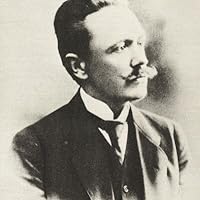
Walter de la Mare
Walter de la Mare
Author · 44 books

Walter John de la Mare was an English poet, short story writer and novelist, probably best remembered for his works for children and The Listeners. He was descended from a family of French Huguenots, and was educated at St Paul's School. His first book, Songs of Childhood, was published under the name Walter Ramal. He worked in the statistics department of the London office of Standard Oil for eighteen years while struggling to bring up a family, but nevertheless found enough time to write, and, in 1908, through the efforts of Sir Henry Newbolt he received a Civil List pension which enabled him to concentrate on writing; One of de la Mare's special interests was the imagination, and this contributed both to the popularity of his children's writing and to his other work occasionally being taken less seriously than it deserved. De la Mare also wrote some subtle psychological horror stories; "Seaton's Aunt" and "Out of the Deep" are noteworthy examples. His 1921 novel, Memoirs of a Midget, won the James Tait Black Memorial Prize for fiction.

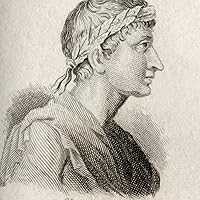
Ovid
Ovid
Author · 48 books

Publius Ovidius Naso (20 March 43 BCE – CE 17/18), known as Ovid (/ˈɒvɪd/) in the English-speaking world, was a Roman poet best known for the Metamorphoses, a 15-book continuous mythological narrative written in the meter of epic, and for collections of love poetry in elegiac couplets, especially the Amores ("Love Affairs") and Ars Amatoria ("Art of Love"). His poetry was much imitated during Late Antiquity and the Middle Ages, and greatly influenced Western art and literature. The Metamorphoses remains one of the most important sources of classical mythology. Ovid is traditionally ranked alongside Virgil and Horace, his older contemporaries, as one of the three canonic poets of Latin literature. He was the first major Roman poet to begin his career during the reign of Augustus, and the Imperial scholar Quintilian considered him the last of the Latin love elegists. He enjoyed enormous popularity, but in one of the mysteries of literary history he was sent by Augustus into exile in a remote province on the Black Sea, where he remained until his death. Ovid himself attributes his exile to carmen et error, "a poem and a mistake", but his discretion in discussing the causes has resulted in much speculation among scholars. Ovid's prolific poetry includes the Heroides, a collection of verse epistles written as by mythological heroines to the lovers who abandoned them; the Fasti, an incomplete six-book exploration of Roman religion with a calendar structure; and the Tristia and Epistulae ex Ponto, two collections of elegies in the form of complaining letters from his exile. His shorter works include the Remedia Amoris ("Cure for Love"), the curse-poem Ibis, and an advice poem on women's cosmetics. He wrote a lost tragedy, Medea, and mentions that some of his other works were adapted for staged performance. See also Ovide.

Adolfo Bioy Casares
Adolfo Bioy Casares
Author · 39 books
Adolfo Vicente Perfecto Bioy Casares (1914-1999) was born in Buenos Aires, the child of wealthy parents. He began to write in the early Thirties, and his stories appeared in the influential magazine Sur, through which he met his wife, the painter and writer Silvina Ocampo, as well Jorge Luis Borges, who was to become his mentor, friend, and collaborator. In 1940, after writing several novice works, Bioy published the novella The Invention of Morel, the first of his books to satisfy him, and the first in which he hit his characteristic note of uncanny and unexpectedly harrowing humor. Later publications include stories and novels, among them A Plan for Escape, A Dream of Heroes, and Asleep in the Sun. Bioy also collaborated with Borges on an Anthology of Fantastic Literature and a series of satirical sketches written under the pseudonym of H. Bustos Domecq.
Virginia Woolf
Virginia Woolf
Author · 284 books

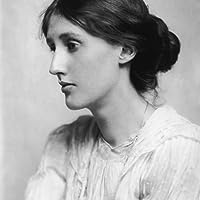
(Adeline) Virginia Woolf was an English novelist and essayist regarded as one of the foremost modernist literary figures of the twentieth century. During the interwar period, Woolf was a significant figure in London literary society and a member of the Bloomsbury Group. Her most famous works include the novels Mrs. Dalloway (1925), To the Lighthouse (1927), and Orlando (1928), and the book-length essay A Room of One's Own (1929) with its famous dictum, "a woman must have money and a room of her own if she is to write fiction."

Lafcadio Hearn
Lafcadio Hearn
Author · 61 books

Greek-born American writer Lafcadio Hearn spent 15 years in Japan; people note his collections of stories and essays, including Kokoro (1896), under pen name Koizumi Yakumo. Rosa Cassimati (Ρόζα Αντωνίου Κασιμάτη in Greek), a Greek woman, bore Patrick Lafcadio Hearn (Πατρίκιος Λευκάδιος Χερν in Greek or 小泉八雲 in Japanese), a son, to Charles Hearn, an army doctor from Ireland. After making remarkable works in America as a journalist, he went to Japan in 1890 as a journey report writer of a magazine. He arrived in Yokohama, but because of a dissatisfaction with the contract, he quickly quit the job. He afterward moved to Matsué as an English teacher of Shimané prefectural middle school. In Matsué, he got acquainted with Nishida Sentarô, a colleague teacher and his lifelong friend, and married Koizumi Setsu, a daughter of a samurai. In 1891, he moved to Kumamoto and taught at the fifth high school for three years. Kanô Jigorô, the president of the school of that time, spread judo to the world. Hearn worked as a journalist in Kôbé and afterward in 1896 got Japanese citizenship and a new name, Koizumi Yakumo. He took this name from "Kojiki," a Japanese ancient myth, which roughly translates as "the place where the clouds are born". On that year, he moved to Tôkyô and began to teach at the Imperial University of Tôkyô. He got respect of students, many of whom made a remarkable literary career. In addition, he wrote much reports of Japan and published in America. So many people read his works as an introduction of Japan. He quit the Imperial University in 1903 and began to teach at Waseda University on the year next. Nevertheless, after only a half year, he died of angina pectoris.

H.P. Lovecraft
H.P. Lovecraft
Author · 634 books

Howard Phillips Lovecraft, of Providence, Rhode Island, was an American author of horror, fantasy and science fiction. Lovecraft's major inspiration and invention was cosmic horror: life is incomprehensible to human minds and the universe is fundamentally alien. Those who genuinely reason, like his protagonists, gamble with sanity. Lovecraft has developed a cult following for his Cthulhu Mythos, a series of loosely interconnected fictions featuring a pantheon of human-nullifying entities, as well as the Necronomicon, a fictional grimoire of magical rites and forbidden lore. His works were deeply pessimistic and cynical, challenging the values of the Enlightenment, Romanticism and Christianity. Lovecraft's protagonists usually achieve the mirror-opposite of traditional gnosis and mysticism by momentarily glimpsing the horror of ultimate reality. Although Lovecraft's readership was limited during his life, his reputation has grown over the decades. He is now commonly regarded as one of the most influential horror writers of the 20th Century, exerting widespread and indirect influence, and frequently compared to Edgar Allan Poe. — Wikipedia

Giovanni Papini
Giovanni Papini
Author · 17 books
Giovanni Papini was an Italian journalist, essayist, literary critic, poet, and novelist.
Jurgis Baltrusaitis
Jurgis Baltrusaitis
Author · 2 books

Jurgis Baltrušaitis (May 2, 1873 – January 3, 1944) was a Lithuanian Symbolist poet and translator, who wrote his works in Lithuanian and Russian. In addition to his important contributions to Lithuanian literature, he was noted as a political activist and diplomat. Himself one of the foremost exponents of iconology, he was the father of art historian and critic Jurgis Baltrušaitis Jr. Baltrušaitis was born to a family of farmers in Paantvardys village near Jurbarkas, which was then under Imperial Russian rule. In 1885, he entered Kaunas gymnasium, and graduated in 1893; he then entered the Faculty of Physical and Mathematical Sciences at Moscow University. At the same time, he attended lectures in the Faculty of History and Philology, and studied foreign languages; Baltrušaitis learned 15 foreign languages during his life. From 1895 onwards, Baltrušaitis began to take part in editing Moscow-based literary magazines, and he began his own creative work in Russian. He joined the Symbolist movement, and, in association with Sergei Polyakov, set up the publishing house Scorpio, which published the chief Russian Symbolist magazines such as Vesy and Severnyie Tzvety as well as collections of the greatest Russian Symbolist poets. A member of the city's cultural elite, Baltrušaitis was a close friend and colleague of such famous Russian writers and artists as Anton Chekhov, Konstantin Bal'mont, Valery Bryusov, Vyacheslav Ivanov, Maksim Gorky, Konstantin Stanislavsky, Mikhail Vrubel, and Aleksandr Scriabin; Boris Pasternak was the private home tutor of Baltrušaitis' children. Baltrušaitis published three collections of poetry in Russian, and another three in Lithuanian. He authored many Russian translations of modern literature, including ones from Henrik Ibsen, Oscar Wilde, August Strindberg, Knut Hamsun, and Gabriele D'Annunzio. His translation of Hunger by Hamsun is considered a classical rendering of this work into Russian, and has been continuously republished right up to contemporary times. Between 1900 and 1914, Baltrušaitis lived in Italy and Norway and spent much time traveling in other countries in Western Europe. During World War I and the subsequent Russian Revolution he was in Russia, where he actively participated in the Lithuanian political struggle for independence. In 1919 he was elected President of the Russian Union of Writers, and was known for his efforts to help and rescue many writers and intellectuals during the first years of the Bolshevik regime. After Lithuania regained independence in 1918, Baltrušaitis was appointed Lithuania's ambassador to Russia in 1920 and held this position until 1939. In 1932 he was honored with a doctorate by Vytautas Magnus University in Kaunas. In 1939, Baltrušaitis was appointed a counselor of the Lithuanian embassy in Paris. Following the annexation of Lithuania by the Soviet Union, his son, Jurgis Baltrušaitis Jr., an art and art critic, served as a diplomat for the Lithuanian diplomatic service which continued to represent Lithuanian interests in some Western countries. Baltrušaitis Sr. died in Paris in January 1944; he is buried at Montrouge cemetery. http://www.rasyk.lt/rasytojai/jurgis-... http://poezija.sdf-eu.org/baltrus.html

Goran Petrovic
Goran Petrovic
Author · 10 books

One of the most significant and most widely read contemporary Serbian writers. He studied Yugoslav and Serbian literature at the Faculty of Philology of Belgrade University. At the moment, he works as a librarian at the Žiča city library, not too far away from the Žiča Monastery. Awards: the Borislav Pekić Fund Scholarship; the "Prosveta Award"; the "Meša Selimović Award"; the "Charter of Rača", the "Golden Bestseller", "Vital Award"; the "National Library of Serbia"Award; the "Most widely read Book Award" (NIN, 2001); the "October Award of the City of Kraljevo; the "Borislav Stanković Award". Petrović's books have been reprinted several times. His novels have already been translated into Russian, French, Italian, Polish and Spanish. Goran Petrović jedan je od najznačajnijih (i najčitanijih) srpskih pisaca mlađe generacije srpskih savremenih prozaista. Rođen je u Kraljevu 1961. godine. Studirao je jugoslovensku i srpsku književnost na Filološkom fakultetu Beogradskog uni...veziteta. Radio je dugo kao bibliotekar u ogranku gradske biblioteke u Žiči, pedesetak metara od manastira Žiča, a danas je na mestu glavnog urednika časopisa „Povelja“ gradske biblioteke u Kraljevu. Objavio je: knjigu kratke proze Saveti za lakši život (1989), roman Atlas opisan nebom (1993), zbirku pripovedaka Ostrvo i okolne priče (1996), roman Opsada crkve Svetog Spasa (1997), roman Sitničarnica „Kod srećne ruke“ (2000), zbirku pripovedaka Bližnji (2002), zbirku izabrane kratke proze Sve što znam o vremenu (2003) i dramu Skela (2004), zbirku pripovedaka „Razlike“ (2006) i kino-novelu "Ispod tavanice koja se ljuspa" (2010). Knjige su mu štampane u preko četrdeset izdanja. Petrovićevi romani su objavljivani u prevodu na ruski, francuski, italijanski, španski jezik, poljski i bugarski. Prema romanu Opsada crkve Svetog Spasa, a u dramatizaciji i režiji Kokana Mladenovića, u Narodnom pozorištu u Somboru postavljena je istoimena predstava. Goran Petrović je dobitnik književne stipendije Fonda Borislava Pekića, „Prosvetine“ nagrade, nagrade „Meša Selimović“, „Račanske povelje“, „Zlatnog bestselera“, „Vitalove“ nagrade, nagrade Narodne biblioteka Srbije za najčitaniju knjigu, NIN-ove nagrade za 2001. godinu, Oktobarske nagrade grada Kraljeva i nagrade „Borisav Stanković“.

Jacob Grimm
Jacob Grimm
Author · 294 books

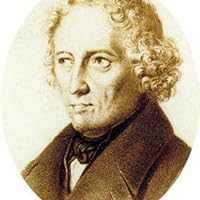
German philologist and folklorist Jakob Ludwig Karl Grimm in 1822 formulated Grimm's Law, the basis for much of modern comparative linguistics. With his brother Wilhelm Karl Grimm (1786-1859), he collected Germanic folk tales and published them as Grimm's Fairy Tales (1812-1815). Indo-European stop consonants, represented in Germanic, underwent the regular changes that Grimm's Law describes; this law essentially states that Indo-European p shifted to Germanic f, t shifted to th, and k shifted to h. Indo-European b shifted to Germanic p, d shifted to t, and g shifted to k. Indo-European bh shifted to Germanic b, dh shifted to d, and gh shifted to g. This jurist and mythologist also authored the monumental German Dictionary and his Deutsche Mythologie . Adapted from Wikipedia.

Isaac Bashevis Singer
Author · 69 books

Isaac Bashevis Singer was a Polish American author of Jewish descent, noted for his short stories. He was one of the leading figures in the Yiddish literary movement, and received the Nobel Prize in Literature in 1978. His memoir, "A Day Of Pleasure: Stories of a Boy Growing Up in Warsaw", won the U.S. National Book Award in Children's Literature in 1970, while his collection "A Crown of Feathers and Other Stories" won the U.S. National Book Award in Fiction in 1974.

G.K. Chesterton
G.K. Chesterton
Author · 224 books

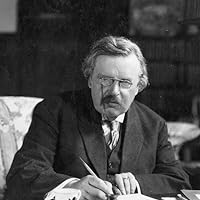
Gilbert Keith Chesterton was an English writer, philosopher, lay theologian, and literary and art critic. He was educated at St. Paul’s, and went to art school at University College London. In 1900, he was asked to contribute a few magazine articles on art criticism, and went on to become one of the most prolific writers of all time. He wrote a hundred books, contributions to 200 more, hundreds of poems, including the epic Ballad of the White Horse, five plays, five novels, and some two hundred short stories, including a popular series featuring the priest-detective, Father Brown. In spite of his literary accomplishments, he considered himself primarily a journalist. He wrote over 4000 newspaper essays, including 30 years worth of weekly columns for the Illustrated London News, and 13 years of weekly columns for the Daily News. He also edited his own newspaper, G.K.’s Weekly. Chesterton was equally at ease with literary and social criticism, history, politics, economics, philosophy, and theology.

Marcel Schwob
Marcel Schwob
Author · 21 books
Marcel Schwob (1867-1905) was one of the key symbolist writers, standing in French literature alongside such names as Stephane Mallarme, Octave Mirbeau, Andre Gide, Leon Bloy, Jules Renard, Remy de Gourmont, and Alfred Jarry. His best-known works are Double Heart (1891), The King In The Gold Mask (1892), and Imaginary Lives (1896).
Leopoldo Lugones
Leopoldo Lugones
Author · 22 books
Leopoldo Lugones Argüello (13 June 1874 - 18 February 1938) was an Argentine writer and journalist.
Edogawa Rampo
Edogawa Rampo
Author · 80 books
Hirai Tarō (平井 太郎), better known by the pseudonym Rampo Edogawa ( 江戸川 乱歩), sometimes romanized as "Ranpo Edogawa", was a Japanese author and critic who played a major role in the development of Japanese mystery fiction.
Angela Carter
Angela Carter
Author · 54 books

Born Angela Olive Stalker in Eastbourne, in 1940, Carter was evacuated as a child to live in Yorkshire with her maternal grandmother. As a teenager she battled anorexia. She began work as a journalist on the Croydon Advertiser, following in the footsteps of her father. Carter attended the University of Bristol where she studied English literature. She married twice, first in 1960 to Paul Carter. They divorced after twelve years. In 1969 Angela Carter used the proceeds of her Somerset Maugham Award to leave her husband and relocate for two years to Tokyo, Japan, where she claims in Nothing Sacred (1982) that she "learnt what it is to be a woman and became radicalised." She wrote about her experiences there in articles for New Society and a collection of short stories, Fireworks: Nine Profane Pieces (1974), and evidence of her experiences in Japan can also be seen in The Infernal Desire Machines of Doctor Hoffman (1972). She was there at the same time as Roland Barthes, who published his experiences in Empire of Signs (1970). She then explored the United States, Asia, and Europe, helped by her fluency in French and German. She spent much of the late 1970s and 1980s as a writer in residence at universities, including the University of Sheffield, Brown University, the University of Adelaide, and the University of East Anglia. In 1977 Carter married Mark Pearce, with whom she had one son. As well as being a prolific writer of fiction, Carter contributed many articles to The Guardian, The Independent and New Statesman, collected in Shaking a Leg. She adapted a number of her short stories for radio and wrote two original radio dramas on Richard Dadd and Ronald Firbank. Two of her fictions have been adapted for the silver screen: The Company of Wolves (1984) and The Magic Toyshop (1987). She was actively involved in both film adaptations, her screenplays are published in the collected dramatic writings, The Curious Room, together with her radio scripts, a libretto for an opera of Virginia Wolf's Orlando, an unproduced screenplay entitled The Christchurch Murders (based on the same true story as Peter Jackson's Heavenly Creatures) and other works. These neglected works, as well as her controversial television documentary, The Holy Family Album, are discussed in Charlotte Crofts' book, Anagrams of Desire (2003). At the time of her death, Carter was embarking on a sequel to Charlotte Brontë's Jane Eyre based on the later life of Jane's stepdaughter, Adèle Varens. However, only a synopsis survives. Her novel Nights at the Circus won the 1984 James Tait Black Memorial Prize for literature. Angela Carter died aged 51 in 1992 at her home in London after developing lung cancer. Her obituary published in The Observer said, "She was the opposite of parochial. Nothing, for her, was outside the pale: she wanted to know about everything and everyone, and every place and every word. She relished life and language hugely, and reveled in the diverse."

Jorge Luis Borges
Jorge Luis Borges
Author · 222 books

Jorge Francisco Isidoro Luis Borges Acevedo, usually referred to as Jorge Luis Borges (Spanish pronunciation: [xoɾxe lwis boɾxes]), was an Argentine writer and poet born in Buenos Aires. In 1914, his family moved to Switzerland where he attended school and traveled to Spain. On his return to Argentina in 1921, Borges began publishing his poems and essays in Surrealist literary journals. He also worked as a librarian and public lecturer. Borges was fluent in several languages. He was a target of political persecution during the Peron regime, and supported the military juntas that overthrew it. Due to a hereditary condition, Borges became blind in his late fifties. In 1955, he was appointed director of the National Public Library (Biblioteca Nacional) and professor of Literature at the University of Buenos Aires. In 1961, he came to international attention when he received the first International Publishers' Prize Prix Formentor. His work was translated and published widely in the United States and in Europe. He died in Geneva, Switzerland, in 1986. J. M. Coetzee said of Borges: "He, more than anyone, renovated the language of fiction and thus opened the way to a remarkable generation of Spanish American novelists."

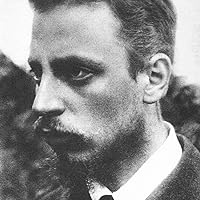
Rainer Maria Rilke
Rainer Maria Rilke
Author · 139 books

A mystic lyricism and precise imagery often marked verse of German poet Rainer Maria Rilke, whose collections profoundly influenced 20th-century German literature and include The Book of Hours (1905) and The Duino Elegies (1923). People consider him of the greatest 20th century users of the language. His haunting images tend to focus on the difficulty of communion with the ineffable in an age of disbelief, solitude, and profound anxiety—themes that tend to position him as a transitional figure between the traditional and the modernist poets. His two most famous sequences include the Sonnets to Orpheus , and his most famous prose works include the Letters to a Young Poet and the semi-autobiographical The Notebooks of Malte Laurids Brigge . He also wrote more than four hundred poems in French, dedicated to the canton of Valais in Switzerland, his homeland of choice.

548 Market St PMB 65688, San Francisco California 94104-5401 USA
© 2026 Paratext Inc. All rights reserved