


Margins
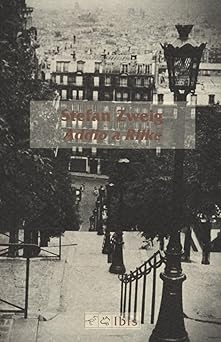
Addio a Rilke book cover
Addio a Rilke
1928
First Published
4.25
Average Rating
72
Number of Pages

Stefan Zweig fu appassionato lettore, ammiratore e poi amico di Rainer Maria Rilke. Il discorso che Zweig tenne in occasione della cerimonia celebrativa al Teatro di Monaco il 20 febbraio 1927, qualche mese dopo la morte del poeta, anticipa di dieci anni le tematiche che svilupperà nel suo scritto "Il mistero della creazione artistica". E' infatti, questo "Addio", un discorso commovente e personale, ma al tempo stesso una riflessione sobria e acuta sulla figura del poeta puro: "Perché poeta lo era, Rainer Maria Rilke, poeta, parola antichissima e sacra, densa e importante e raffinata, adatta a lui [...] Poeta era, e tale è rimasto, immutabile e inconfutabile in ogni parola e gesto della sua esistenza presto interrotta".
Avg Rating
4.25
Number of Ratings
4
5 STARS
50%
4 STARS
25%
3 STARS
25%
2 STARS
0%
1 STARS
0%
goodreads

Author

Stefan Zweig
Stefan Zweig
Author · 183 books

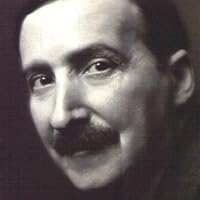
Stefan Zweig was one of the world's most famous writers during the 1920s and 1930s, especially in the U.S., South America, and Europe. He produced novels, plays, biographies, and journalist pieces. Among his most famous works are Beware of Pity, Letter from an Unknown Woman, and Mary, Queen of Scotland and the Isles. He and his second wife committed suicide in 1942. Zweig studied in Austria, France, and Germany before settling in Salzburg in 1913. In 1934, driven into exile by the Nazis, he emigrated to England and then, in 1940, to Brazil by way of New York. Finding only growing loneliness and disillusionment in their new surroundings, he and his second wife committed suicide. Zweig's interest in psychology and the teachings of Sigmund Freud led to his most characteristic work, the subtle portrayal of character. Zweig's essays include studies of Honoré de Balzac, Charles Dickens, and Fyodor Dostoevsky (Drei Meister, 1920; Three Masters) and of Friedrich Hölderlin, Heinrich von Kleist, and Friedrich Nietzsche (Der Kampf mit dem Dämon, 1925; Master Builders). He achieved popularity with Sternstunden der Menschheit (1928; The Tide of Fortune), five historical portraits in miniature. He wrote full-scale, intuitive rather than objective, biographies of the French statesman Joseph Fouché (1929), Mary Stuart (1935), and others. His stories include those in Verwirrung der Gefühle (1925; Conflicts). He also wrote a psychological novel, Ungeduld des Herzens (1938; Beware of Pity), and translated works of Charles Baudelaire, Paul Verlaine, and Emile Verhaeren. Most recently, his works provided the inspiration for 2014 film The Grand Budapest Hotel.

548 Market St PMB 65688, San Francisco California 94104-5401 USA
© 2025 Paratext Inc. All rights reserved