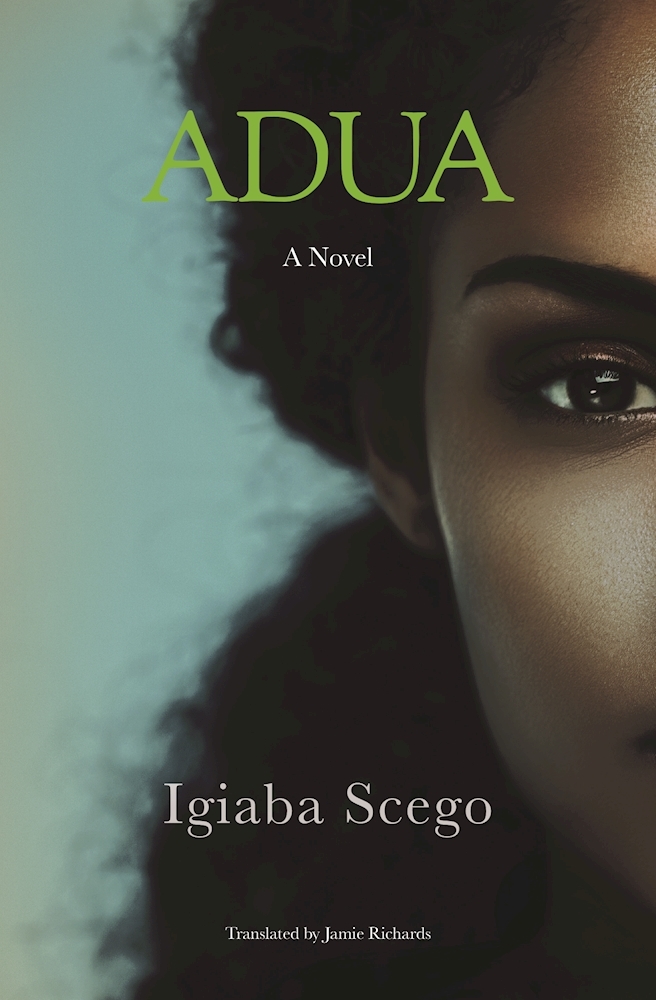



“Utterly sublime."—Maaza Mengiste, author of Beneath the Lion’s Gaze Adua, an immigrant from Somalia to Italy, has lived in Rome for nearly forty years. She came seeking freedom from a strict father and an oppressive regime, but her dreams of becoming a film star ended in shame. Now that the civil war in Somalia is over, her homeland beckons. Yet Adua has a husband who needs her, a young man, also an immigrant, who braved a dangerous crossing of the Mediterranean Sea. When her father, who worked as an interpreter for Mussolini’s fascist regime, dies, Adua inherits the family home. She must decide whether to make the journey back to reclaim her material inheritance, but also how to take charge of her own story and build a future. Igiaba Scego is an Italian novelist and journalist. She was born in Rome in 1974 to Somali parents who took refuge in Italy following a coup d’état in their native country, where her father served as foreign minister.

Author

Igiaba Scego is an Italian writer, journalist, and activist of Somali origin. She graduated with her BA in Foreign Literature at the First University of Rome (La Sapienza) as well as in pedagogy at the Third University of Rome. Presently, she is writing and researching cultural dialogue and migration. She writes for various magazines that deal with migrant literature, in particular Carta, El-Ghibli and Migra. Her work, not devoid of autobiographical references, are characterized by the delicate balance between her two cultural realities, the Italian and Somalian. In 2003, she won the Eks & Tra prize for migrant writers with her story "Salsicce", and published her debut novel, La nomade che amava Alfred Hitchcock. In 2006 she attended the Literature festival in Mantua. Scego collaborates with newspapers such as La Repubblica and Il manifesto and also writes for the magazine Nigrizia with a column of news and reflection, "The colors of Eve". In 2007 along with Ingy Mubiayi, she edited the short story collection 'Quando nasci è una roulette. Giovani figli di migranti si raccontano.' It follows the story of seven boys and girls of African origin, who were born in Rome of foreign parents or came to Italy when young: the story of their schooling, their relationship with family and with peers, religion, racism in Italy, and their dreams.