Margins


548 Market St PMB 65688, San Francisco California 94104-5401 USA
© 2026 Paratext Inc. All rights reserved

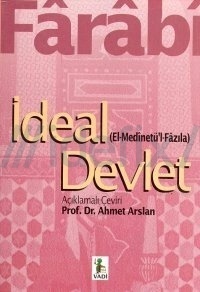
Al-Farabi (/ˌælfəˈrɑːbi/; Arabic: ابو نصر محمد بن محمد فارابی Abū Naṣr Muḥammad ibn Muḥammad Al Fārābī;, known in the West as Alpharabius (c. 872[2] in Fārāb – between 14 December, 950 and 12 January, 951 in Damascus), Born c. 872 Fārāb on the Jaxartes (Syr Darya) in modern Kazakhstan or Faryāb in Khorāsān (modern day Afghanistan) and Died in Damascus, Syria He was a renowned philosopher and jurist who wrote in the fields of political philosophy, metaphysics, ethics and logic. He was also a scientist, cosmologist, mathematician and music scholar. In Arabic philosophical tradition, he is known with the honorific "the Second Master", after Aristotle. He is credited with preserving the original Greek texts during the Middle Ages because of his commentaries and treatises, and influencing many prominent philosophers, like Avicenna and Maimonides. Through his works, he became well-known in the East as well as the West.

1960

900

Mevcutların İlkeleri
2012

2014

Din Üzerine
2001

900

2007
900

"Selected Aphorisms" and Other Texts (Agora Editions)
1985

1034

2003

1270

2017