


Margins
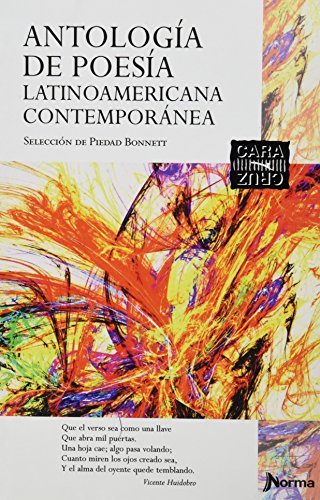
Antología de poesía latinoamericana contemporánea book cover
Antología de poesía latinoamericana contemporánea
2010
First Published
3.84
Average Rating
320
Number of Pages

La poesía es una lectura dispuesta con otros medios incautadores: la lucha por la información define el rango social de nuestra cultura, y su salud está en su convicción hablada, en su oralización compartida, en su capacidad para decirlo todo con las palabras exactas. Julio Ortega
Avg Rating
3.84
Number of Ratings
45
5 STARS
36%
4 STARS
27%
3 STARS
27%
2 STARS
9%
1 STARS
2%
goodreads

Authors

César Vallejo
César Vallejo
Author · 26 books
César Abraham Vallejo Mendoza was a Peruvian poet. Although he published only three books of poetry during his lifetime, he is considered one of the great poetic innovators of the 20th century. Always a step ahead of the literary currents, each of his books was distinct from the others and, in it's own sense, revolutionary. Clayton Eshleman and José Rubia Barcia's translation of "The Complete Posthumous Poetry of César Vallejo" won the National Book Award for translation in 1979.
Vicente Huidobro
Vicente Huidobro
Author · 12 books

Vicente García-Huidobro Fernández was a Chilean poet born to an aristocratic family. He was an exponent of the artistic movement called Creacionismo ("Creationism"), which held that a poet should bring life to the things he or she writes about, rather than just describe them. Huidobro was born into a wealthy family in Santiago. After spending his first years in Europe, he enrolled in a Jesuit secondary school in Santiago where he was expelled for using a ring, which he claimed, was for marriage. He studied literature at the University of Chile and published "Ecos del alma" ( Soul's Echoes ) in 1911, a work with modernist tendencies. The following year he married, and started to edit the journal "Musa Joven" ( Young Muse ), where part of his later book, "Canciones en la noche" ( Songs in the Night ) appeared, as well as his first calligram, "Triángulo armónico" ( Harmonic Triangle ).

Juan Sánchez Peláez
Juan Sánchez Peláez
Author · 1 book
Juan Sánchez Peláez was a Venezuelan poet and National Prize winner for Literature in 1975. Attended university in Santiago, Chile where he befriended the poets of the surrealist group Mandrágora. He published his first poems in their magazine and it was through this encounter that his lifelong interest in surrealism began. Upon returning to Caracas, he published Elena y los elementos in 1951. Elena y los elementos had a profound effect on Venezuelan poetry, outlining a distinctly Venezuelan form of surrealism that influenced the generation of avant-garde poets who emerged in the 1960s. This book was published in a fiftieth anniversary edition by Monte Ávila Editores after he was awarded the title of Doctor Honoris Causa from the Universidad de los Andes in Mérida in 2001.
Coral Bracho
Coral Bracho
Author · 6 books
Bracho is winner of the Aguacalientes National Poetry Prize in 1981 and a Guggenheim Fellowship in 2000. She received the 2004 Xavier Villaurrutia Award for her book, Ese Espacio, Ese Jardin. She is a member of the Sistema Nacional de Creadores de Arte (National Artists’ Center), and in 2007 she was awarded the award “Programa de Aliento a la Obra Literaria de la Fundación para las Letras Mexicanas” in recognition of her work.
Idea Vilariño
Idea Vilariño
Author · 12 books

Idea Vilariño (Montevideo, 1920-2009) fue una poeta, ensayista y crítica literaria uruguaya perteneciente al grupo de escritores denominado Generación del 45. Dentro de sus facetas menos conocidas se encuentran la de traductora, compositora y docente. Vilariño was one of the outstanding figures of Uruguayan poetry, with her lyric creations collected in works such as “La Suplicante” (The Supplicant), “Poemas de Amor” (Love Poems) and “Nocturnos” (Nocturnes). Also known as an essayist and literary critic, she was a member of the writers’ group called the Generation of 45, to which Mario Benedetti, 88, also belonged and who is currently in a Montevideo hospital in critical condition. Idea Vilariño worked as a high-school literature teacher from 1952 until the 1973 military coup in Uruguay. Her translations and Shakespearean studies have been hailed throughout Latin America’s academic world. After the dictatorship in 1985, she became head of Uruguayan literature in the Humanities and Education Sciences Faculty of the University of the Republic. In her work as a lyricist, two legendary works stand out: “A una Paloma” (To a Dove), set to music by Daniel Viglietti, and “La Cancion y el Poema” (The Song and the Poem), with a melody by Alfredo Zitarrosa.

Yolanda Pantin
Yolanda Pantin
Author · 2 books

Yolanda Pantin nació en Caracas el 10 de octubre de 1954; Licenciada en Letras, egresada de la Universidad Católica Andrés Bello. En 1979 se integra al grupo literario Calicanto dirigido por la escritora Antonia Palacios. Ese año recibe la Mención de Honor del Premio Nacional de Poesía Francisco Lazo Martí por su libro Casa o Lobo. En 1981, junto con Alberto Márquez, Miguel Márquez, Igor Barreto, Rafael Castillo Zapata y Armando Rojas Guardia, se separa de Calicanto y funda el grupo Tráfico que en su momento significó una violenta ruptura y cuestionamiento a las poéticas dominantes en el país. En 1982 recibe la Mención de Honor de la Bienal de Poesía José Rafael Pocaterra por el libro Correo del Corazón. En 1989 funda con un grupo de poetas venezolanos la editorial Pequeña Venecia de poesía. Ese año recibe el Premio Fundarte de Poesía por el libro Poemas del Escritor. En 1990, junto con Santos López, crea la Fundación Casa de la Poesía de la cual es directora adjunta.

Luis Alberto Crespo
Luis Alberto Crespo
Author · 1 book
Luis Alberto Crespo es un poeta, crítico y columnista venezolano, ganador del Premio Nacional de Literatura 2010-2012.
Jaime Sáenz
Jaime Sáenz
Author · 3 books

En Sáenz, vida y obra se suponen y se iluminan mutuamente. Así, la imagen de escritor rebelde, marginado, alcohólico, nocturno y enemigo del artificio de la “gente bien”, no sólo remite a uno de los pocos enfants terribles de las letras bolivianas, sino que es parte integrante de una vida que asumió la escritura con vocación monástica. El resultado fue una obra que es una visión de mundo extraordinaria y original, como pocas en el contexto de la literatura boliviana y latinoamericana. Se puede decir que muy pocos representantes de la literatura, la música o la pintura contemporánea en Bolivia han dejado de tener alguna relación o influencia de Sáenz. Incluso su importancia se ha sentido en las nuevas generaciones de videastas y cineastas. Tal vez lo que más llamó la atención, sobre todo a gente joven, fue el aspecto romántico de su estilo de vida, reflejado en su horario de trabajo y de vida social: dormir en el día y vivir de noche. La publicación póstuma de su novela, Los papeles de Narciso Lima Achá (1991), arroja luces sobre otros dos importantes aspectos de su vida: su sexualidad y su atracción por el nazismo. Esta última, similar a la de Ezra Pound en algunos elementos, fue más bien un rechazo a la sociedad burguesa moderna y una exaltación de lo irracional y lo esotérico como métodos de conocimiento del mundo. De ahí que su interés por el nazismo estuvo más cerca de la magia que de la política. En cuanto a su sexualidad, un aspecto poco conocido de su vida, no hay duda de la importancia que debió tener el mundo de las relaciones homosexuales. Así lo prueba la escritura de Los papeles de Narciso Lima Achá, donde se narra básicamente una historia de amor entre un joven boliviano y uno alemán. Cabe señalar que Sáenz nunca se definió como homosexual y su vida amorosa conocida estuvo siempre heterosexualmente orientada. Lo cual se muestra, por ejemplo, en que Sáenz se casó con una mujer alemana de origen judío y con ella tuvo una hija. Este matrimonio, donde lo judío y la heterosexualidad predominan, indica la dificultad de asignarle una etiqueta a sus intereses políticos y sexuales.

Iván Carvajal
Author · 2 books
Iván Oswaldo Carvajal Aguirre (Carchi, 1948) es un poeta, filósofo y ensayista ecuatoriano.
Nicanor Parra
Nicanor Parra
Author · 25 books
Nicanor Segundo Parra Sandoval was a Chilean poet and physicist. He was considered one of the most influential poets in the Spanish language of the 20th century, often compared with Pablo Neruda.
José Lezama Lima
José Lezama Lima
Author · 11 books

José Lezama Lima (December 19, 1910 in Havana, Cuba - August 8, 1976 in Havana, Cuba) was a Cuban writer and poet who is considered one of the most influential figures in Latin American literature. Although he only left Cuba on at most two occasions (one trip to Jamaica and a possible trip to Mexico), Lezama's poetry, essays and two novels draw images and ideas from nearly all of the world's cultures and from all historical time periods. The baroque style that he forged relied equally upon his Góngora-influenced syntax and stunning constellations of unlikely images. Lezama Lima's first published work, a long poem called "Muerte de Narciso," released when he was only twenty-seven, made him immediately famous within Cuba and established Lezama's well-wrought style and classical subject matter. In addition to his poems and novels, Lezama wrote many essays on figures of world literature like Mallarmé, Valéry, Góngora and Rimbaud as well as on Latin American baroque asethetics. Most notably the essays published as La expresión americana lay out his vision of the European baroque, its relation to the classical, and of the American baroque.

Blanca Varela
Blanca Varela
Author · 7 books
Blanca Leonor Varela Gonzáles was considered one of the most important poets of Latin American literature.
Marosa Di Giorgio
Marosa Di Giorgio
Author · 8 books

Marosa di Giorgio (1932–2004) was a Uruguayan poet and novelist. Marosa di Giorgio is considered one of the most singular voices in Latin America. Critics tend to agree that her writing is greatly influenced by European surrealism, although her vocabulary, style, and imagery are uniquely her own. Her work deals predominately with the imaginary world of childhood and nature. In the past few years, Latin American critics such as Hugo Achugar, Luis Bravo, Leonardo Garet, Sylvia Guerra, María Alejandra Minelli, and María Rosa Olivera-Williams have explored Marosa Di Giorgio's writing. Uruguayan poet Roberto Echavarren published in 1991 "Transplatinos", which offers an excellent introduction to Di Giorgio's writing. Selected poems from The March Hare have been translated into English by K.A. Kopple and published in the 1995 by Exact Change Yearbook. An article discussing gender politics, parody, and desire (as elaborated by Gilles Deleuze) also written by K.A. Kopple appeared in March 2000 in the Journal of Latin American Cultural Studies. In'Identity, Nation, Discourse: Latin American Women Writers and Artists, edited by Claire Taylor (Cambridge Scholars Publishing, 2009), Soledad Montañez opens up a new discussion of Di Giorgio's erotic writing. Montañez shows how "Di Giorgio's erotic prose illustrates the representation and performance of patriarchal hierarchy as a perverse comedy, creating a genre that constructs gender narratives in order to undermine the patriarchal system from within."Montañez also affirms that "The effect achieved in Marosa's radicalised narrative is ultimately a mocking performance, a burlesque discourse that reveals and denounces domination and power. Through a perverse representation Marosa exposes the complicated matter of culturally constructed sexual norms and develops a writing that is at the same time disturbing and astonishing" (2009: 158). In 1982 she received the Fraternity Award for literature

Oscar Hahn
Oscar Hahn
Author · 9 books

"Como muchas cosas de la vida, parece que la poesía también funciona por ritmos cíclicos. Después de la idea tradicional de lo poético, correspondía lo antipoético. La antipoesía y el llamado prosaísmo ya cumplieron -y bien- su papel histórico. Lo que corresponde ahora quizás sea una síntesis de lo poético y de lo antipoético. Después habrá un retorno a lo 'poético', pero en espiral y después tal vez venga otro tipo de antipoesía a un nivel distinto, y así en adelante". Óscar Hahn poeta, crítico y ensayista chileno, integrante de la Generación Literaria de 1960, también conocida como generación dispersa o "veteranos de 1970", consiguió, en 1972, el grado de Master of Arts en la Universidad de Iowa; volvió al país para ejercer como profesor de Literatura en la Universidad de Chile sede Arica hasta el golpe de Estado de 1973. Un año después partió al exilio y se radicó en Estados Unidos. Su primer reconocimiento como poeta lo obtuvo en 1959, con el Premio Poesía de la Federación de Estudiantes de Chile. El año 1961 ganó el Premio Alerce de la Sociedad de Escritores de Chile por su primer libro de poemas Esta rosa negra. Su siguiente publicación fue Agua final en 1967, con la que obtuvo el Premio Único del Primer Certamen Zonal de Poesía Nortina de la Universidad de Chile, ex-sede Antofagasta. Su trayectoria poética continuó con Arte de morir (1977), Mal de amor (1981), Imágenes nucleares (1983), Flor de enamorados (1987), Estrellas fijas en un cielo blanco (1989), Tratados de sortilegios, que reúne toda la obra poética anterior (1992), Versos robados, Antología virtual (1996) y Antología retroactiva (1999). Entre las distinciones que ha recibido en el último tiempo destacan el Premio Casa de América de Poesía otorgado por su libro de poemas En un abrir y cerrar de ojos (2006) y el Premio de Poesía José Lezama Lima (2008). También obtuvo el Premio Iberoamericano de Poesía Pablo Neruda (2011). La crítica especializada ha reconocido en la poesía de Óscar Hahn una calidad y originalidad indiscutibles en el contexto poético hispanoamericano, ejemplo de ello es el volumen Asedios a Oscar Hahn, editado por Pedro Lastra y Enrique Lihn, con motivo de los cincuenta años del poeta. Entre otros elementos, los especialistas destacan el uso que el poeta hace de materiales intertextuales, como crónicas periodísticas, hechos históricos, y el diálogo permanente con autores y obras de la literatura universal. Oscar Galindo en su artículo "La poesía de Óscar Hahn: 'los símbolos despavoridos'" señala: "Por sus poemas transitan los clásicos españoles... El registro literario y culterano de su poesía entra en relación con registros verbales de (digámoslo con una frase periodística) 'rabiosa actualidad', pues Hahn ha sabido incorporar, no pocas veces el lenguaje callejero del español de Chile... Lo específico de este sistema intertextual es que no se inclina por la parodia, tan usual en los poetas contemporáneos, sino por la 'imitación diferencial'...". Actualmente es profesor de Literatura Hispanoamericana en la Universidad de Iowa y continúa su proceso de producción poética junto con la publicación de ensayos críticos como Vicente Huidobro o el atentado celeste (1998) y las antologías El cuento fantástico hispanoamericano en el siglo XIX (1978) y Fundadores del cuento fantástico hispanoamericano (1999), además de numerosos prólogos y artículos breves para revistas especializadas. El año 2012 le fue otorgado el Premio Nacional de Literatura.

Álvaro Mutis
Álvaro Mutis
Author · 20 books
Novelista y poeta colombiano. Uno de los grandes escritores hispanoamericanos contemporáneos. Autor destacado por la riqueza verbal de su producción y una característica combinación de lírica y narratividad. A lo largo de su carrera literaria ha recibido, entre otros, el Premio Xavier Villaurrutia en 1988, el Premio Príncipe de Asturias de las Letras en 1997, el Premio Reina Sofía de Poesía Iberoamericana en 1997, el Premio Cervantes en 2001 y el Premio Internacional Neustadt de Literatura en 2002.
Rafael Cadenas
Rafael Cadenas
Author · 9 books
Rafael Cadenas es un poeta, ensayista y profesor universitario venezolano. Formó parte del grupo «Tabla Redonda» a comienzos de la década de los sesenta. En 1985 recibió el Premio Nacional de Literatura de Venezuela y en 2009 el Premio FIL de Literatura en Lenguas Romances, en Guadalajara, México.
Jorge Luis Borges
Jorge Luis Borges
Author · 222 books

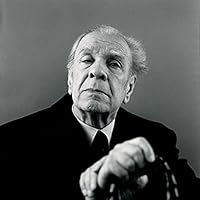
Jorge Francisco Isidoro Luis Borges Acevedo, usually referred to as Jorge Luis Borges (Spanish pronunciation: [xoɾxe lwis boɾxes]), was an Argentine writer and poet born in Buenos Aires. In 1914, his family moved to Switzerland where he attended school and traveled to Spain. On his return to Argentina in 1921, Borges began publishing his poems and essays in Surrealist literary journals. He also worked as a librarian and public lecturer. Borges was fluent in several languages. He was a target of political persecution during the Peron regime, and supported the military juntas that overthrew it. Due to a hereditary condition, Borges became blind in his late fifties. In 1955, he was appointed director of the National Public Library (Biblioteca Nacional) and professor of Literature at the University of Buenos Aires. In 1961, he came to international attention when he received the first International Publishers' Prize Prix Formentor. His work was translated and published widely in the United States and in Europe. He died in Geneva, Switzerland, in 1986. J. M. Coetzee said of Borges: "He, more than anyone, renovated the language of fiction and thus opened the way to a remarkable generation of Spanish American novelists."

Oliverio Girondo
Oliverio Girondo
Author · 11 books

Born of a wealthy family in Buenos Aires in 1891, Oliverio Girondo spent his early years in Argentina and Europe, traveling to the Universal Exhibition in Paris in 1900, when he was only nine, and where he later claimed to have seen Oscar Wilde stalking the streets with sunflower in hand. After spending some time at the Lycée Louis le Grand in Paris and Epsom School in England, he made an agreement with his family to attend law school in Buenos Aires if they would send him each year to Europe for the holidays. For the next several years, Girondo explored the continent, even traveling to find the source of the Nile. Meanwhile, back at home he had begun writing avant-garde plays, which caused a stir in the theater world of Argentina. In 1922 he published, in France, his first volume and verse, 20 Poems to Be Read in a Trolley Car, which shows the influence of Guillaume Apollinaire and the Parisian scene. Only in 1925, with the second printing of this book, did Girondo receive attention in Argentina. By this time, the ultraists, lead by Jorge Luis Borges, had become a major force the scene, and Girondo continued his own humorous exploration of the aesthetic in his second volume, Decals. In the same period he became involved with the avant-garde journal Martin Fierro, which brought together younger poets such as Girondo and Borges with more established figures such as Ricardo Güiraldes and Macedonion Fernández. After a five year period of traveling again, Girondo returned to Buenos Aires, publishing two of his major works, Scarecrow (1932) and Intermoonlude (1937). A new book, Our Countryside, appeared in 1946, the same year he married the poet Nora Lange. In this new work he moved away from the ultraist ideas, playing with elaborate metaphoric language. As Borges moved toward his more fantasist works, and a new generation of poets arose, Girondo was increasingly described as a humorous or even frivolous poet, but his 1956 work, Moremarrow stood as a darker summation of his career, a work that bears comparison with the great Chilean writer Vicente Huidobro's Altazor. Many readers, however, feel that Girondo went further in his linguistic explorations. During that same period Girondo revived the journal Contemporánea. In 1964 Girondo was hit by a car, and for the several years suffered terrible pain before dying of those injuries in 1967. His last works were gathered by the surrealist poet Enrique Molina.

William Ospina
William Ospina
Author · 18 books

En 1982 ganó el Premio Nacional de Ensayo de la Universidad de Nariño, Pasto, con el ensayo Aurelio Arturo, la palabra del hombre. En 1986 publicó su primer poemario: Hilo de Arena. El 13 de julio de 1993 fundó -junto a 10 profesionales de distintas áreas- la prestigiosa Revista Número, publicación colombiana de circulación trimestral cuyo propósito es la promoción de la cultura. Fue redactor en la edición dominical de diario La Prensa de Bogotá de 1988 a 1989. Escribió ensayos sobre Lord Byron, Edgar Allan Poe, León Tolstói, Charles Dickens, Emily Dickinson, Las mil y una noches, Alfonso Reyes, Estanislao Zuleta, literatura árabe y las brujas de Macbeth. En 1992 obtuvo el primer Premio Nacional de Poesía del Instituto Colombiano de Cultura. En el año 2005 publicó su primera novela (Ursúa), en la que aborda la historia de Pedro de Ursúa, conquistador español fundador de la ciudad colombiana de Pamplona. Un verdadero testimonio dramático de la colonización. William Ospina es considerado como uno de los poetas y ensayistas más destacados de las últimas generaciones y sus obras son mapas eruditos de sus amores literarios, acompañados de declaraciones ideológicas sobre la historia y el mundo moderno.

Xavier Villaurrutia
Xavier Villaurrutia
Author · 3 books
Xavier Villaurrutia y González was a Mexican poet and playwright, whose most famous works are the short theatrical dramas, called Autos profanos, compiled in the work Poesía y teatro completos published in 1953.
Olga Orozco
Olga Orozco
Author · 5 books

Olga Orozco (1920-1999) (real name Olga Noemí Gugliotta) was an Argentine poet born in Toay, La Pampa. She spent her childhood in Bahía Blanca until she was 16 years old and she moved to Buenos Aires with her parents where she initiated her career as a writer. Orozco directed some literary publications using some pseudonymous names while she worked as a journalist. She was a member of so-called «Tercera Vanguardia» generation, which had a strong surrealist tendency . Her poetic works were influenced by Rimbaud, Nerval, Baudelaire, Miłosz and Rilke. Olga Orozco died in Buenos Aires at the age of 79 because of a cardiac crisis. (Source: http://en.wikipedia.org/wiki/Olga\_Orozco)

Octavio Paz
Octavio Paz
Author · 56 books
Octavio Paz Lozano was a Mexican writer, poet, and diplomat, and the winner of the 1982 Neustadt International Prize for Literature and the 1990 Nobel Prize for Literature ("for impassioned writing with wide horizons, characterized by sensuous intelligence and humanistic integrity.")
Fina García Marruz
Fina García Marruz
Author · 2 books
Josefina García-Marruz Badía (28 April 1923 – 27 June 2022), known artistically as Fina García Marruz, was a Cuban poet and literary researcher.
Cintio Vitier
Cintio Vitier
Author · 1 book
Cintio Vitier was a Cuban poet, essayist, and novelist. Upon winning the Juan Rolfo prize, the award jury called him "one of the most important writers of his generation".
Jose Watanabe
Jose Watanabe
Author · 9 books

Poeta y dramaturgo peruano nacido en Laredo, Trujillo en 1946. Hijo de un inmigrante japonés y una campesina de la sierra peruana, recibió la enseñanza básica en su pueblo natal, trasladándose luego a Lima donde inició estudios de Arquitectura. Después de algunos semestres interrumpió la carrera para dedicarse de lleno al ejercicio literario. Por su primera publicación, "Álbum de familia", publicada en 1971, recibió el premio Poeta joven del Perú. Su segundo libro, "El huso de la palabra", sólo apareció en 1989 y lo consagró como uno de los poetas más importantes de la poesía peruana contemporánea. Parte de su obra está contenida en publicaciones tan importantes como, "Cosas del cuerpo" 1999, "El guardián del hielo" en 2000, galardonado con el premio Lezama Lima de Casa de las Américas, "Elogio del refrenamiento" 2003, "La piedra alada" 2005 y "Banderas detrás de la niebla" 2006. Se destacó además como guionista para cine y teatro. Falleció en Lima en abril de 2007.

Enrique Molina
Enrique Molina
Author · 1 book

Fue uno de los más destacados cultores del surrealismo en la literatura de la Argentina. Tripulante de barcos mercantes, viajó al Caribe y a Europa y vivió en diversos países de América Latina. En 1952, con el poeta Aldo Pellegrini, fundó en la ciudad de Buenos Aires la revista surrealista "A partir de cero". Como pintor, manifestación creativa que también ejerció, concibió apariencias en un espacio onírico, pureza y enigma que se relacionan íntimamente con su poesía. Publicó, además de numerosos libros de poesía, la novela Una sombra en la que sueña Camila O'Gorman, inspirada en la historia de amor del sacerdote católico tucumano Ladislao Gutiérrez, que escandalizó a Buenos Aires en el siglo XIX y tuvo un final trágico. En 1992 fue distinguido con el Gran Premio Fondo Nacional de las Arte y en 1994 con el Premio Konex de Platino. Estudió abogacía, fue tripulante de barcos mercantes y residió en diversos países de América. Identificado con las ideas y los fines del movimiento surrealista fundó en 1952, con Aldo Pellegrini, la revista "A Partir de Cero". Su estilo poético cerebral y en ciertos aspectos surrealista le hacen cercano a sus coetáneos y compatriotas Alberto Girri y Olga Orozco.

Alejandra Pizarnik
Alejandra Pizarnik
Author · 28 books
Born in Buenos Aires to Russian parents who had fled Europe and the Nazi Holocaust, Alejandra Pizarnik was destined for literary greatness as well as an early death. She died from an ostensibly self-administered overdose of barbiturates on 25 September 1972. A few words scribbled on a slate that same month, reiterating her desire to go nowhere "but to the bottom," sum up her lifelong aspiration as a human being and as a writer. The compulsion to head for the "bottom" or "abyss" points to her desire to surrender to nothingness in an ultimate experience of ecstasy and poetic fulfillment in which life and art would be fused, albeit at her own risk. "Ojalá pudiera vivir solamente en éxtasis, haciendo el cuerpo del poema con mi cuerpo" (If I could only live in nothing but ecstasy, making the body of the poem with my body).
Eugenio Montejo
Eugenio Montejo
Author · 7 books

Eugenio Montejo (Caracas,19 de octubre de 1938 - Valencia, 5 de junio de 2008) fue un poeta y ensayista venezolano, fundador de la revista Azar Rey y co-fundador de la Revista Poesía de la Universidad de Carabobo. Fue investigador en el Centro de Estudios Latinoamericanos "Romulo Gallegos" de Caracas, y colaborador de una gran cantidad de revistas nacionales y extranjeras. En 1998 recibió el Premio Nacional de Literatura de Venezuela y en 2004 el Premio Internacional Octavio Paz de Poesía y Ensayo. Uno de sus poemas es citado en la película 21 gramos, del director mexicano Alejandro González Iñárritu. Eugenio Montejo fue Profesor Universitario, Gerente Literario de la Editorial MonteAvila de Venezuela. Como diplomático trabajo en la embajada de Venezuela en Portugal en varias ocasiones. El valor de su estimable obra poética y ensayística no ha parado de crecer en los últimos años, siendo una de las más importantes y originales de la última mitad del siglo XX.

Pablo Neruda
Pablo Neruda
Author · 114 books

Pablo Neruda was the pen name and, later, legal name of the Chilean writer and politician Neftalí Ricardo Reyes Basoalto. Neruda assumed his pen name as a teenager, partly because it was in vogue, partly to hide his poetry from his father, a rigid man who wanted his son to have a "practical" occupation. Neruda's pen name was derived from Czech writer and poet Jan Neruda; Pablo is thought to be from Paul Verlaine. With his works translated into many languages, Pablo Neruda is considered one of the greatest and most influential poets of the 20th century. Neruda was accomplished in a variety of styles, ranging from erotically charged love poems like his collection Twenty Poems of Love and a Song of Despair, surrealist poems, historical epics, and overtly political manifestos. In 1971 Neruda won the Nobel Prize for Literature, a controversial award because of his political activism. Colombian novelist Gabriel García Márquez once called him "the greatest poet of the 20th century in any language." On July 15, 1945, at Pacaembu Stadium in São Paulo, Brazil, he read to 100,000 people in honor of Communist revolutionary leader Luís Carlos Prestes. When Neruda returned to Chile after his Nobel Prize acceptance speech, Salvador Allende invited him to read at the Estadio Nacional before 70,000 people. During his lifetime, Neruda occupied many diplomatic posts and served a stint as a senator for the Chilean Communist Party. When Conservative Chilean President González Videla outlawed communism in Chile, a warrant was issued for Neruda's arrest. Friends hid him for months in a house basement in the Chilean port of Valparaíso. Later, Neruda escaped into exile through a mountain pass near Maihue Lake into Argentina. Years later, Neruda was a close collaborator to socialist President Salvador Allende. Neruda was hospitalized with cancer at the time of the Chilean coup d'état led by Augusto Pinochet. Three days after being hospitalized, Neruda died of heart failure. Already a legend in life, Neruda's death reverberated around the world. Pinochet had denied permission to transform Neruda's funeral into a public event. However, thousands of grieving Chileans disobeyed the curfew and crowded the streets to pay their respects. Neruda's funeral became the first public protest against the Chilean military dictatorship.

Juan Gelman
Juan Gelman
Author · 19 books

Juan Gelman is one of the most read and influential poets in the Spanish language. He has published more than twenty books of poetry since 1956 and has been translated into fourteen languages. A political activist and critical journalist since his youth, Gelman has not only been a literary paradigm but also a moral one, within and outside of Argentina. Among his most recent awards are the National Poetry Prize (Argentina, 1997), the Juan Rulfo Prize in Latin American and Caribbean Literature (Mexico, 2000), the Pablo Neruda Prize (Chile, 2005), the Queen Sofia Prize in Ibero-American Poetry (Spain, 2005), and the Cervantes Prize (the most important award given to a Hispanic writer, Spain, 2007). Long biographical note Juan Gelman is the most significant, contemporary Argentine intellectual figure and one of the most read and influential poets in the Spanish language. Son of a family of Jewish immigrants from the Ukraine, he grew up like any other porteño, among soccer and tango, in the populous neighborhood of Villa Crespo. At 11, he published his first poem in the magazine Rojo y negro, and in the 1950s formed part of the group of rebel writers, El Pan Duro. He was discovered by Raúl González Túñón, among the most relevant voices of the southern country’s poetic avant-garde, who saw in the young man’s verses “a rich and vivacious lyricism and a principally social content […] that does not elude the richness of fantasy.” Gelman has published, from his initial Violín y otras cuestiones (1956) to his most recent Mundar (2008), more than twenty books of poetry. These works, as Mario Benedetti asserted early on, constitute “the most coherent, and also the most daring, participatory repertoire (in spite of its inevitable wells of solitude), and ultimately the one most suited to its environment, that Argentine poetry has today”, and Hispanic poetry in general, as the profusion of re-editions of his books and numerous anthologies proves. Gelman’s poetry has achieved international recognition, with translations into fourteen languages, including English. Among his awards are the National Poetry Prize (Argentina, 1997), the Juan Rulfo Prize in Latin American and Caribbean Literature (Mexico, 2000), the Pablo Neruda Prize (Chile, 2005), the Queen Sofia Prize in Ibero-American Poetry (Spain, 2005), and the Cervantes Prize (Spain, 2007), the most important award in Hispanic Letters. No one should be surprised to see him the winner of the Nobel Prize in Literature one day. It would be relevant to note that Juan Gelman has not only been a literary paradigm but also a moral one, within and outside of Argentina. A political activist and critical journalist since his youth, he was forced into an exile of thirteen years because of the military dictatorship that ravaged his country from 1976 to 1983, and the weak governments that followed. In 1976 the ultra-right kidnapped his children, Nora Eva, 19, and Marcelo Ariel, 20, along with his son’s wife, María Claudia Iruretagoyena, 19, who was 7 months pregnant. Nora Eva would later return, unlike his son and daughter-in-law, who were killed; their child born in a concentration camp. The vehement search for the truth about the fate of these family members, which culminated in finding his granddaughter in Uruguay in 2000, has made the poet a symbol of the struggle for respect for human rights. Like other poets from his time and space, Juan Gelman creates his work starting from a critique of the so-called post-avante-garde poetry, which surges in the Hispanic world in the 1940s and breaks with the powerful avante-garde. He is a poet who denies the labors of the Mexican Octavio Paz, the Cuban José Lezama Lima, the Argentine Alberto Girri, among others, to reaffirm it in his own way. It is a poetry that goes against the current, transgresses the established social and cultural order, challenges the individualism intrinsic to modernity and the neo-colonial condition. A poetry that renounc

Darío Jaramillo Agudelo
Author · 6 books

Poeta, novelista y ensayista colombiano nacido en Santa Rosa de Osos, Antioquia, en 1947. Terminó el bachillerato en Medellín y posteriormente obtuvo el título de abogado y economista por la Universidad Javeriana de Bogotá. Es el gran renovador de la poesía amorosa colombiana y uno de los mejores poetas de la segunda mitad del siglo XX de su país. Su obra poética se caracteriza por un marcado corte intimista. También se ha destacado como brillante narrador y ensayista. Ha desempeñado importantes cargos culturales en organismos estatales y es miembro de los consejos de redacción de la revista "Golpe de Dados" y de la fundación particular "Simón y Lola Guberek".

Emilio Adolfo Westphalen
Author · 1 book

Fue un poeta, ensayista y promotor cultural peruano. Como ejemplo del reconocimiento dado a su obra, el Premio Nobel de Literatura Octavio Paz, al presentarlo en 1978 dijo de él: "Emilio Adolfo Westphalen es uno de los poetas más puramente poetas entre los que escriben en español. Su poesía no está contaminada de ideología ni de moral ni de teología. Poesía de poeta y no de profesor ni de predicador ni de inquisidor. Poesía que no juzga, sino que se asombra y nos asombra."

Jose Emilio Pacheco
Jose Emilio Pacheco
Author · 30 books

José Emilio Pacheco Berny fue un poeta y ensayista mexicano nacido en Ciudad de México en 1939. Empezó a brillar desde muy joven en el panorama cultural mexicano, gracias a su dominio de las formas clásicas y modernas y al enfoque universal de su poesía. Además de poeta y prosista se ha consagrado también como eximio traductor, trabajando como director y editor de colecciones bibliográficas y diversas publicaciones y suplementos culturales. Ha sido docente universitario e investigador al servicio de entidades gubernamentales. Entre sus galardones se cuentan: Premio Nacional de Poesía, Premio Nacional de Periodismo Literario, Premio Xavier Villaurrutia, Premio Magda Donato, Premio José Asunción Silva en 1996,el Premio Octavio Paz en el año 2003, el Premio Federico García Lorca 2005, el Premio Iberoamericano de Poesía Pablo Neruda en 2004, la XVIII edición del Premio Reina Sofía de Poesía Iberoamericana en 2009 y el Premio Cervantes en 2009. De su obra poética se destacan: «Los elementos de la noche» en 1963, «El reposo del fuego» en 1966, «No me preguntes cómo pasa el tiempo» en 1969, «Irás y no volverás» en 1973, «Islas a la deriva» en 1976, «Desde entonces» en 1980, «Trabajos en el mar» en 1983, y «El silencio de la luna» poemas de 1985 1996. Falleció el 26 de Enero de 2014 en su ciudad natal. Le sobrevive su esposa, la periodista Cristina Pacheco.

Marco Antonio Campos
Author · 3 books
Cronista, ensayista, narrador, poeta y traductor. Ha sido profesor de Literatura en la UIA (1976-1983); lector huésped de las universidades de Salzburgo y Viena (1988-1991); profesor invitado de Brigham Young University (1991) en las universidades de Buenos Aires y La Plata (1992) y la Universidad de Jerusalén (2003); jefe de redacción de Punto de Partida; director de Literatura de la Coordinación de Difusión Cultural; director en dos épocas de Periódico de Poesía, investigador del Centro de Estudios Literarios del IIFL de la UNAM y coordinador del Programa Editorial de la Coordinación de Humanidades de la UNAM. Colaborador en distintas épocas de Confabulario (suplemento literario del diario El Universal), La Jornada Semanal (suplemento literario del diario La Jornada), La Semana de Bellas Artes, Periódico de Poesía, Proceso, Punto de Partida, Revista Universidad de México, Sábado (suplemento literario de Unomásuno) y Vuelta. Premio Diana Moreno Toscano 1972, a la promesa literaria. Premio Xavier Villaurrutia de Escritores para Escritores 1992 por Antología personal. Medalla Presidencial Pablo Neruda otorgada por el Gobierno de Chile en 2004. Premio Casa de América 2005 por Viernes de Jerusalén. Premio del Tren Antonio Machado 2008 por su poemario Aquellas cartas. XXXI Premio Internacional de Poesía Ciudad Melilla 2099, por su obra Díme dónde, en qué país. Premio Iberoamericano de Poesía Ramón López Velarde 2010, por el conjunto de su obra poética. Premio Nacional de Letras Sinaloa 2013. Premio Lèvres Urbaines 2014, otorgado por el Festival de Poesía de Montreal, en Canadá. Doctor Honoris Causa por la Universidad Autónoma de Nuevo León en 2014. Premio Anton Pan 2019, otorgado por el Festival Internacional de Poesía de Bucarest. Premio Juan José Arreola 2019, otorgado por la Fundación Cultural Puertabierta A.C. Ha traducido la obra de Charles Baudelaire, Arthur Rimbaud, André Guide, Roger Munier, entre otros.
548 Market St PMB 65688, San Francisco California 94104-5401 USA
© 2026 Paratext Inc. All rights reserved