


Margins
Antología literaria para regresar a la infancia book cover
Antología literaria para regresar a la infancia
2017
First Published
4.50
Average Rating
441
Number of Pages

Los protagonistas de estos relatos inmortales somos nosotros. Lo fuimos. Lo volveremos a ser infinitas veces. Las niñas y niños que protagonizaban estas narraciones son voces blancas que contemplan, interrogan, escogen, son llevadas por el mal, el deseo, la soledad, la oscuridad interior. Pequeños héroes enormes que corren llenos de vida y desesperación hacia la risa, la crueldad, la ternura, el engaño. Bellas criaturas que habitan y exploran consciencias nuevas. Niños, seres que renacen a cada instante. Para recordarnos quienes somos las palabras de los niños que fuimos.
Avg Rating
4.50
Number of Ratings
2
5 STARS
50%
4 STARS
50%
3 STARS
0%
2 STARS
0%
1 STARS
0%
goodreads

Authors

Katherine Mansfield
Katherine Mansfield
Author · 120 books

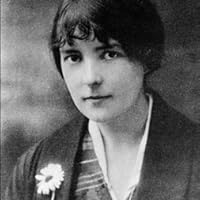
Kathleen Mansfield Murry (née Beauchamp) was a prominent New Zealand modernist writer of short fiction who wrote under the pen name of Katherine Mansfield. Katherine Mansfield is widely considered one of the best short story writers of her period. A number of her works, including "Miss Brill", "Prelude", "The Garden Party", "The Doll's House", and later works such as "The Fly", are frequently collected in short story anthologies. Mansfield also proved ahead of her time in her adoration of Russian playwright and short story writer Anton Chekhov, and incorporated some of his themes and techniques into her writing. Katherine Mansfield was part of a "new dawn" in English literature with T.S. Eliot, James Joyce and Virginia Woolf. She was associated with the brilliant group of writers who made the London of the period the centre of the literary world. Nevertheless, Mansfield was a New Zealand writer - she could not have written as she did had she not gone to live in England and France, but she could not have done her best work if she had not had firm roots in her native land. She used her memories in her writing from the beginning, people, the places, even the colloquial speech of the country form the fabric of much of her best work. Mansfield's stories were the first of significance in English to be written without a conventional plot. Supplanting the strictly structured plots of her predecessors in the genre (Edgar Allan Poe, Rudyard Kipling, H. G. Wells), Mansfield concentrated on one moment, a crisis or a turning point, rather than on a sequence of events. The plot is secondary to mood and characters. The stories are innovative in many other ways. They feature simple things - a doll's house or a charwoman. Her imagery, frequently from nature, flowers, wind and colours, set the scene with which readers can identify easily. Themes too are universal: human isolation, the questioning of traditional roles of men and women in society, the conflict between love and disillusionment, idealism and reality, beauty and ugliness, joy and suffering, and the inevitability of these paradoxes. Oblique narration (influenced by Chekhov but certainly developed by Mansfield) includes the use of symbolism - the doll's house lamp, the fly, the pear tree - hinting at the hidden layers of meaning. Suggestion and implication replace direct detail.

Carmen Martín Gaite
Carmen Martín Gaite
Author · 28 books

Carmen Martín Gaite (Salamanca 1925-Madrid 2000) se licenció en Filosofía y Letras en la Universidad de Salamanca, donde conoció a Ignacio Aldecoa y a Agustín García Calvo. En esa universidad tuvo además su primer contacto con el teatro participando como actriz en varias obras. Se trasladó a Madrid en 1950 y se doctoró en la Universidad de Madrid con la tesis Usos amorosos del XVIII en España. Ignacio Aldecoa, cuya obra estudiaría posteriormente, la introdujo en su círculo literario, donde conoció a Josefina Aldecoa, Alfonso Sastre, Juan Benet, Medardo Fraile, Jesús Fernández Santos y Rafael Sánchez Ferlosio, con quien se casó en 1954. De esta manera se incluyó en la que sería conocida como la Generación del 55 o Generación de la Posguerra. Escribió su primer cuento, Un día de libertad, en 1953, aunque confiesa escribir desde los 8 años. Comienza su carrera literaria con El balneario obteniendo en 1955 uno de los premios literarios de mayor prestigio en España, el Café Gijón. Tres años después obtiene el Premio Nadal por su obra Entre visillos. Escribe dos obras de teatro, el monólogo A palo seco en 1957, que fue representado en 1987, y La hermana pequeña en 1959, rescatada en 1998 por el director de teatro Ángel García Moreno y estrenada el 19 de enero de 1999 en Madrid. Durante la década de los sesenta continúa cultivando la narrativa, con obras como Las ataduras (1960) o Ritmo lento (1963), pero es en los setenta cuando vemos la versatilidad de Martín Gaite. Publica sus dos ensayos sobre el proceso contra Macanaz además de su tesis, recopila su poesía en A rachas (1976), y la novela Retahílas, sale a la luz en 1974. También a esta década debemos su primera recopilación de relatos, Cuentos completos. Su faceta periodística se caracteriza por su etapa de redactora en los comienzos de Diario 16. Su matrimonio con Rafael Sánchez Ferlosio duró unos años antes de acabar en separación, en los cuales tuvieron una hija, Marta, a quien dedicó el cuento La reina de las nieves. Falleció antes que ella. Entre otros logros, Martín Gaite destaca por haber sido la primera mujer a la que se le concede el Premio Nacional de Literatura con El cuarto de atrás en 1978, y por haber ganado en 1994 el Premio Nacional de las Letras por el conjunto de su obra. Fue una de las personas más y mejor premiadas del mundo de la literatura; obtuvo el Príncipe de Asturias en 1988 compartido con el poeta gallego José Ángel Valente [1929-2000], el Premio Acebo de Honor en 1988 como reconocimiento a toda su obra, el Premio Castilla y León de las Letras en 1992, Medalla de Oro del Círculo de Bellas Artes en 1997, Pluma de Plata del Círculo de la Escritura otorgada en junio de 1999 y cuya ceremonia fue retransmitida por videoconferencia a través de Internet, algo sin precedentes, hasta aquel momento, en el mundo literario. Con su ensayo Usos amorosos de la posguerra española recibió en 1987 el Premio Anagrama de Ensayo y el Libro de Oro de los libreros españoles. Esta obra dispara sus ventas, y desde entonces las obras de Carmen Martín Gaite están siempre entre las más vendidas en España, siendo espectacular su éxito en la Feria del libro de Madrid, donde solía ser su obra de cada temporada la más vendida de la feria. Cultivó también la crítica literaria y la traducción destacando en autores como Gustave Flaubert [1821-1880], Rainer Maria Rilke [1875-1926] y Emily Brönte [1818-1848]; colaboró, asimismo, en los guiones de series para Televisión Española como Santa Teresa de Jesús (1982) y Celia (1989), serie basada en los famosos cuentos de la escritora madrileña Elena Fortún (1886-1952). Publica dos enormes éxitos de crítica y público, Lo raro es vivir en 1997 e Irse de casa en 1998, y en 1999 se publica

Isaac Babel
Isaac Babel
Author · 24 books

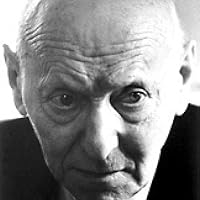
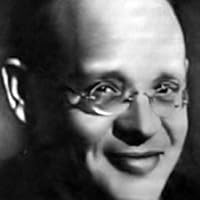
Isaak Emmanuilovich Babel (Russian: Исаак Эммануилович Бабель; 1894 - 1940) was a Russian language journalist, playwright, literary translator, and short story writer. He is best known as the author of Red Cavalry, Story of my Dovecote and Tales of Odessa, all of which are considered masterpieces of Russian literature. Babel has also been acclaimed as "the greatest prose writer of Russian Jewry." Loyal to, but not uncritical of, the Communist Party of the Soviet Union, Isaak Babel fell victim to Joseph Stalin's Great Purge due to his longterm affair with the wife of NKVD chief Nikolai Yezhov. Babel was arrested by the NKVD at Peredelkino on the night of May 15, 1939. After "confessing", under torture, to being a Trotskyist terrorist and foreign spy, Babel was shot on January 27, 1940. The arrest and execution of Isaak Babel has been labeled a catastrophe for the world of literature.

Gesualdo Bufalino
Gesualdo Bufalino
Author · 9 books
Gesualdo Bufalino (Comiso, Italy, November 15, 1920 - June 14, 1996), was an Italian writer. Born in Comiso (Sicily), he studied literature and was, for most of his life a high-school professor in his hometown. The time spent in an hospital for tuberculosis immediately after World War II provided the material for the novel Diceria dell'untore (The Plague Sower), that, begun in 1950, would be published only in 1981, when, at the age of 61, his friend and celebrated writer Leonardo Sciascia discovered his talents. In 1988, the novel Le menzogne della notte (Night's Lies) won the Strega Prize. In 1990 he won the Nino Martoglio International Book Award. In his native town the Biblioteca di Bufalino ("Bufalino's Library") is now named after him.
Clarice Lispector
Clarice Lispector
Author · 84 books

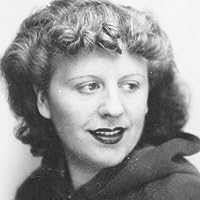
Clarice Lispector was a Brazilian writer. Acclaimed internationally for her innovative novels and short stories, she was also a journalist. Born to a Jewish family in Podolia in Western Ukraine, she was brought to Brazil as an infant, amidst the disasters engulfing her native land following the First World War. She grew up in northeastern Brazil, where her mother died when she was nine. The family moved to Rio de Janeiro when she was in her teens. While in law school in Rio she began publishing her first journalistic work and short stories, catapulting to fame at age 23 with the publication of her first novel, 'Near to the Wild Heart' (Perto do Coração Selvagem), written as an interior monologue in a style and language that was considered revolutionary in Brazil. She left Brazil in 1944, following her marriage to a Brazilian diplomat, and spent the next decade and a half in Europe and the United States. Upon return to Rio de Janeiro in 1959, she began producing her most famous works, including the stories of Family Ties (Laços de Família), the great mystic novel The Passion According to G.H. (A Paixão Segundo G.H.), and the novel many consider to be her masterpiece, Água Viva. Injured in an accident in 1966, she spent the last decade of her life in frequent pain, steadily writing and publishing novels and stories until her premature death in 1977. She has been the subject of numerous books and references to her, and her works are common in Brazilian literature and music. Several of her works have been turned into films, one being 'Hour of the Star' and she was the subject of a recent biography, Why This World, by Benjamin Moser.

William Irish
William Irish
Author · 12 books
pseudonym of Cornell Woolrich
Sylvia Plath
Sylvia Plath
Author · 58 books
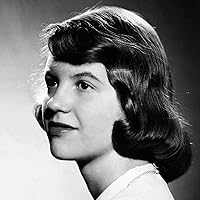
Sylvia Plath was an American poet, novelist, and short story writer. Known primarily for her poetry, Plath also wrote a semi-autobiographical novel, The Bell Jar, under the pseudonym Victoria Lucas. The book's protagonist, Esther Greenwood, is a bright, ambitious student at Smith College who begins to experience a mental breakdown while interning for a fashion magazine in New York. The plot parallels Plath's experience interning at Mademoiselle magazine and subsequent mental breakdown and suicide attempt.
Mercè Rodoreda
Mercè Rodoreda
Author · 21 books

Mercè Rodoreda i Gurguí was a Catalan novelist. She is considered by many to be the most important Catalan novelist of the postwar period. Her novel "La plaça del diamant" ('The diamond square', translated as 'The Time of the Doves', 1962) has become the most acclaimed Catalan novel of all time and since the year it was published for the first time, it has been translated into over 20 languages. It's also considered by many to be best novel dealing with the Spanish Civil War.

Ernest Martínez Ferrando
Author · 3 books

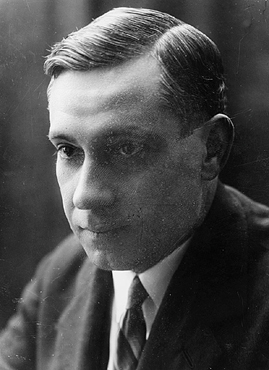
Ernest Martínez Ferrando (València, 1891—1965). Es llicencià en història a València. Ingressà per oposició al Cos d’Arxivers, i fou destinat a la Biblioteca Universitària de Barcelona, a l’Arxiu d’Hisenda i a la Biblioteca Provincial de Girona, fins que, el 1920, fou destinat a l’Arxiu de la Corona d’Aragó, del qual fou director del 1940 al 1961. Millorà notablement les instal·lacions de l’Arxiu i planejà un ambiciós projecte de modernització i d’ampliació, que començà a executar. Fou un bon escriptor en prosa, autor de contes i narracions curtes i d’una novel·la, Una dona s’atura en el camí, que guanyà el premi Crexells el 1935. Publicà la seva primera col·lecció de narracions breus, Les llunyanies suggestives i altres proses, el 1918, seguida d' El farsant i l’enamorada (1919) i Vida d’infant (1921), reelaborada en Primavera inquieta (1926). El darrer recull, L’altre geperut i alguns contes més, aparegué el 1963. La seva tasca com a historiador s’inicià el 1934, amb la publicació del Catálogo de la documentación relativa al antiguo reino de Valencia (Jaime I el Conquistador; Pedro el Grande). Aparegué poc després Pere de Portugal, “rei dels catalans”, vist a través dels registres de la seva cancelleria (1936) i altres obres relacionades amb aquest tema, que constituí una de les seves especialitats. També estudià la figura i el regnat de Jaume II i el seu fill Alfons el Benigne a Jaime II de Aragón, Su vida familiar (1948), Els fills de Jaume II (1950), Jaume II (1954) i Jaume II o el seny català (1956), reeditada el 1963 amb el complement de la biografia d' Alfons el Benigne, i després, La tràgica història dels reis de Mallorca (1960). Col·laborà en la Història dels catalans, dirigida per Ferran Soldevila (1966 i 1969). Fou també traductor del francès i de l’alemany al català, amb traduccions d’obres literàries de Kleist, Maupassant, Schnitzler i Zweig. Photo credit © Fototeca.cat

Isaac Bashevis Singer
Author · 68 books

Isaac Bashevis Singer was a Polish American author of Jewish descent, noted for his short stories. He was one of the leading figures in the Yiddish literary movement, and received the Nobel Prize in Literature in 1978. His memoir, "A Day Of Pleasure: Stories of a Boy Growing Up in Warsaw", won the U.S. National Book Award in Children's Literature in 1970, while his collection "A Crown of Feathers and Other Stories" won the U.S. National Book Award in Fiction in 1974.

Roald Dahl
Roald Dahl
Author · 234 books

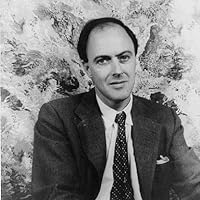
Roald Dahl was a British novelist, short story writer and screenwriter of Norwegian descent, who rose to prominence in the 1940's with works for both children and adults, and became one of the world's bestselling authors. Dahl's first published work, inspired by a meeting with C. S. Forester, was Shot Down Over Libya. Today the story is published as A Piece of Cake. The story, about his wartime adventures, was bought by the Saturday Evening Post for $900, and propelled him into a career as a writer. Its title was inspired by a highly inaccurate and sensationalized article about the crash that blinded him, which claimed he had been shot down instead of simply having to land because of low fuel. His first children's book was The Gremlins, about mischievous little creatures that were part of RAF folklore. The book was commissioned by Walt Disney for a film that was never made, and published in 1943. Dahl went on to create some of the best-loved children's stories of the 20th century, such as Charlie and the Chocolate Factory, Matilda and James and the Giant Peach. He also had a successful parallel career as the writer of macabre adult short stories, usually with a dark sense of humour and a surprise ending. Many were originally written for American magazines such as Ladies Home Journal, Harper's, Playboy and The New Yorker, then subsequently collected by Dahl into anthologies, gaining world-wide acclaim. Dahl wrote more than 60 short stories and they have appeared in numerous collections, some only being published in book form after his death. His stories also brought him three Edgar Awards: in 1954, for the collection Someone Like You; in 1959, for the story "The Landlady"; and in 1980, for the episode of Tales of the Unexpected based on "Skin".

Marcel Schwob
Marcel Schwob
Author · 18 books
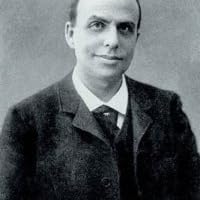
Marcel Schwob (1867-1905) was one of the key symbolist writers, standing in French literature alongside such names as Stephane Mallarme, Octave Mirbeau, Andre Gide, Leon Bloy, Jules Renard, Remy de Gourmont, and Alfred Jarry. His best-known works are Double Heart (1891), The King In The Gold Mask (1892), and Imaginary Lives (1896).
Yasunari Kawabata
Yasunari Kawabata
Author · 47 books

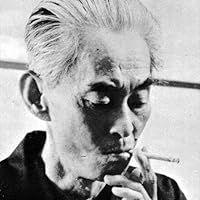
Yasunari Kawabata (川端 康成) was a Japanese short story writer and novelist whose spare, lyrical, subtly-shaded prose works won him the Nobel Prize for Literature in 1968, the first Japanese author to receive the award. His works have enjoyed broad international appeal and are still widely read today. Nobel Lecture: 1968 http://www.nobelprize.org/nobel\_prize...

Ana Matute
Ana Matute
Author · 36 books

Ana María Matute Ausejo was born in Barcelona, Spain, the second of five children in a conservative middle class family. Her father, Facundo Matute, owned an umbrella factory and has been credited with inspiring his daughter's creativity. Matute spent a considerable amount of time in Madrid during her childhood as well, but few of her stories are set there. When she was four years old, she almost died of an illness, and was taken to live with her grandparents in San Mansilla de la Sierra, a small town in the mountains, for a period of convalescence. Matute says that she was profoundly influenced by the villagers whom she met during her time there. This influence can be seen in such works as those published in the 1961 anthology Historias de la Artamila ("Stories about the Artamila", all of which deal with the people that Matute met during her recovery). Settings reminiscent of that town are also often used as settings for her other work. She was almost ten years old when the Spanish Civil War broke out in 1936, and this conflict is said to have had the greatest impact on Matute's writing. She considered not only "the battles between the two factions, but also the internal aggression within each one" The war resulted in Francisco Franco's rise to power, starting in 1936 and escalating until 1939, when he took control of the entire country. Franco established a dictatorship which lasted thirty-six years, until his death in 1975. The violence brought on by the war continued through much of his reign. Since Matute matured as a writer in this posguerra period under Franco's oppressive regime, some of the most recurrent themes in her works are violence, alienation, misery, and especially the loss of innocence. She married Ramón Eugenio de Goicoechea, also a writer, on 17 November 1952, and the couple had a son, Juan Pablo, to whom Matute dedicated various children's stories. The couple divorced in 1965. Because of the laws of Spain, following her divorce she was not allowed to see her son, as the law gave full care over to her ex-husband. This caused Matute great emotional distress. However, she refused to use this as material for any of her stories. During her last years, before being very ill, Matute worked as university professor. She traveled in various countries, especially the United States, as a lecturer. She was outspoken about subjects such as the benefits of emotional suffering, the constant changing of a human being, and how innocence is never completely lost. She claimed that, although her body was old, she was young at heart. In the year 1998, she was elected as a member of the Real Academia Española, becoming the third woman that could take part in the spanish language academia. Her academic life also led her to be an honorific member in the Hispanic Society of America and, in the year 2013, to be a juror in the Miguel de Cervantes Prize, the most important in spanish language.

Dylan Thomas
Dylan Thomas
Author · 52 books

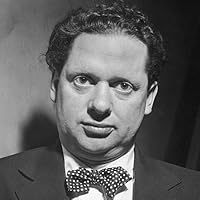
Dylan Marlais Thomas (1914-1953) was a Welsh poet who wrote in English. Many regard him as one of the 20th century's most influential poets. In addition to poetry, Thomas wrote short stories and scripts for film and radio, with the latter frequently performed by Thomas himself. His public readings, particularly in America, won him great acclaim; his booming, at times, ostentatious voice, with a subtle Welsh lilt, became almost as famous as his works. His best-known work includes the "play for voices" Under Milk Wood and the celebrated villanelle for his dying father, "Do not go gentle into that good night." Appreciative critics have also noted the superb craftsmanship and compression of poems such as "In my craft or sullen art" and the rhapsodic lyricism of Fern Hill.

Anton P. Txékhov
Author · 1 book
Catalan variant spelling record for Anton Chekhov
Amadou Hampâté Bâ
Author · 2 books

Amadou Hampâté Bâ was born to an aristocratic Fula family in Bandiagara, the largest city in Dogon territory and the capital of the precolonial Masina Empire. After his father's death, he was adopted by his mother's second husband, Tidjani Amadou Ali Thiam of the Toucouleur ethnic group. He first attended the Qur'anic school run by Tierno Bokar, a dignitary of the Tijaniyyah brotherhood, then transferred to a French school at Bandiagara, then to one at Djenné. In 1915, he ran away from school and rejoined his mother at Kati, where he resumed his studies. In 1921, he turned down entry into the école normale in Gorée. As a punishment, the governor appointed him to Ouagadougou with the role he later described as that of "an essentially precarious and revocable temporary writer". From 1922 to 1932, he filled several posts in the colonial administration in Upper Volta, now Burkina Faso and from 1932 to 1942 in Bamako. In 1933, he took a six month leave to visit Tierno Bokar, his spiritual leader.(see also:Sufi studies) In 1942, he was appointed to the Institut Français d’Afrique Noire (IFAN, French Institute of Black Africa) in Dakar thanks to the benevolence of Théodore Monod, its director. At IFAN, he made ethnological surveys and collected traditions. For 15 years he devoted himself to research, which would later lead to the publication of his work L'Empire peul de Macina (The Peul Empire of Macina). In 1951, he obtained a UNESCO grant, allowing him to travel to Paris and meet with intellectuals from Africanist circles, notably Marcel Griaule. With Mali's independence in 1960, Bâ founded the Institute of Human Sciences in Bamako, and represented his country at the UNESCO general conferences. In 1962, he was elected to UNESCO's executive council, and in 1966 he helped establish a unified system for the transcription of African languages. His term in the executive council ended in 1970, and he devoted the remaining years of his life to research and writing. He moved to Abidjan, and worked on classifying the archives of West African oral tradition that he had accumulated throughout his lifetime, as well as writing his memoirs (Amkoullel l'enfant peul and Oui mon commandant!, both published posthumously). (source: Wikipedia)

Andrei Platonov
Andrei Platonov
Author · 33 books

Andrei Platonov, August 28, 1899 – January 5, 1951, was the pen name of Andrei Platonovich Klimentov, a Soviet author whose works anticipate existentialism. Although Platonov was a Communist, his works were banned in his own lifetime for their skeptical attitude toward collectivization and other Stalinist policies. From 1918 through 1921, his most intensive period as a writer, he published dozens of poems (an anthology appeared in 1922), several stories, and hundreds of articles and essays, adopting in 1920 the Platonov pen-name by which he is best-known. With remarkably high energy and intellectual precocity he wrote confidently across a wide range of topics including literature, art, cultural life, science, philosophy, religion, education, politics, the civil war, foreign relations, economics, technology, famine, and land reclamation, amongst others. His famous works include the novels The Foundation Pit and Chevengur.

Miguel Torga
Miguel Torga
Author · 18 books

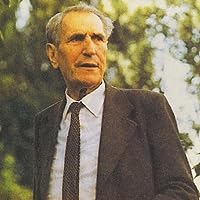
Miguel Torga, pseudonym of Adolfo Correia da Rocha was one of the greatest Portuguese writers of the 20th century. He wrote poetry, short stories, theater and a 16 volume diary. He was born in a village in Trás-os-Montes, northern Portugal, to small-time farmer parents. After a short spell as student in a catholic seminary in Lamego, also in Trás-os-Montes, in 1920 his father sent him to Brazil where he worked on the coffee plantation of an uncle who, finding him to be a clever student, paid his high school there and afterwards his medicine graduation (1933) at the University of Coimbra, in Portugal (to where he returns in 1925). After graduation he worked in his village and in other places in the country, publishing his books from his own pocket for a number of years. In 1941, he established himself as an otolaryngologist physician in Coimbra. His agnostic beliefs seems to reflect in his work, that deals mainly with the nobility of the human condition in a beautiful but ruthless world where God is absent or is nothing but a passive and silent, indiferent creator. After the value of his work was being recognized, he went on to receive several awards, as the Prémio Camões in 1989 and the Montaigne award in 1981. He was several times nominated for the Nobel Prize of Literature, being the last one in 1994, but he never won. Source: http://en.wikipedia.org/wiki/Miguel\_T...

548 Market St PMB 65688, San Francisco California 94104-5401 USA
© 2026 Paratext Inc. All rights reserved