Margins
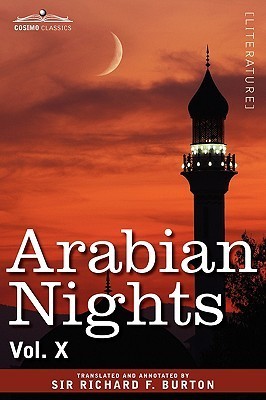
Arabian Nights; Volume 10 of 16 book cover
Arabian Nights; Volume 10 of 16
2010
First Published
3.76
Average Rating
520
Number of Pages
Notorious for the delight he took in tweaking the sexual taboos of the Victorian age-as well as the delight he took in the resulting shock of his bashful peers-British adventurer, linguist, and author CAPTAIN SIR RICHARD FRANCIS BURTON (1821-1890) is perhaps best remembered for his unexpurgated translation of the Eastern classic The One Thousand and One Nights, more famously known today as The Arabian Nights. Originating in Persian, Indian, and Arabic sources as far back as the ninth century AD, this collection of bawdy tales-which Burton was the first to bring to English readers in uncensored form-has exerted incalculable influence on modern literature. It represents one of the earliest examples of a framing story, as young Shahrazad, under threat of execution by the King, postpones her death by regaling him with these wildly entertaining stories over the course of 1,001 nights. The stories themselves feature early instances of sexual humor, satire and parody, murder mystery, horror, and even science fiction. Burton's annotated 16-volume collection, as infamous as it is important, was first published between 1885 and 1888, and remains an entertainingly naughty read. Volume X-which concludes Burton's initial publication of the tales-includes: "Ma'aruf the Cobbler and His Wife Fatimah" Burton's essays on the origins of the tales and other background material appendices and indexes and more.

Avg Rating
3.76
Number of Ratings
29
5 STARS
28%
4 STARS
31%
3 STARS
31%
2 STARS
10%
1 STARS
0%
goodreads

Author

Richard Francis Burton
Author · 33 books

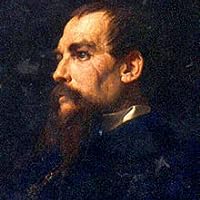
Captain Sir Richard Francis Burton KCMG FRGS was a British geographer, explorer, translator, writer, soldier, orientalist, cartographer, ethnologist, spy, linguist, poet, fencer and diplomat. He was known for his travels and explorations within Asia, Africa and the Americas as well as his extraordinary knowledge of languages and cultures. According to one count, he spoke 29 European, Asian, and African languages. Burton's best-known achievements include travelling in disguise to Mecca, an unexpurgated translation of One Thousand and One Nights (also commonly called The Arabian Nights in English after Andrew Lang's adaptation), bringing the Kama Sutra to publication in English, and journeying with John Hanning Speke as the first Europeans led by Africa's greatest explorer guide, Sidi Mubarak Bombay, utilizing route information by Indian and Omani merchants who traded in the region, to visit the Great Lakes of Africa in search of the source of the Nile. Burton extensively criticized colonial policies (to the detriment of his career) in his works and letters. He was a prolific and erudite author and wrote numerous books and scholarly articles about subjects including human behaviour, travel, falconry, fencing, sexual practices, and ethnography. A unique feature of his books is the copious footnotes and appendices containing remarkable observations and unexpurgated information. He was a captain in the army of the East India Company serving in India (and later, briefly, in the Crimean War). Following this he was engaged by the Royal Geographical Society to explore the east coast of Africa and led an expedition guided by the locals and was the first European to see Lake Tanganyika. In later life he served as British consul in Fernando Po, Santos, Damascus and, finally, Trieste. He was a Fellow of the Royal Geographical Society and was awarded a knighthood (KCMG) in 1886.

548 Market St PMB 65688, San Francisco California 94104-5401 USA
© 2026 Paratext Inc. All rights reserved