1990
First Published
4.26
Average Rating
228
Number of Pages
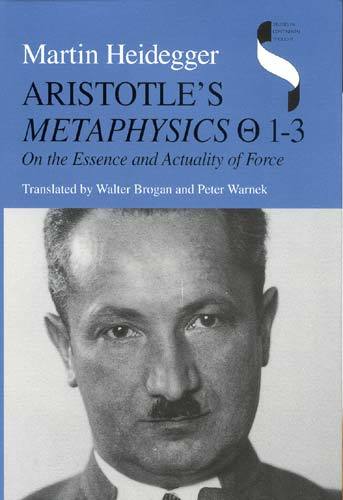
Martin Heidegger’s reading of Aristotle was one of the pivotal influences in the development of his philosophy. First published in German in 1981 as volume 33 of Heidegger's Collected Works, this book translates a lecture course he presented at the University of Freiburg in 1931. Heidegger's careful translation and his probing commentary on the first three chapters of Book IX of Metaphysics show the close correlation between his phenomenological interpretation of the Greeks (especially of Aristotle) and his critique of metaphysics. Additionally, Heidegger's confrontation with Aristotle's Greek text makes a significant contribution to contemporary scholarship on Aristotle, particularly the understanding of potentiality in Aristotle's thought. Finally, the book exemplifies Heidegger's gift for teaching students how to read a philosophical text and how to question that text in a philosophical way.

Avg Rating
4.26
Number of Ratings
43
5 STARS
53%
4 STARS
26%
3 STARS
16%
2 STARS
2%
1 STARS
2%
goodreads
Author

Martin Heidegger
Author · 91 books
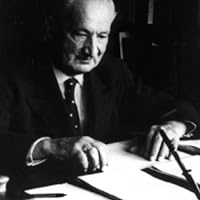
Martin Heidegger (1889-1976) was a German philosopher whose work is perhaps most readily associated with phenomenology and existentialism, although his thinking should be identified as part of such philosophical movements only with extreme care and qualification. His ideas have exerted a seminal influence on the development of contemporary European philosophy. They have also had an impact far beyond philosophy, for example in architectural theory (see e.g., Sharr 2007), literary criticism (see e.g., Ziarek 1989), theology (see e.g., Caputo 1993), psychotherapy (see e.g., Binswanger 1943/1964, Guignon 1993) and cognitive science (see e.g., Dreyfus 1992, 2008; Wheeler 2005; Kiverstein and Wheeler forthcoming).