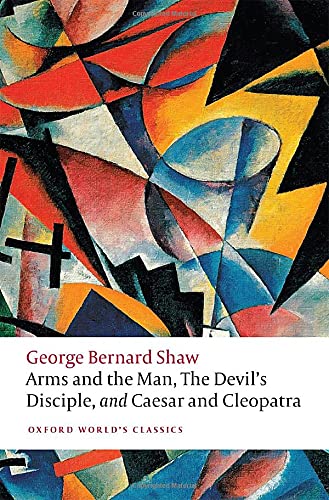
The three plays in this volume are some of George Bernard Shaw's most popular and frequently performed works. They demonstrate the development of Shavian comedy and contain early formulations of his idea of the Superman, an extraordinary individual who catalyzes the evolution of mankind. Arms and the Man (1894) was Shaw's first commercial success and the first public confirmation that he could make playwriting his profession. It is the first of what Shaw called his "pleasant plays',comedies that critique idealism in general rather than specific social problems (as his earlier plays did). Specifically, Shaw undermines the romance of wartime courage, reckless heroism, and nationalist pride among British spectators while using the Serbo-Bulgarian War of 1886 as an exotic veneer. Shaw wrote The Devil's Disciple (1897) for William Terriss, an actor known for his swashbuckling roles who had requested a play that would 'contain every "surefire" melodramatic situation' —mistaken identities, terrifying adventures and last-second escapes, and frequent emotional outpourings.. Caesar and Cleopatra (1898) is Shaw's revision of Shakespeare's Julius Caesar and Antony and Cleopatra as well as a fusion of the pragmatism and unconventionality of the heroes of Arms and the Man and The Devil's Disciple into a portrait of jocular, morally serious leadership.
Author

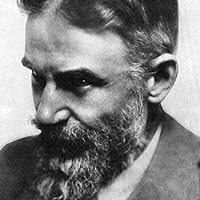
George Bernard Shaw was an Irish playwright, socialist, and a co-founder of the London School of Economics. Although his first profitable writing was music and literary criticism, in which capacity he wrote many highly articulate pieces of journalism, his main talent was for drama. Over the course of his life he wrote more than 60 plays. Nearly all his plays address prevailing social problems, but each also includes a vein of comedy that makes their stark themes more palatable. In these works Shaw examined education, marriage, religion, government, health care, and class privilege. An ardent socialist, Shaw was angered by what he perceived to be the exploitation of the working class. He wrote many brochures and speeches for the Fabian Society. He became an accomplished orator in the furtherance of its causes, which included gaining equal rights for men and women, alleviating abuses of the working class, rescinding private ownership of productive land, and promoting healthy lifestyles. For a short time he was active in local politics, serving on the London County Council. In 1898, Shaw married Charlotte Payne-Townshend, a fellow Fabian, whom he survived. They settled in Ayot St. Lawrence in a house now called Shaw's Corner. He is the only person to have been awarded both a Nobel Prize for Literature (1925) and an Oscar (1938). The former for his contributions to literature and the latter for his work on the film "Pygmalion" (adaptation of his play of the same name). Shaw wanted to refuse his Nobel Prize outright, as he had no desire for public honours, but he accepted it at his wife's behest. She considered it a tribute to Ireland. He did reject the monetary award, requesting it be used to finance translation of Swedish books to English. Shaw died at Shaw's Corner, aged 94, from chronic health problems exacerbated by injuries incurred by falling.