Margins
ASAA Southeast Asian Publications Series book cover 1
ASAA Southeast Asian Publications Series book cover 2
ASAA Southeast Asian Publications Series book cover 3
ASAA Southeast Asian Publications Series
Series · 5 books · 2005-2018

Books in series

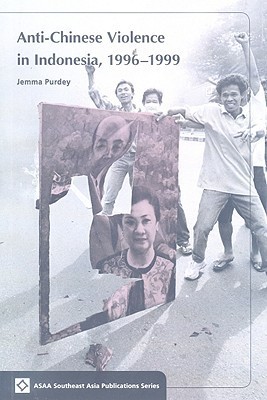
Anti-Chinese Violence in Indonesia, 1996–1999 book cover
#9

Anti-Chinese Violence in Indonesia, 1996–1999

2005

In this first book-length study of anti-Chinese hostility during the collapse of Suharto’s regime, Jemma Purdey presents a close analysis of the main incidents of violence during the transitional period between 1996 and 1999, and the unprecedented process of national reflection that ensued. While ethnicity and prejudice are central to the explanation put forward, Purdey concludes that politics, economics, and religion offer additional keys to understanding why such outbreaks occurred.
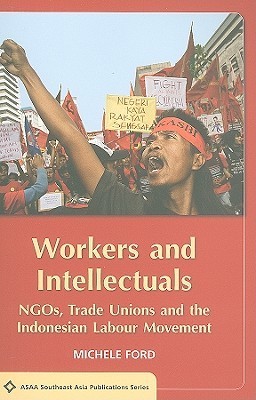
Workers and Intellectuals book cover
#17

Workers and Intellectuals

NGOs, Trade Unions and the Indonesian Labour Movement

2009

In the 1990s, Indonesia's independent labor movement re-emerged after decades of repression. The revival was led by students and NGO activists, who organized industrial workers and spoke on their behalf. Workers and Intellectuals explores how these middle-class activists struggled to define their place in a labor movement shaped by a history of fierce debate about the role of nonworker intellectuals. Drawing on extensive interviews, Michele Ford documents the contribution made by NGOs and student groups to the resurgence of labor activism, explaining how activists and workers perceived their roles and how the situation evolved in the decade after Suharto's authoritarian regime crumbled in 1998. This fine-grained study of labor organization in a developing country will appeal to scholars of labor history, politics, and sociology, as well as Indonesia specialists.
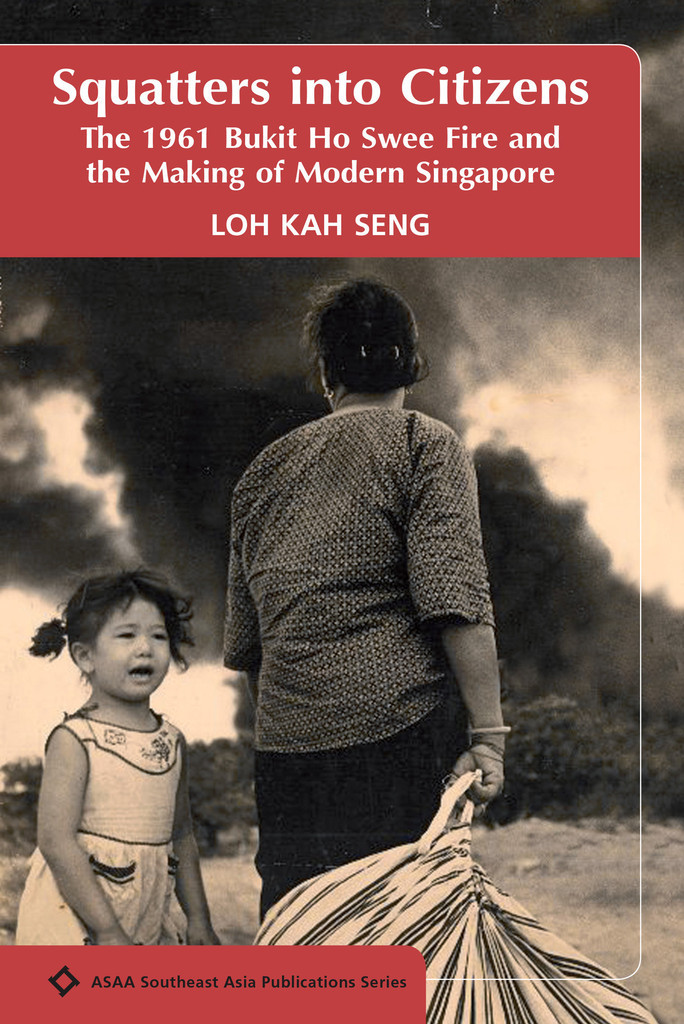
Squatters into Citizens book cover
#22

Squatters into Citizens

The 1961 Bukit Ho Swee Fire and the Making of Modern Singapore

2013

The crowded, bustling, 'squatter' kampongs so familiar across Southeast Asia have long since disappeared from Singapore, leaving few visible traces of their historical influence on the life in the city-state. In one such settlement, located in an area known as Bukit Ho Swee, a great fire in 1961 destroyed the kampong and left 16,000 people homeless, creating a national emergency that led to the first big public housing project of the new Housing and Development Board (HDB). HDB flats now house more than four-fifths of the Singapore population, making the aftermath of the Bukit Ho Swee fire a seminal event in modern Singapore. Loh Kah Seng grew up in one-room rental flats in the HDB estate built after the fire. Drawing on oral history interviews, official records and media reports, he describes daily life in squatter communities and how people coped with the hazard posed by fires. His examination of the catastrophic events of 25 May 1961 and the steps taken by the new government of the People's Action Party in response to the disaster show the immediate consequences of the fire and how relocation to public housing changed the people's lives. Through a narrative that is both vivid and subtle, the book explores the nature of memory and probes beneath the hard surfaces of modern Singapore to understand the everyday life of the people who live in the city.
Soul Catcher book cover
#27

Soul Catcher

Java’s Fiery Prince Mangkunagara I, 1726-95

2018

Mangkunagara I (1726-95) was one of the most flamboyant figures of 18th-century Java. A charismatic rebel from 1740 to 1757 and one of the foremost military commanders of his age, he won the loyalty of many followers. He was also a devout Muslim of the Mystic Synthesis style, a devotee of Javanese culture and a lover of beautiful women and Dutch gin. His enemies—the Surakarta court, his uncle the rebel and later Sultan Mangkubumi of Yogyakarta and the Dutch East India Company—were unable to subdue him, even when they united against him. In 1757 he settled as a semi-independent prince in Surakarta, pursuing his objective of as much independence as possible by means other than war, a frustrating time for a man who was a fighter to his fingertips. Professor Ricklefs here employs an extraordinary range of sources in Dutch and Javanese—among them Mangkunagara I’s voluminous autobiographical account of his years at war, the earliest autobiography in Javanese so far known—to bring this important figure to life. As he does so, our understanding of Java’s devastating civil war of the mid-18th century is transformed and much light is shed on Islam and culture in Java. "The Prince Sambĕr Nyawa is a very familiar name among Indonesians. However, our knowledge on his life and role as member of the Mataram royal family is very limited. The story of his character circulated is more of myths than a historical figure. This book convincingly provides readers a very rich biography of this flamboyant man based on first hand Javanese primary sources, including Sĕrat Babad Pakunĕgaran, and the VOC archives." –Oman Fathurahman, Syarif Hidayatullah State Islamic University "M.C. Ricklefs’ Soul Catcher is a rich and deeply textured portrait of Mangkunagara I (1726–95), a man who played a crucial role in in the history of 18th-century Java. Rickefs’ magisterial biography traces this prince’s life story, with an especially detailed history of the 15-year long military campaign he waged against the forces of the Dutch along with those of his various royal Javanese rivals. Ricklefs’ captivating narrative vividly displays his unparalled command and careful use of primary sources from both the Dutch colonial and the royal Javanese archives." –Nancy Florida, University of Michigan

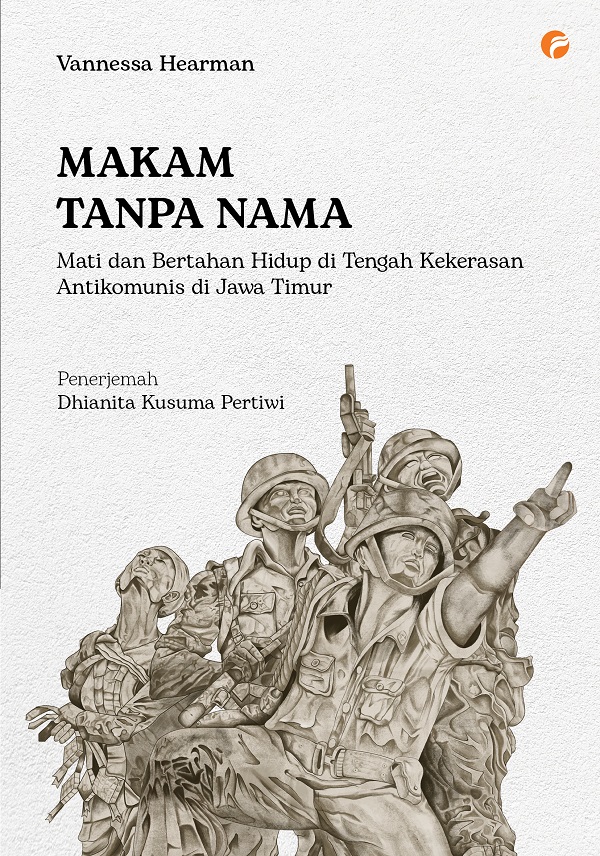
Makam Tanpa Nama book cover
#28

Makam Tanpa Nama

Mati dan Bertahan Hidup di Tengah Kekerasan Antikomunis di Jawa Timur

2018

Pemenang - 2020 Early Career Book Prize, ASAA (Asian Studies Association of Australia) Kekerasan antikomunis yang melanda Indonesia pada 1965-66 menyebabkan angka kematian yang sangat tinggi khususnya di daerah Jawa Timur. Hal tersebut juga mengubah kehidupan ratusan ribu penyintas yang selama beberapa dekade harus menghadapi persekusi, pemenjaraan, dan kekerasan. Dalam buku ini, Vannessa Hearman mengkaji kerugian korban jiwa dan dampak sosial dari kekerasan antikomunis dari berbagai sisi politik yang berbeda. Kontribusi utama dari buku ini adalah kajian atas pengalaman orang-orang Kiri. Melalui wawancara, rekaman arsip, serta laporan pemerintah dan militer, Vannessa menelusuri kehidupan sejumlah individu menyusul upaya mereka untuk membangun basis pertahanan di kawasan Blitar Selatan, Jawa Timur, serta perjalanan mereka selama berada dalam penjara dan pusat tahanan atau dalam persembunyian dan penyamaran bawah tanah. Vannessa juga memberikan pemahaman baru terkait relasi antara tentara dengan pendukungnya dari masyarakat sipil. Dewasa ini, pembunuhan massal yang pernah terjadi di Indonesia mendapatkan lebih banyak perhatian, tetapi para peneliti mengalami kesulitan untuk mengatasi tantangan keterbatasan arsip yang tersedia serta stigma yang berkaitan dengan keanggotaan partai komunis. Dengan mengkaji peristiwa yang terjadi di satu provinsi dan berfokus pada pengalaman individu, Vannessa telah mengambil langkah jauh ke depan—pada arah pemahaman yang lebih baik tentang periode masa lalu Indonesia yang kelam.

Authors

Loh Kah Seng
Author · 2 books
Loh Kah Seng is an Assistant Professor at the Institute for East Asian Studies, Sogang University, South Korea. His research investigates the transnational and social history of Singapore and Southeast Asia after the Second World War. Loh is author or editor of six books, including Squatters into Citizens: The 1961 Bukit Ho Swee Fire and The Making of Modern Singapore (NUS Press & ASAA, 2013).
548 Market St PMB 65688, San Francisco California 94104-5401 USA
© 2026 Paratext Inc. All rights reserved
ASAA Southeast Asian Publications Series