Margins
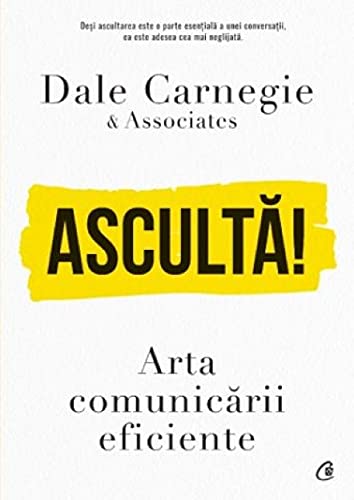
Asculta! Arta Comunicarii Eficiente book cover
Asculta! Arta Comunicarii Eficiente
2021
First Published
3.71
Average Rating
300
Number of Pages
Te-ai intrebat vreodata de ce deseori nu reusesti sa te intelegi cu partenerii de afaceri, cu rudele sau cu prietenii? Nu ti s-a intamplat uneori sa nu iti doresti nimic mai mult decat sa poti depasi barierele de comunicare dintre tine si persoanele dragi? Sa te faci nu doar auzit, ci ascultat si inteles? Acest volum te poate ajuta sa gasesti raspunsul la toate aceste intrebari si inca multe altele, pornind de la ideea ca pentru a fi un partener de discutie mai bun, este fundamental sa inveti sa-l asculti pe celalalt. Lectia cea mai importanta a acestei carti, este aceea ca pentru a fi inteles si ascultat trebuie mai intai sa inveti tu sa-l asculti si sa-l intelegi pe celalalt. Folosind exemple concrete, tehnici usor de invatat, care pot fi aplicate rapid in interactiunile de zi cu zi, aceasta carte tepoate invata sa devii un ascultator mai bun, mai empatic, mai atent, chiar si in situatiile cele mai delicate. Cel mai bun cadou pe care il poti face altora este sa devii tu mai bun. si poti face asta devenind un ascultator mai bun.– Joe Hart Desi ascultarea este doar o parte a unei conversatii, este adesea partea cea mai neglijata.– Dale Carnegie E nevoie doar de 45 de secunde de ascultare profunda si atenta pentru ca vorbitorul sa se simta ascultat.– Dale Carnegie Dale Carnegie, pe numele lui real Dale Carnagey, s-a nascut intr-o familie saraca de fermieri americani. Dupa absolvirea facultatii, a vandut cursuri prin corespondenta in Nebraska si a obtinut cateva roluri ca actor la New York, fara prea mare succes. In 1912 a fost angajat de Young Men's Christian Association sa predea cursuri pentru adulti si a descoperit, fara sa isi fi propus, o metoda de a diminua teama celor care vorbesc in fata unui public numeros. Astfel a inceput faimoasa cariera a lui Dale Carnegie, care a ajuns sa fie considerat cel mai mare autor de literatura motivationala al secolului al XX-lea. In anii ’50 au inceput sa prinda contur proiectele din cadrul programului Dale Carnegie Training, care se bazeaza pe principiile promovate de fondatorul sau. Recunoscut recent de catre Wall Street Journal ca una dintre cele 25 de francize de inalta performanta, programul Dale Carnegie Training a elaborat cursuri disponibile in 25 de limbi, in Statele Unite ale Americii si in alte 80 de tari. In prezent, partenerii din cadrul programului Dale Carnegie Training colaboreaza cu sute de corporatii medii si mari, precum si cu diferite alte organizatii pentru a ajuta firmele sa aiba succes, derulan

Avg Rating
3.71
Number of Ratings
21
5 STARS
38%
4 STARS
19%
3 STARS
29%
2 STARS
5%
1 STARS
10%
goodreads

Author

Dale Carnegie
Dale Carnegie
Author · 82 books

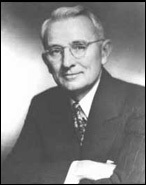
Dale Breckenridge Carnegie (originally Carnagey until 1922 and possibly somewhat later) (November 24, 1888 – November 1, 1955) was an American writer and lecturer and the developer of famous courses in self-improvement, salesmanship, corporate training, public speaking and interpersonal skills. Born in poverty on a farm in Missouri, he was the author of How to Win Friends and Influence People, first published in 1936, a massive bestseller that remains popular today. He also wrote a biography of Abraham Lincoln, titled Lincoln the Unknown, as well as several other books. Carnegie was an early proponent of what is now called responsibility assumption, although this only appears minutely in his written work. One of the core ideas in his books is that it is possible to change other people's behavior by changing one's reaction to them. Born in 1888 in Maryville, Missouri, Carnegie was a poor farmer's boy, the second son of James William Carnagey and wife Amanda Elizabeth Harbison (b. Missouri, February 1858 – living 1910). In his teens, though still having to get up at 4 a.m. every day to milk his parents' cows, he managed to get educated at the State Teacher's College in Warrensburg. His first job after college was selling correspondence courses to ranchers; then he moved on to selling bacon, soap and lard for Armour & Company. He was successful to the point of making his sales territory of South Omaha, Nebraska the national leader for the firm. After saving $500, Carnegie quit sales in 1911 in order to pursue a lifelong dream of becoming a Chautauqua lecturer. He ended up instead attending the American Academy of Dramatic Arts in New York, but found little success as an actor, though it is written that he played the role of Dr. Hartley in a road show of Polly of the Circus.[citation needed] When the production ended, he returned to New York, unemployed, nearly broke, and living at the YMCA on 125th Street. It was there that he got the idea to teach public speaking, and he persuaded the "Y" manager to allow him to instruct a class in return for 80% of the net proceeds. In his first session, he had run out of material; improvising, he suggested that students speak about "something that made them angry", and discovered that the technique made speakers unafraid to address a public audience. From this 1912 debut, the Dale Carnegie Course evolved. Carnegie had tapped into the average American's desire to have more self-confidence, and by 1914, he was earning $500 - the equivalent of nearly $10,000 now - every week. Perhaps one of Carnegie’s most successful marketing moves was to change the spelling of his last name from “Carnegey” to Carnegie, at a time when Andrew Carnegie (unrelated) was a widely revered and recognized name. By 1916, Dale was able to rent Carnegie Hall itself for a lecture to a packed house. Carnegie's first collection of his writings was Public Speaking: a Practical Course for Business Men (1926), later entitled Public Speaking and Influencing Men in Business (1932). His crowning achievement, however, was when Simon & Schuster published How to Win Friends and Influence People. The book was a bestseller from its debut in 1937, in its 17th printing within a few months. By the time of Carnegie's death, the book had sold five million copies in 31 languages, and there had been 450,000 graduates of his Dale Carnegie Institute. It has been stated in the book that he had critiqued over 150,000 speeches in his participation of the adult education movement of the time. During World War I he served in the U.S. Army. His first marriage ended in divorce in 1931. On November 5, 1944, in Tulsa, Oklahoma, he married Dorothy Price Vanderpool, who also had been divorced. Vanderpool had two daughters; Rosemary, from her first marriage, and Donna Dale from their marriage together. Carnegie died at Forest Hills, New York, and was buried in the Belton, Cass County, Missouri cemetery. The official biography fro

548 Market St PMB 65688, San Francisco California 94104-5401 USA
© 2026 Paratext Inc. All rights reserved