


Margins
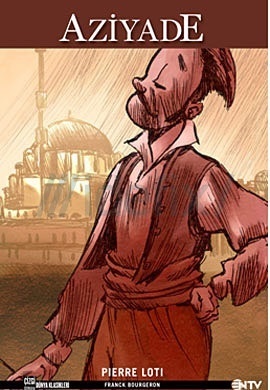
Aziyade book cover
Aziyade
2007
First Published
3.30
Average Rating
128
Number of Pages

AZİYADE ile devam ediyor. Pierre Loti'nin İstanbul'da geçen romanı hem bir kadına hem de bir diyara duyulan aşkı anlatıyor... Louis Marie Julien Viaud, namıdiğer Pierre Loti'nin yazma merakı okul yıllarında başladı. 15 yaşındayken Deniz Harp Okulu'na gitmek için evinden ayrılıp Paris'e giden Loti, yalnızlıktan kurtulmanın yolunu yazmakta buldu. 1866 yılının Kasım ayından itibaren tutmaya başladığı bu günlük yazarlık serüveninde hayli önemli rol oynadı. Zira Pierre Loti, otobiyografik unsurlar barındıran hemen bütün kitaplarını günlüklerinden yola çıkarak kaleme aldı. 1872 yılında Fransız donanmasına katılan Pierre Loti'nin gemisi önce Tahiti, ardından da Senegal'e uğrar. Tahiti'de Kraliçe VI. Pomané'nin huzuruna çıkılır. İşte bu ilk seyahatte kraliyet ailesi bu genç subaya yıllar sonra yapıtlarını imzalayacağı "Loti" lakabını takar. Tahiti'den Senegal'e, Mısır'dan Çin'e, Hindistan'dan Amerika'ya kadar birçok ülkeyi gezen; gördüğü yerler arasında sadece ve sadece İstanbul'u "ikinci vatan" olarak benimseyen Pierre Loti, yaşadığı sürece yedi kez ziyaret ettiği İstanbul'da bugün yalnızca yapıtlarıyla değil, adını taşıyan tepeyle de ölümsüzleşti. Aziyade ile, bir Türk asilzadesinin haremindeki o genç kadınla 1877'de karşılaştı. Kısa ama çılgınca bir aşk yaşadılar. Neden sonra yeniden İstanbul'a döndüğünde genç kadının kahrından öldüğünü öğrendi. Kalbinden asla atamadığı kadının yüce hatırasına duyduğu saygının gereği olarak 1879'da AZİYADE'yi, 1892'de ise Fantome d'orient / Doğudaki Hayalet'i yayınladı. AZİYADE'den sonra ikinci romanı Rarahu ya da Tahiti adıyla da bilinen Le Mariage de Loti, ardından da üçüncü kitabı Le Roman d'un Spahi / Bir Sipahi'nin Romanı geldi. 1886'da yayınlanan ve en beğenilen romanı Pêcheur d'Islande / İzlanda Balıkçısı ise Loti'nin tanınan ve okunan bir yazar olmasını sağladı. Fransız ve dünya edebiyatının usta kalemi Pierre Loti'nin bu eserini Franck Bourgeron uyarladı ve çizdi. NTV Yayınları Dünya Klasikleri serisi bir İstanbul âşığı ile devam ediyor.
Avg Rating
3.30
Number of Ratings
54
5 STARS
7%
4 STARS
33%
3 STARS
43%
2 STARS
15%
1 STARS
2%
goodreads

Author

Pierre Loti
Pierre Loti
Author · 27 books

Louis Marie-Julien Viaud was a writer, who used the pseudonym Pierre Loti. Viaud was born in Rochefort, Charente-Maritime, France, to an old Protestant family. His education began in Rochefort, but at the age of seventeen, being destined for the navy, he entered the naval school in Brest and studied on Le Borda. He gradually rose in his profession, attaining the rank of captain in 1906. In January 1910 he went on the reserve list. His pseudonym has been said to be due to his extreme shyness and reserve in early life, which made his comrades call him after "le Loti", an Indian flower which loves to blush unseen. Other explanations have been put forth by scholars. It is also said that he got the name in Tahiti where he got a sun burn and was called Roti (because he was all red like a local flower), he couldn't pronounce the r well so he stuck with Loti. He was in the habit of claiming that he never read books (when he was received at the Académie française, he said, "Loti ne sait pas lire" ("Loti doesn't know how to read"), but testimony from friends and acquaintances proves otherwise, as does his library, much of which is preserved in his house in Rochefort. In 1876 fellow naval officers persuaded him to turn into a novel passages in his diary dealing with some curious experiences at Istanbul. The result was Aziyadé, a novel which, like so many of Loti's, is part romance, part autobiography, like the work of his admirer, Marcel Proust, after him. (There is a popular cafe in current-day Istanbul dedicated to the time Loti spent in Turkey.) He proceeded to the South Seas as part of his naval training, and several years after leaving Tahiti published the Polynesian idyll originally named Rarahu (1880), which was reprinted as Le Mariage de Loti, the first book to introduce him to the wider public. This was followed by Le Roman d'un spahi (1881), a record of the melancholy adventures of a soldier in Senegambia. Loti on the day of his reception at the Académie française on 7 April, 1892. In 1882, Loti issued a collection of four shorter pieces, three stories and a travel piece, under the general title of Fleurs d'ennui (Flowers of Boredom). In 1883 he entered the wider public spotlight. First, he publish the critically acclaimed Mon frere Yves (My Brother Yves), a novel describing the life of a French naval officer (Pierre Loti), and a Breton sailor (Yves Kermadec), described by Edmund Gosse as "one of his most characteristic productions".[1] Second, while taking part as a naval officer in the undeclared hostilities that preceded the outbreak of the Sino-French War (August 1884 to April 1885), Loti wrote an article in the newspaper Le Figaro about atrocities that occurred during the French bombardment of the Thuan An forts that guarded the approaches to Hue (August 1883), and was threatened with suspension from the service, thus gaining wider public notoriety. In 1886 he published a novel of life among the Breton fisherfolk, called Pêcheur d'Islande (Iceland Fisherman), which Edmund Gosse characterized as "the most popular and finest of all his writings."[1] It shows Loti adapting some of the Impressionist techniques of contemporary painters, especially Monet, to prose, and is a classic of French literature. In 1887 he brought out a volume "of extraordinary merit, which has not received the attention it deserves",[1] Propos d'exil, a series of short studies of exotic places, in his characteristic semi-autobiographic style. The novel of Japanese manners, Madame Chrysanthème—a precursor to Madame Butterfly and Miss Saigon and a work that is a combination of narrative and travelog—was published the same year. During 1890 he published Au Maroc, the record of a journey to Fez in company with a French embassy, and Le Roman d'un enfant (The Story of a Child), a somewhat fictionalized recollection of Loti's childhood that would greatly influence Marcel Proust. A collection

548 Market St PMB 65688, San Francisco California 94104-5401 USA
© 2026 Paratext Inc. All rights reserved