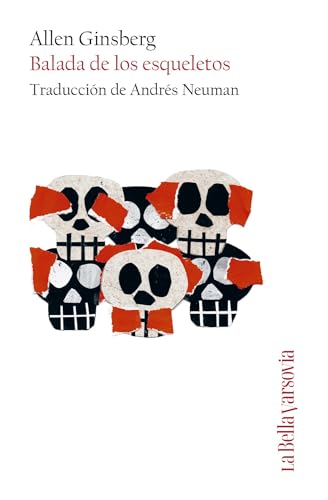



Uno de los poemas menos conocidos de Allen Ginsberg, y también uno de los más actuales. En 1996, Allen Ginsberg tenía setenta años, se encontraba muy delicado de salud y le quedaba apenas un año de vida. Impulsado quizá por la urgencia de cantar unas últimas verdades, y a pesar de sus escasas apariciones públicas durante aquel período, el poeta beat se lanzó a un gran proyecto el de musicar, en colaboración con Paul McCartney y Philip Glass, una colección de pequeños poemas que acababa de publicar en la revista The Nation: se trataba de la Balada de los esqueletos. Inspirados en la festividad mexicana del Día de los Muertos, estos esqueletos universales reproducen y padecen los males de nuestra sociedad, ejercen y a la vez sufren el poder, dejándose el cuerpo en ello. Entre todos conforman la danza macabra del sistema de agotamiento, explotación y destrucción en que vivimos. Sus versos, tan radicales como divertidos, azote de la moral estadounidense, mantienen hoy su feroz condición de sátira carnavalesca, cobrando una sorprendente y acaso terrorífica actualidad. Esta edición bilingüe cuenta con la traducción de Andrés una versión brillante y creativa que hace honor a la fuerza, el humor sarcástico, la expresividad y sonoridad de sus versos originales; así como con los memorables grabados del artista mexicano José Guadalupe Posada que, según el propio Ginsberg, supusieron una fuente de asombro poético.
Author

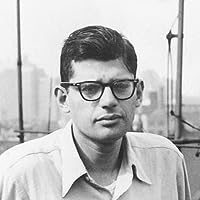
Long incantatory works and books of known American poet Irwin Allen Ginsberg, a leading figure of the Beat Generation, include Howl (1956) and Kaddish (1961). Naomi Ginsberg bore Irwin Allen Ginsberg, a son, to Louis Ginsberg, a Jewish member of the New York literary counterculture of the 1920s. They reared Ginsberg among several progressive political perspectives. Mental health of Naomi Ginsberg, a nudist, who supported the Communist party, concerned people throughout the childhood of the poet. According to biographer Barry Miles, "Naomi's illness gave Allen an enormous empathy and tolerance for madness, neurosis, and psychosis." As an adolescent, Ginsberg savored Walt Whitman, though in 1939, when Ginsberg graduated high school, he considered Edgar Allan Poe his favorite poet. Eager to follow a childhood hero who had received a scholarship to Columbia University, Ginsberg made a vow that if he got into the school he would devote his life to helping the working class, a cause he took seriously over the course of the next several years. He was admitted to Columbia University, and as a student there in the 1940s, he began close friendships with William S. Burroughs, Neal Cassady, and Jack Kerouac, all of whom later became leading figures of the Beat movement. The group led Ginsberg to a "New Vision," which he defined in his journal: "Since art is merely and ultimately self-expressive, we conclude that the fullest art, the most individual, uninfluenced, unrepressed, uninhibited expression of art is true expression and the true art." Around this time, Ginsberg also had what he referred to as his "Blake vision," an auditory hallucination of William Blake reading his poems "Ah Sunflower," "The Sick Rose," and "Little Girl Lost." Ginsberg noted the occurrence several times as a pivotal moment for him in his comprehension of the universe, affecting fundamental beliefs about his life and his work. While Ginsberg claimed that no drugs were involved, he later stated that he used various drugs in an attempt to recapture the feelings inspired by the vision. In 1954, Ginsberg moved to San Francisco. His mentor, William Carlos Williams, introduced him to key figures in the San Francisco poetry scene, including Kenneth Rexroth. He also met Michael McClure, who handed off the duties of curating a reading for the newly-established "6" Gallery. With the help of Rexroth, the result was "The '6' Gallery Reading" which took place on October 7, 1955. The event has been hailed as the birth of the Beat Generation, in no small part because it was also the first public reading of Ginsberg's "Howl," a poem which garnered world-wide attention for him and the poets he associated with. Shortly after Howl and Other Poems was published in 1956 by City Lights Bookstore, it was banned for obscenity. The work overcame censorship trials, however, and became one of the most widely read poems of the century, translated into more than twenty-two languages. In the 1960s and 70s, Ginsberg studied under gurus and Zen masters. As the leading icon of the Beats, Ginsberg was involved in countless political activities, including protests against the Vietnam War, and he spoke openly about issues that concerned him, such as free speech and gay rights agendas. Ginsberg went on publish numerous collections of poetry, including Kaddish and Other Poems (1961), Planet News (1968), and The Fall of America: Poems of These States (1973), which won the National Book Award. In 1993, Ginsberg received the Chevalier des Arts et des Lettres (the Order of Arts and Letters) from the French Minister of Culture. He also co-founded and directed the Jack Kerouac School of Disembodied Poetics at the Naropa Institute in Colorado. In his later years, Ginsberg became a Distinguished Professor at Brooklyn College. On April 5, 1997, in New York City, he died from complications of hepatitis.