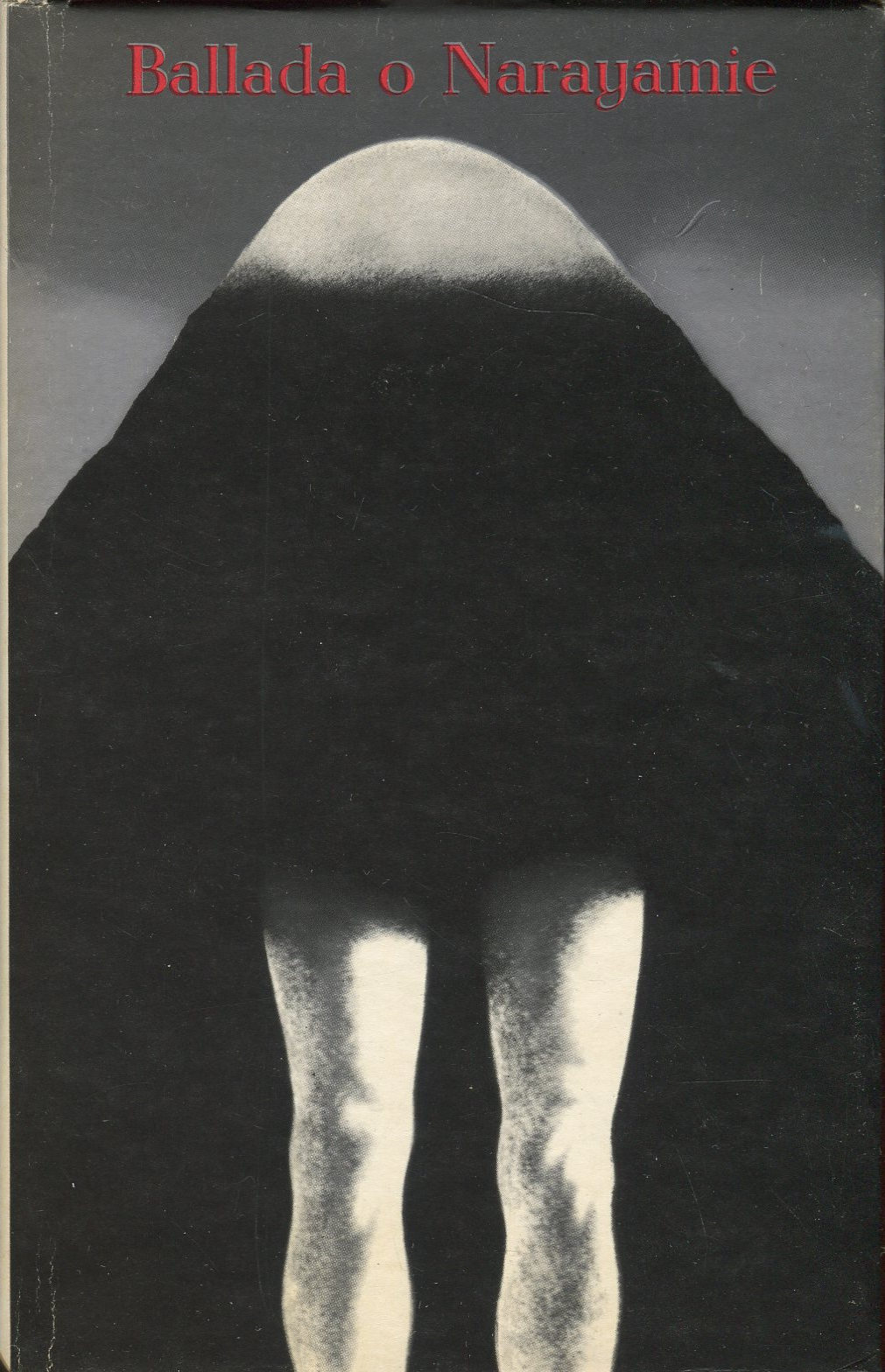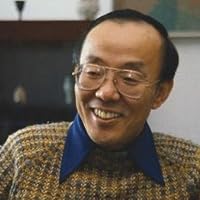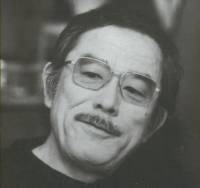



Dwadzieścia opowiadań grozy autorstwa wybitnych pisarzy japońskich. Same opowieści wydają się proste, niekiedy nad wyraz banalne, ale nie wolno nam zapominać, że to nie treść decyduje tutaj o niesamowitości opowiedzianych historii. Trzeba przyznać, że wybór opowieści dokonany został z wielkim smakiem i znajomością mistrzów pióra. Znajdziemy tutaj eksperymenty twórcze Kawabaty - laureata nagrody Nobla, wzorowane na opowieściach epoki Edo dzieło mistrza formy japońskiego romantyzmu - Izumiego Kyoki, jedno z najbardziej znanych opowiadań Akutagawy Ryuunosuke, który tak bał się popaść w obłęd, że popełnił samobójstwo (to z jego opowiadań czerpał Kurosawa, kręcąc m.in. Rashomon), a także Endo Shuusaku, który przybliżył rodakom zachodnie pojęcie dobra i zła, poznawszy chrześcijańskiego Boga i próbując zbliżyć się do Niego. Nie zapomniano też o Tanizakim Jun'ichiro, słynącym z subtelnej perwersji i fetyszystycznych obrazów w swych wczesnych utwo-rach, oraz o innych, których zainteresowanym kulturą Japonii znać wypada. Wybór ponad wątpliwość godny polecenia, lecz podkreślić należy, nie dla przeciętnego czytelnika, dla którego ważna jest tylko prosta, dająca się bezboleśnie przełknąć historia, której nie chce się smakować w skupieniu, bądź też nie posiada się zdolności docenienia piękna formy. Wrażliwy odbiorca nie tylko doceni kunszt autorów, ale zostanie również dotknięty trudnym do opisania, orientalnym nastrojem milczenia i tajemnicy i w jakiejś części swej własnej istoty dotknie świata, którego nie widać, ale który przynajmniej raz w życiu dostrzegamy kącikiem oka. Spis opowiadań: 1. Koizumi Yakumo "Przygoda kupca". 2. Koizumi Yakumo "Opowieść przy wtórze lutni". 3. Koizumi Yakumo "Zdrowy rozsądek". 4. Koizumi Yakumo "Podstęp". 5. Koizumi Yakumo "Na dnie czarki". 6. Izumi Kyoka "Świątobliwy bonza z góry Koya". 7. Izumi Kyoka "Nocny połów". 8. Akutagawa Ryunosuke "Piekieł wizerunek niezwykły". 9. Nakajima Atsushi "W górach przy księżycu". 10. Tanizaki Jun'ichiro "Szkaradne oblicze". 11. Tanizaki Jun'ichiro "Królestwo w miniaturze". 12. Kawabata Yasunari "Pieśń liryczna". 13. Kawabata Yasunari "Ręka". 14. Dazai Osamu "Rybką być". 15. Ibuse Masuji "Kwiaty śliwy i mroku". 16. Fukazawa Shichiro "Apeniny w świetle księżyca". 17. Fukazawa Shichiro "Ballada o Narayamie". 18. Endo Shusaku, "Pająk". 19. Nosaka Akiyuki "Bluszcz cmentarny na Przełęczy Kościotrupa". 20. Yuki Shoji "Samotny kruk". Akcja opowiadania Fukazawy Shichiro, które dało tytuł całej antologii, dzieje się w II połowie XIX wieku w niewielkiej, ubogiej wiosce położonej u podnóża świętej góry Narayamy. Panuje tam pradawny obyczaj, że z chwilą przyjścia na świat dziecka starcy, którzy ukończyli 70 lat, muszą się udać na górę - by tam umrzeć... Opowiadanie to stało się podstawą scenariusza filmu Shohei Imamury z 1983 r. pod tym samym tytułem.
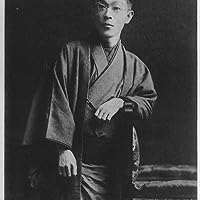
Authors

Shusaku Endo (遠藤周作), born in Tokyo in 1923, was raised by his mother and an aunt in Kobe where he converted to Roman Catholicism at the age of eleven. At Tokyo's Keio University he majored in French literature, graduating BA in 1949, before furthering his studies in French Catholic literature at the University of Lyon in France between 1950 and 1953. A major theme running through his books, which have been translated into many languages, including English, French, Russian and Swedish, is the failure of Japanese soil to nurture the growth of Christianity. Before his death in 1996, Endo was the recipient of a number of outstanding Japanese literary awards: the Akutagawa Prize, Mainichi Cultural Prize, Shincho Prize, and Tanizaki Prize. (from the backcover of Volcano).

Osamu DAZAI (native name: 太宰治, real name Shūji Tsushima) was a Japanese author who is considered one of the foremost fiction writers of 20th-century Japan. A number of his most popular works, such as Shayō (The Setting Sun) and Ningen Shikkaku (No Longer Human), are considered modern-day classics in Japan. With a semi-autobiographical style and transparency into his personal life, Dazai’s stories have intrigued the minds of many readers. His books also bring about awareness to a number of important topics such as human nature, mental illness, social relationships, and postwar Japan.

Jun'ichirō Tanizaki (谷崎 潤一郎) was a Japanese author, and one of the major writers of modern Japanese literature, perhaps the most popular Japanese novelist after Natsume Sōseki. Some of his works present a rather shocking world of sexuality and destructive erotic obsessions; others, less sensational, subtly portray the dynamics of family life in the context of the rapid changes in 20th-century Japanese society. Frequently his stories are narrated in the context of a search for cultural identity in which constructions of "the West" and "Japanese tradition" are juxtaposed. The results are complex, ironic, demure, and provocative.

Atsushi Nakajima (中島敦, Nakajima Atsushi, 5 May 1909 – 4 December 1942) was a Japanese author known for his unique style and self-introspective themes. His major works include "The Moon Over the Mountain" and "Light, Wind and Dreams". During his life he wrote about 20 works, including unfinished works, typically inspired by Classical Chinese stories and his own life experiences.

Masuji Ibuse (井伏 鱒二) was a Japanese novelist. At Waseda University, Ibuse was greatly influenced by the works of Shakespeare and Basho; he was also an avid reader of French fiction and poetry. Ibuse went as far as to pawn a watch to try to understand the necessities of writers. In 1918 Ibuse met naturalist writer Iwano Homei. Homei's literature was appealing to Ibuse and would later influence some of Ibuse's literary works. Ibuse befriended student Aoki Nampachi in Waseda, Aoki was a mentor and a great influence in the writings of Ibuse, Aoki's influence can be found in The Carp, where Ibuse ideolizes Aoki's friendship and represents his feelings towards this friendship in a carp. Ibuse started writing his first essays in 1922, shortly after the death of Aoki. Ibuse often found inspiration in his loneliness and in his encounters with geishas, his first literary works where in the style of prose, he had severed ties with Waseda University and started writing for small magazines. One of Ibuse's first contributions was for the magazine Seiki, it was originally written for Aoki in 1919 and titled The Salamander, in 1923 it was renamed Confinement. Ibuse was known and appreciated for most of his career, although it wasn't until after the war that he became famous. In 1966 he published his most well known work, Black Rain, which won him international acclaim and several awards including the Noma Prize and the Order of Cultural Merit, the highest honor that can be bestowed upon a Japanese author. The novel draws its material from the bombing of Hiroshima with the title referring to the nuclear fallout. Ibuse was not present at the time of the bombing, but uses the diaries of survivors to construct his narrative. His earlier story Kakitsubata (The Crazy Iris, first published in 1951) deals with similar themes. (from Wikipedia)

Akiyuki Nosaka (野坂 昭如 Nosaka Akiyuki) is a Japanese novelist, singer, lyricist, and former member of the House of Councillors. As a broadcasting writer he uses the name Yukio Aki (阿木 由紀夫 Aki Yukio) and his alias as a chanson singer is Claude Nosaka (クロード 野坂 Kurōdo Nosaka). Nosaka was born in Kamakura, Kanagawa, the son of Sukeyuki Nosaka, who was a sub-governor of Niigata. Together with his sisters he grew up as an adopted child of Harimaya in Nada, Kobe, Hyōgo. One of his sisters died as the result of sickness, and his adoptive father died during the 1945 bombing of Kobe in World War II. Another sister died of malnutrition in Fukui. Nosaka would later base his short story Grave of the Fireflies on these experiences. He is well known for children's stories about war. His Grave of the Fireflies and American Hijiki won the Naoki Prize in 1967. His novel, The Pornographers, was translated into English by Michael Gallagher and published in 1968. It was also filmed as The Pornographers by Shohei Imamura. In December 1978, he was credited for giving former rugby player-turned pro wrestler Susumu Hara his ring name, Ashura Hara. He was elected to the Japanese Diet in 1983. Nosaka suffered a stroke in 2003 and although still affected by it, he keeps writing a column for the daily Mainichi Shimbun. (from Wikipedia)

Japanese profile: 泉 鏡花 Kyōka was born Kyōtarō Izumi on November 4, 1873 in the Shitashinmachi section of Kanazawa, Ishikawa, to Seiji Izumi, a chaser and inlayer of metallic ornaments, and Suzu Nakata, daughter of a tsuzumi hand-drum player from Edo and younger sister to lead protagonist of the Noh theater, Kintarō Matsumoto. Because of his family's impovershed circumstances, he attended the tuition-free Hokuriku English-Japanese School, run by Christian missionaries. Even before he entered grade school, young Kintarō's mother introduced him to literature in picture-books interspersed with text called kusazōshi, and his works would later show the influence of this early contact with such visual forms of story-telling. In April 1883, at ten years old, Kyōka lost his mother, who was 29 at the time. It was a great blow to his young mind, and he would attempt to recreate memories of her in works throughout his literary career. At a friend's boarding house in April 1889, Kyōka was deeply impressed by Ozaki Kōyō's "Amorous Confessions of Two Nuns" and decided to pursue a career in literature. That June he took a trip to Toyama Prefecture. At this time he worked as a teacher in private preparatory schools and spent his free time running through yomihon and kusazōshi. In November of that year, however, Kyōka's aspiration to an artistic career drove him to Tokyo, where he intended to enter the tutelage of Kōyō himself. On 19 November 1891, he called on Kōyō in Ushigome(part of present-day Shinjuku) without prior introduction and requested that he be allowed into the school immediately. He was accepted, and from that time began life as a live-in apprentice. Other than a brief trip to Kanazawa in December of the following year, Kyōka spent all of his time in the Ozaki household, proving his value to Kōyō through correcting his manuscripts and household tasks. Kyōka greatly adored his teacher, thinking of him as a teacher of more than literature, a benefactor who nourished his early career before he gained a name for himself. He felt deeply a personal indebtedness to Kōyō, and continued to admire the author throughout his life.

Akutagawa Ryūnosuke (芥川 龍之介) was one of the first prewar Japanese writers to achieve a wide foreign readership, partly because of his technical virtuosity, partly because his work seemed to represent imaginative fiction as opposed to the mundane accounts of the I-novelists of the time, partly because of his brilliant joining of traditional material to a modern sensibility, and partly because of film director Kurosawa Akira's masterful adaptation of two of his short stories for the screen. Akutagawa was born in the Kyōbashi district Tokyo as the eldest son of a dairy operator named Shinbara Toshizō and his wife Fuku. He was named "Ryūnosuke" ("Dragon Offshoot") because he was born in the Year of the Dragon, in the Month of the Dragon, on the Day of the Dragon, and at the Hour of the Dragon (8 a.m.). Seven months after Akutagawa's birth, his mother went insane and he was adopted by her older brother, taking the Akutagawa family name. Despite the shadow this experience cast over Akutagawa's life, he benefited from the traditional literary atmosphere of his uncle's home, located in what had been the "downtown" section of Edo. At school Akutagawa was an outstanding student, excelling in the Chinese classics. He entered the First High School in 1910, striking up relationships with such classmates as Kikuchi Kan, Kume Masao, Yamamoto Yūzō, and Tsuchiya Bunmei. Immersing himself in Western literature, he increasingly came to look for meaning in art rather than in life. In 1913, he entered Tokyo Imperial University, majoring in English literature. The next year, Akutagawa and his former high school friends revived the journal Shinshichō (New Currents of Thought), publishing translations of William Butler Yeats and Anatole France along with original works of their own. Akutagawa published the story Rashōmon in the magazine Teikoku bungaku (Imperial Literature) in 1915. The story, which went largely unnoticed, grew out of the egoism Akutagawa confronted after experiencing disappointment in love. The same year, Akutagawa started going to the meetings held every Thursday at the house of Natsume Sōseki, and thereafter considered himself Sōseki's disciple. The lapsed Shinshichō was revived yet again in 1916, and Sōseki lavished praise on Akutagawa's story Hana (The Nose) when it appeared in the first issue of that magazine. After graduating from Tokyo University, Akutagawa earned a reputation as a highly skilled stylist whose stories reinterpreted classical works and historical incidents from a distinctly modern standpoint. His overriding themes became the ugliness of human egoism and the value of art, themes that received expression in a number of brilliant, tightly organized short stories conventionally categorized as Edo-mono (stories set in the Edo period), ōchō-mono (stories set in the Heian period), Kirishitan-mono (stories dealing with premodern Christians in Japan), and kaika-mono (stories of the early Meiji period). The Edo-mono include Gesaku zanmai (A Life Devoted to Gesaku, 1917) and Kareno-shō (Gleanings from a Withered Field, 1918); the ōchō-mono are perhaps best represented by Jigoku hen (Hell Screen, 1918); the Kirishitan-mono include Hokōnin no shi (The Death of a Christian, 1918), and kaika-mono include Butōkai(The Ball, 1920). Akutagawa married Tsukamoto Fumiko in 1918 and the following year left his post as English instructor at the naval academy in Yokosuka, becoming an employee of the Mainichi Shinbun. This period was a productive one, as has already been noted, and the success of stories like Mikan (Mandarin Oranges, 1919) and Aki (Autumn, 1920) prompted him to turn his attention increasingly to modern materials. This, along with the introspection occasioned by growing health and nervous problems, resulted in a series of autobiographically-based stories known as Yasukichi-mono, after the name of the main character. Works such as Daidōji Shinsuke no hansei(The Early Life of

Shichirō Fukazawa (深沢 七郎) was a Japanese author and guitarist. Fukazawa was born in Isawa, Yamanashi, Japan. His first novel, The Ballad of Narayama (楢山節考) won the Chūōkōron Prize, and was twice made into a movie script: first by Keisuke Kinoshita in 1958, and again by Shōhei Imamura in 1983. Imamura's film won the Cannes Film Festival Palme d'Or. In 1960, the monthly Japanese literary magazine Chūōkōron published his satire Furyu mutan (“The Story of a Dream of Courtly Elegance"). In it the narrator dreams that leftists take over the Imperial Palace and behead Crown Prince Akihito and Princess Michiko before an enthusiastic crowd. This story provoked fury in the Imperial Household Agency and among Japanese ultra-nationalists. On February 1, 1961, a seventeen-year-old rightist broke into the home of Chūōkōron's president, Shimanaka Hoji, killed a maid with a sword, and severely wounded Shimanaka's wife in response to the story. Fukazawa went into hiding and was little seen in public afterwards.

Yasunari Kawabata (川端 康成) was a Japanese short story writer and novelist whose spare, lyrical, subtly-shaded prose works won him the Nobel Prize for Literature in 1968, the first Japanese author to receive the award. His works have enjoyed broad international appeal and are still widely read today. Nobel Lecture: 1968 http://www.nobelprize.org/nobel\_prize...