Margins
Margins
Sign in
Margins
Subscribe to our newsletter
548 Market St PMB 65688, San Francisco California 94104-5401 USA
hello@margins.app
·
+1 (650) 223-5283
Privacy Policy
·
Terms of Use
© 2026 Paratext Inc. All rights reserved
📚
Barbara Pym
A Glass of Blessings
1958
Barbara Pym
Well dressed, well looked after, suitably husbanded, good looking and fairly young. Wilmet Forsyth is most, if not all of those things. No matter that Rodney, the handsome army major, working nine thirty to six at the Ministry, is slightly balder and fatter than he once was. Wilmet would like to think she has changed rather less.
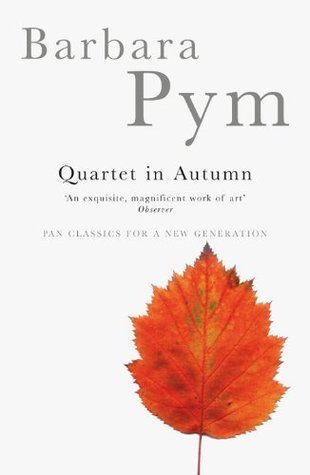
Quartet in Autumn
1977
Barbara Pym
This is the story of four people in late middle-age - Edwin, Norman, Letty and Marcia - whose chief point of contact is that they work in the same office and they suffer the same problem - loneliness. Lovingly, poignantly, satirically and with much humor, Pym conducts us through their small lives and the facade they erect to defend themselves against the outside world. There is nevertheless an obstinate optimism in her characters, allowing them in their different ways to win through to a kind of hope. Barbara Pym’s sensitive wit and artistry are at their most sparkling in Quartet in Autumn.
Crampton Hodnet
1985
Barbara Pym
Life has a certain reassuring if not terribly exciting rhythm for the residents of North Oxford. Miss Morrow is content in her position as spinster companion to Miss Doggett, even if her employer and the woman’s social circle regard her as a piece of furniture. Stephen Latimer, the new cleric and Miss Doggett’s dashing new tenant, upsets the balance for Miss Morrow by proposing the long discounted possibility of marriage. Miss Doggett’s nephew, Mr. Francis Cleveland, is a handsome, middle-aged professor not destined for greatness in his field. He has a complaisant wife and an adoring pupil, a dangerous midlife combination. The town gossips witness an impulsive declaration of love between Francis Cleveland and Miss Bird and conclude that Mr. Cleveland is willing to sacrifice marriage and respectability for the sake of passion. Caught in a potentially compromising situation with Miss Morrow, Mr. Latimer clumsily refers to a nonexistent town: Crampton Hodnet. His lie is harmless. In this town appearances are much more deceiving. Barbara Pym began writing Crampton Hodnet in 1939. It was first published posthumously in 1985, thanks to her friend and biographer, Hazel Holt.
A Few Green Leaves
1980
Barbara Pym
Completed barely two months before her death, Pym's last novel is an incisive and wry portrait of life in an English village in Oxfordshire. It is also certain to be considered by many her masterwork. In A Few Green Leaves the author combines the rural setting of her earliest novels with many of the themes—and even some characters—of her later ones. Switching points of view among many characters, she builds with accumulating effect the picture of life in a town forgotten by time yet affected dramatically by it. Historical time—represented by Druid ruins, the local eighteenth-century country manor, and the last aristocrats who occupied it in the 1920's—is juxtaposed against the banalities of life in today's world.
Jane and Prudence
1953
Barbara Pym
If Jane Cleveland and Prudence Bates seem an unlikely pair to be walking together at an Oxford reunion, neither of them are aware of it. They couldn't be more different: Jane is a rather incompetent vicar's wife, who always looks as if she is about to feed the chickens, while Prudence, a pristine hothouse flower, has the most unsuitable affairs. With the move to a rural parish, Jane is determined to find her friend the perfect man. She learns that matchmaking has as many pitfalls as housewifery...
Less Than Angels
1955
Barbara Pym
It is surely appropriate that anthropologists, who spend their time studying life and behavior in various societies, should be studied in their turn," says Barbara Pym. In a wonderful twist on her subjects, she has written a book inspecting the behavior of a group of anthropologists. She pits them against each other in affairs of the heart and mind. Academia is an especially rich backdrop. There is competition between the sexes, gender, and age groups. With Pym's keen eye for male pretensions and female susceptibilities, she exploits with good humor. Love will have its way even among the learned, one of whom is in a quandary between an adult and a young student. This is the world of research, grants, libraries and primitive cultures. Here is a particularly interesting contrast between the tribes of Africa and the social matrix of London. As the title implies, civilized society fares not too well on moral grounds to the more primitive societies. Barbara Pym does a masterful job with the mores of the cloistered society of academia.
Excellent Women
1952
Barbara Pym
Excellent Women is one of Barbara Pym's richest and most amusing high comedies. Mildred Lathbury is a clergyman's daughter and a mild-mannered spinster in 1950s England. She is one of those "excellent women," the smart, supportive, repressed women who men take for granted. As Mildred gets embroiled in the lives of her new neighbors—anthropologist Helena Napier and her handsome, dashing husband, Rocky, and Julian Malory, the vicar next door—the novel presents a series of snapshots of human life as actually, and pluckily, lived in a vanishing world of manners and repressed desires.
📚 Barbara Pym