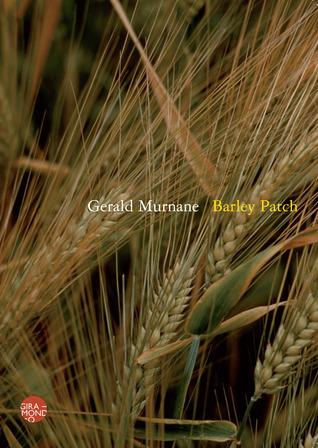



Gerald Murnane is regarded by many as Australia's most innovative writer of fiction. Barley Patch is his first new work of fiction in fourteen years, written after a period in which he had thought he would never write fiction again. The book begins with the question, 'Must I write?' What follows is both a chronicle of the images that have endured in the author's mind, and an exploration of their nature. The clarity of the images is extraordinary, as is their range, from Mandrake the Magician to the bachelor uncle kicked in the 'stones' as a child, from the country cousin's doll's house to the mysterious woman who lets her hair down, from the soldier beetle who winks messages from God to the racehorces that run forever in the author's mind, beyond the grasslands, to the place where the characters of fiction dwell before they come into existence in books.

Author

Murnane's first two books, Tamarisk Row (1974) and A Lifetime on Clouds (1976), seem to be semi-autobiographical accounts of his childhood and adolescence. Both are composed largely of very long but grammatical sentences. In 1982, he attained his mature style with The Plains, a short novel about a young filmmaker who travels to a fictive country far within Australia, where his failure to make a film is perhaps his most profound achievement. The novel is both a metaphysical parable about appearance and reality, and a parodic examination of traditions and cultural horizons. The novel depicts an abstracted Australia, akin to something out of mythology or fable. The novel was followed by: Landscape With Landscape (1985), Inland (1988), Velvet Waters (1990), and Emerald Blue (1995). A book of essays, Invisible Yet Enduring Lilacs, appeared in 2005, and a new work of fiction, Barley Patch, was released in 2009. All of these books are concerned with the relation between memory, image, and landscape, and frequently with the relation between fiction and non-fiction. Murnane is mainly known within Australia. A seminar was held on his work at the University of Newcastle in 2001. Murnane does, however, also have a following in other countries, especially Sweden and the United States, where The Plains was published in 1985 and reprinted in 2004 (New Issues Poetry & Prose), and where Dalkey Archive Press has recently issued Barley Patch and will be reprinting Inland in 2012. In 2011, The Plains' was translated into French and published in France by P.O.L, and in 2012 will be published in Hungarian.