Margins
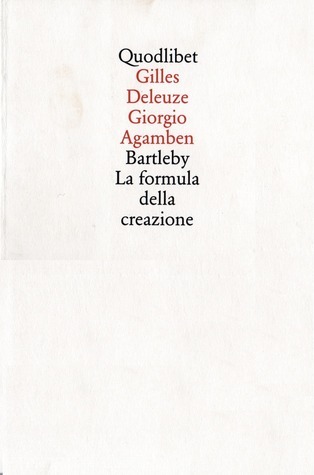
Bartleby. La formula della creazione book cover
Bartleby. La formula della creazione
1993
First Published
3.81
Average Rating
96
Number of Pages
Fin dalla sua pubblicazione nel 1853, Bartleby lo scrivano di Melville, «uno dei più bei racconti dell’epoca moderna», sta iscritto come un enigma sulla soglia della letteratura americana. La figura scialba e «incurabilmente perduta» dello scrivano che ha smesso di scrivere, ha letteralmente paralizzato i critici e tenacemente eluso ogni spiegazione. Qual è il messaggio che, senza mai proferirlo, egli sembra volerci significare con ogni suo gesto? E qual è il senso della formula che egli non si stanca di ripetere a ogni richiesta: «preferirei di no»? In questo libro, due filosofi, Gilles Deleuze e Giorgio Agamben, provano a misurarsi con l’enigma di Bartleby e a decifrare il senso della formula. In pagine straordinariamente dense l’autore dell’Anti Edipo scopre in Bartleby il paradigma della «natura prima» e, insieme, il rappresentante del «popolo a venire»; Giorgio Agamben legge nel «preferirei di no» dello scrivano la formula della potenza pura, l’algoritmo di un esperimento in cui il Possibile si emancipa da ogni ragione.

Avg Rating
3.81
Number of Ratings
58
5 STARS
21%
4 STARS
41%
3 STARS
36%
2 STARS
2%
1 STARS
0%
goodreads

Authors

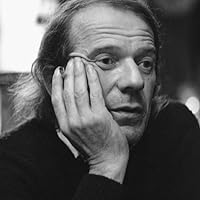
Gilles Deleuze
Gilles Deleuze
Author · 45 books

Deleuze is a key figure in poststructuralist French philosophy. Considering himself an empiricist and a vitalist, his body of work, which rests upon concepts such as multiplicity, constructivism, difference and desire, stands at a substantial remove from the main traditions of 20th century Continental thought. His thought locates him as an influential figure in present-day considerations of society, creativity and subjectivity. Notably, within his metaphysics he favored a Spinozian concept of a plane of immanence with everything a mode of one substance, and thus on the same level of existence. He argued, then, that there is no good and evil, but rather only relationships which are beneficial or harmful to the particular individuals. This ethics influences his approach to society and politics, especially as he was so politically active in struggles for rights and freedoms. Later in his career he wrote some of the more infamous texts of the period, in particular, Anti-Oedipus and A Thousand Plateaus. These texts are collaborative works with the radical psychoanalyst Félix Guattari, and they exhibit Deleuze’s social and political commitment. Gilles Deleuze began his career with a number of idiosyncratic yet rigorous historical studies of figures outside of the Continental tradition in vogue at the time. His first book, Empirisism and Subjectivity, is a study of Hume, interpreted by Deleuze to be a radical subjectivist. Deleuze became known for writing about other philosophers with new insights and different readings, interested as he was in liberating philosophical history from the hegemony of one perspective. He wrote on Spinoza, Nietzche, Kant, Leibniz and others, including literary authors and works, cinema, and art. Deleuze claimed that he did not write “about” art, literature, or cinema, but, rather, undertook philosophical “encounters” that led him to new concepts. As a constructivist, he was adamant that philosophers are creators, and that each reading of philosophy, or each philosophical encounter, ought to inspire new concepts. Additionally, according to Deleuze and his concepts of difference, there is no identity, and in repetition, nothing is ever the same. Rather, there is only difference: copies are something new, everything is constantly changing, and reality is a becoming, not a being. He often collaborated with philosophers and artists as Félix Guattari, Michel Foucault, Guy Hocquenghem, René Schérer, Carmelo Bene, François Châtelet, Olivier Revault d'Allonnes, Jean-François Lyotard, Georges Lapassade, Kateb Yacine and many others.

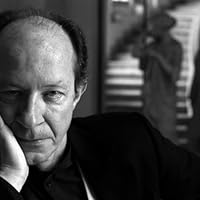
Giorgio Agamben
Giorgio Agamben
Author · 51 books

Giorgio Agamben is one of the leading figures in Italian and contemporary continental philosophy. He is the author of Homo Sacer: Sovereign Power and Bare Life; Remnants of Auschwitz: The Witness and the Archive; Profanations; The Signature of All Things: On Method, and other books. Through the 1970s, 1980s, and early 1990s he treated a wide range of topics, including aesthetics, literature, language, ontology, nihilism, and radical political thought. In recent years, his work has had a deep impact on contemporary scholarship in a number of disciplines in the Anglo-American intellectual world. Born in Rome in 1942, Agamben completed studies in Law and Philosophy with a doctoral thesis on the political thought of Simone Weil, and participated in Martin Heidegger’s seminars on Hegel and Heraclitus as a postdoctoral scholar. He rose to international prominence after the publication of Homo Sacer in 1995. Translated into English in 1998, the book’s analyses of law, life, and state power appeared uncannily prescient after the attacks on New York City and Washington, DC in September 2001, and the resultant shifts in the geopolitical landscape. Provoking a wave of scholarly interest in the philosopher’s work, the book also marked the beginning of a 20-year research project, which represents Agamben’s most important contribution to political philosophy.

548 Market St PMB 65688, San Francisco California 94104-5401 USA
© 2026 Paratext Inc. All rights reserved