Margins
Margins
Sign in
Margins
Subscribe to our newsletter
548 Market St PMB 65688, San Francisco California 94104-5401 USA
hello@margins.app
·
+1 (650) 223-5283
Privacy Policy
·
Terms of Use
© 2026 Paratext Inc. All rights reserved
👤 Biography
👤
Biography
Kissinger
1923-1968: The Idealist
Niall Ferguson
No American statesman has been as revered or as reviled as Henry Kissinger. Once hailed as “Super K”—the “indispensable man” whose advice has been sought by every president from Kennedy to Obama—he has also been hounded by conspiracy theorists, scouring his every “telcon” for evidence of Machiavellian malfeasance. Yet as Niall Ferguson shows in this 2-volume biography, drawing not only on Kissinger’s hitherto closed private papers but also on documents from more than a hundred archives around the world, the idea of Kissinger as the ruthless arch-realist is based on a profound misunderstanding. The first half of Kissinger’s life is usually skimmed over as a quintessential tale of American ascent: the Jewish refugee from Hitler’s Germany who made it to the White House. But in this first of two volumes, Ferguson shows that what Kissinger achieved before his appointment as Nixon’s national security adviser was astonishing in its own right. Toiling as a teen in a New York factory, he studied indefatigably at night. He was drafted into the infantry & saw action at the Battle of the Bulge—as well as the liberation of a concentration camp—but ended his army career interrogating Nazis. It was at Harvard that Kissinger found his vocation. Having immersed himself in the philosophy of Kant & the diplomacy of Metternich, he shot to celebrity by arguing for limited nuclear war. Nelson Rockefeller hired him. Kennedy called him to Camelot. Yet Kissinger’s rise was anything but irresistible. Dogged by press gaffes & disappointed by Rocky, Kissinger seemed stuck—until a trip to Vietnam changed everything. The Idealist is the story of one of the most important strategic thinkers America has ever produced. It's also a political Bildungsroman, explaining how “Dr Strangelove” ended up as consigliere to a politician he'd always abhorred. Like Ferguson’s classic 2-volume history of the House of Rothschild, Kissinger sheds new light on an entire era. The essential account of an extraordinary life, it recasts the Cold War world.
Unohda minut
2016
Alex Schulman
Unohda minut
Bränn alla mina brev
2018
Alex Schulman
Tre tidsperspektiv. Två generationer. En hemlighet. Det är 1989 och Alex är på ett ödesdigert besök hos sina morföräldrar. Det är något som inte stämmer och han kan inte förstå vad som har orsakat sprickan som ekar mellan väggarna. Det är 2018 och Alex kommer av en slump sin mormors hemliga kärlekshistoria från 1932 på spåren. Ett brev ger honom svaren som han inte visste att han har spenderat ett helt liv att söka efter. Frågan är om han är redo att konfrontera det som kan vara roten till släktens mörker. Med skicklig hand väver Schulman samman en berättelse som överskrider både tid och rum. Det är en gripande och djupt personlig skildring av identitet, familj och hur en händelse kan skapa svallvågor som går genom generationer.
The World of Yesterday
1942
Stefan Zweig
The World of Yesterday, mailed to his publisher a few days before Stefan Zweig took his life in 1942, has become a classic of the memoir genre. Originally titled “Three Lives,” the memoir describes Vienna of the late Austro-Hungarian Empire, the world between the two world wars and the Hitler years. Translated from the German by Benjamin W. Huebsch and Helmut Ripperger; with an introduction by Harry Zohn, 34 illustrations, a chronology of Stefan Zweig’s life and a new bibliography, by Randolph Klawiter, of works by and about Stefan Zweig in English. “The best single memoir of Old Vienna by any of the city’s native artists.” — Clive James “A book that should be read by anyone who is even slightly interested in the creative imagination and the intellectual life, the brute force of history upon individual lives, the possibility of culture and, quite simply, what it meant to be alive between 1881 and 1942.” — The Guardian “It is not so much a memoir of a life as it is the memento of an age.” — The New Republic
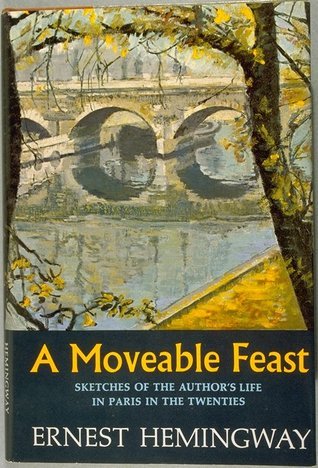
A Moveable Feast
1964
Ernest Hemingway
Hemingway's memories of his life as an unknown writer living in Paris in the twenties are deeply personal, warmly affectionate, and full of wit. Looking back not only at his own much younger self, but also at the other writers who shared Paris with him - James Joyce, Wyndham Lewis, Scott and Zelda Fitzgerald - he recalls the time when, poor, happy, and writing in cafes, he discovered his vocation. Written during the last years of Hemingway's life, his memoir is a lively and powerful reflection of his genius that scintillates with the romance of the city.