Margins
2007
First Published
4.20
Average Rating
128
Number of Pages
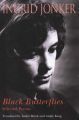
Despite her relatively short life, Jonker left behind a substantial body of work that continues to be celebrated for its lyrical beauty and its fearless confrontation of social and political issues. Her personal life was marked by turbulence, including tumultuous relationships and a brief affair with fellow writer Andre Brink. The complexities of her personal experiences found expression in her poetry, adding layers of depth to her already emotionally charged work. Tragically, Ingrid Jonker’s life came to an end in 1965 when, at the age of 31, she walked into the sea at Drieankerbaai near Cape Town. Her death added a somber chapter to her legacy, and her poetry gained even more attention posthumously. Nelson Mandela notably read her poem “Die Kind” (The Child) during the opening of the first democratic parliament in 1994, acknowledging Jonker’s enduring impact on South African literature and her role in speaking out against injustice.

Avg Rating
4.20
Number of Ratings
56
5 STARS
36%
4 STARS
48%
3 STARS
16%
2 STARS
0%
1 STARS
0%
goodreads

Authors

Antjie Krog
Antjie Krog
Author · 14 books

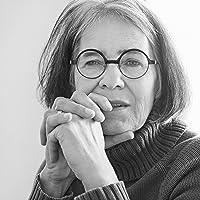
Krog grew up on a farm, attending primary and secondary school in Kroonstad. In 1973 she earned a BA (Hons) degree in English from the University of the Orange Free State, and an MA in Afrikaans from the University of Pretoria in 1976. With a teaching diploma from the University of South Africa (UNISA) she would lecture at a segregated teacher’s training college for black South Africans. She is married to architect John Samuel and has four children: Andries, Susan, Philip, and Willem. In 2004 she joined the Arts faculty of the University of the Western Cape.

André P. Brink
André P. Brink
Author · 28 books

André Philippus Brink was a South African novelist. He wrote in Afrikaans and English and was until his retirement a Professor of English Literature at the University of Cape Town. In the 1960s, he and Breyten Breytenbach were key figures in the Afrikaans literary movement known as Die Sestigers ("The Sixty-ers"). These writers sought to use Afrikaans as a language to speak against the apartheid government, and also to bring into Afrikaans literature the influence of contemporary English and French trends. His novel Kennis van die aand (1973) was the first Afrikaans book to be banned by the South African government. Brink's early novels were often concerned with the apartheid policy. His final works engaged new issues raised by life in postapartheid South Africa.

548 Market St PMB 65688, San Francisco California 94104-5401 USA
© 2026 Paratext Inc. All rights reserved