Margins
Bodies from the Library book cover 1
Bodies from the Library book cover 2
Bodies from the Library book cover 3
Bodies from the Library
Series · 3 books · 2018-2023

Books in series

Bodies from the Library book cover
#1

Bodies from the Library

Lost Tales of Mystery and Suspense from the Golden Age of Detection

2018

[Bodies from the Library 2](https://www.goodreads.com/book/show/43239300.BodiesfromtheLibrary2 "Bodies from the Library 2") [Bodies from the Library 3](https://www.goodreads.com/book/show/50996775.BodiesfromtheLibrary3 "Bodies from the Library 3") \\\\\\\\\\\\\\\\\\\\\\\\\_ This anthology of rare stories of crime and suspense brings together 16 rare tales by masters of the Golden Age of Detective Fiction for the first time in book form, including a newly discovered Agatha Christie crime story that has not been seen since 1922. At a time when crime and thriller writing has once again overtaken the sales of general and literary fiction, Bodies from the Library unearths lost stories from the Golden Age, that period between the World Wars when detective fiction captured the public’s imagination and saw the emergence of some of the world’s cleverest and most popular storytellers. This anthology brings together 16 forgotten tales that have either been published only once before – perhaps in a newspaper or rare magazine – or have never before appeared in print. From a previously unpublished 1917 script featuring Ernest Bramah’s blind detective Max Carrados, to early 1950s crime stories written for London’s Evening Standard by Cyril Hare, Freeman Wills Crofts and A.A. Milne, it spans five decades of writing by masters of the Golden Age. Most anticipated of all are the contributions by women writers: the first detective story by Georgette Heyer, unseen since 1923; an unpublished story by Christianna Brand, creator of Nanny McPhee; and a dark tale by Agatha Christie published only in an Australian journal in 1922 during her ‘Grand Tour’ of the British Empire. With other stories by Detection Club stalwarts Anthony Berkeley, H.C. Bailey, J.J. Connington, John Rhode and Nicholas Blake, plus Vincent Cornier, Leo Bruce, Roy Vickers and Arthur Upfield, this essential collection harks back to a time before forensic science – when murder was a complex business.
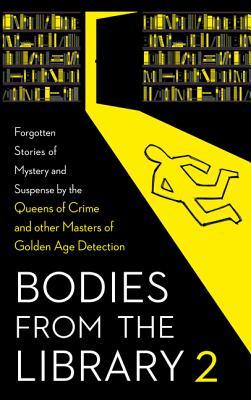
Bodies from the Library 2 book cover
#2

Bodies from the Library 2

Forgotten Stories of Mystery and Suspense by the Queens of Crime and other Masters of Golden Age Detection

2019

[Bodies from the Library](https://www.goodreads.com/book/show/38734222.BodiesfromtheLibrary "Bodies from the Library")_ [Bodies from the Library 3](https://www.goodreads.com/book/show/50996775.BodiesfromtheLibrary3 "Bodies from the Library 3") [Bodies from the Library 4](https://www.goodreads.com/book/show/55506327.BodiesfromtheLibrary4 "Bodies from the Library 4") \\\\\\\\\\\\\\\\\\\\\\\\\\\\\\\\\_ This anthology of rare stories of crime and suspense brings together 15 tales from the Golden Age of Detective Fiction for the first time in book form, including a newly discovered Gervase Fen novella by Edmund Crispin that has never previously been published. With the Golden Age of detective fiction shining ever more brightly thanks to the recent reappearance of many forgotten crime novels, Bodies from the Library offers a rare opportunity to read lost stories from the first half of the twentieth century by some of the genre’s most accomplished writers. This second volume is a showcase for popular figures of the Golden Age, in stories that even their most ardent fans will not be aware of. It includes uncollected and unpublished stories by acclaimed queens and kings of crime fiction, from Helen Simpson, Ethel Lina White, E. C. R. Lorac, Christianna Brand, Agatha Christie and Dorothy L. Sayers, to S. S. Van Dine, Jonathan Latimer, Clayton Rawson, Cyril Alington and Antony and Peter Shaffer (writing as Peter Antony). This book also features two highly readable radio scripts by Margery Allingham (involving Jack the Ripper) and John Rhode, plus two full-length novellas – one from a rare magazine by Q Patrick, the other an unpublished Gervase Fen mystery by Edmund Crispin, written at the height of his career. It concludes with another remarkable discovery: ‘The Locked Room’ by Dorothy L. Sayers, a never-before-published case for Lord Peter Wimsey! Selected and introduced by Tony Medawar, who also provides fascinating pen portraits of each author, Bodies in the Library 2 is an indispensable collection for any bookshelf.

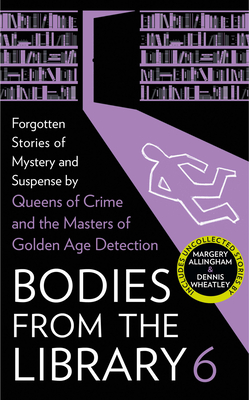
Bodies from the Library 6 book cover
#6

Bodies from the Library 6

Forgotten Stories of Mystery and Suspense by the Masters of the Golden Age of Detection

2023

Bodies from the Library brings into the daylight the forgotten, the lost and the unknown, and the 2023 volume is another indispensable collection for crime fans. The sixth volume of Bodies from the Library includes the usual eclectic mix of pre- and post-war stories by classic crime and thriller writers. Unearthed from ephemeral publications, newspapers and magazines, some of these ‘lost’ stories are by authors who have appeared in previous volumes, with others who are new to the We welcome back to the Library familiar Golden Age detective writers in the form of stories by Christianna Brand, Alice Campbell, Joseph Commings and Cyril Hare, a previously unknown novella by Anthony Gilbert, a short novel by Margery Allingham, and a hitherto unpublished Detection Club radio play by John Rhode. We also welcome for the first time George Bellairs, Victor Whitechurch and Andrew Garve, with E. C. Bentley’s ‘Greedy Night’ providing a humorous parody of Dorothy L. Sayers’ Lord Peter Wimsey, before five thriller writers including Geoffrey Household and Dennis Wheatley round off the collection with an unusual and exciting round-robin novella. And, whether this is your first encounter with Bodies or a return to the Library, we welcome you, the reader. Complete with revealing biographies of all 16 featured authors by Tony Medawar, we hope you will find this to be an indispensable collection for your bookshelf.

Authors

Georgette Heyer
Georgette Heyer
Author · 73 books

Georgette Heyer was a prolific historical romance and detective fiction novelist. Her writing career began in 1921, when she turned a story for her younger brother into the novel The Black Moth. In 1925 she married George Ronald Rougier, a mining engineer. Rougier later became a barrister and he often provided basic plot outlines for her thrillers. Beginning in 1932, Heyer released one romance novel and one thriller each year. Heyer was an intensely private person who remained a best selling author all her life without the aid of publicity. She made no appearances, never gave an interview and only answered fan letters herself if they made an interesting historical point. She wrote one novel using the pseudonym Stella Martin. Her Georgian and Regencies romances were inspired by Jane Austen. While some critics thought her novels were too detailed, others considered the level of detail to be Heyer's greatest asset. Heyer remains a popular and much-loved author, known for essentially establishing the historical romance genre and its subgenre Regency romance.

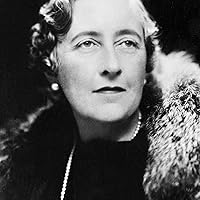
Agatha Christie
Agatha Christie
Author · 741 books

Agatha Christie is the top-selling author of all time, with a legacy spanning 66 crime novels, 14 plays, and six romance novels under a pseudonym. Her works have sold over two billion copies globally, translated into at least 103 languages, making her the most translated author. She introduced the world to iconic characters Hercule Poirot and Miss Jane Marple, and wrote *The Mousetrap*, the record-holding longest-running play in modern theater. The youngest in the Miller family, her experience as a nurse during WWI and later roles in pharmacies during both World Wars deeply influenced her mystery novels, often featuring poisons. Christie’s writing career launched in 1920 with *The Mysterious Affair at Styles*. Her life was as captivating as her fiction, notably her 1926 disappearance after her first husband’s affair became public, sparking a nationwide search. Christie's second marriage to archaeologist Max Mallowan enriched her life and work, with travels and homes like the Greenway Estate and Abney Hall providing settings for several novels. Her marriage to Mallowan lasted until her death in 1976. Christie's contributions to literature earned her the title Commander of the Order of the British Empire, solidifying her place in literary history.

A.A. Milne
A.A. Milne
Author · 152 books

Alan Alexander Milne (pronounced /ˈmɪln/) was an English author, best known for his books about the teddy bear Winnie-the-Pooh and for various children's poems. A. A. Milne was born in Kilburn, London, to parents Vince Milne and Sarah Marie Milne (née Heginbotham) and grew up at Henley House School, 6/7 Mortimer Road (now Crescent), Kilburn, a small public school run by his father. One of his teachers was H. G. Wells who taught there in 1889–90. Milne attended Westminster School and Trinity College, Cambridge, where he studied on a mathematics scholarship. While there, he edited and wrote for Granta, a student magazine. He collaborated with his brother Kenneth and their articles appeared over the initials AKM. Milne's work came to the attention of the leading British humour magazine Punch, where Milne was to become a contributor and later an assistant editor. Milne joined the British Army in World War I and served as an officer in the Royal Warwickshire Regiment and later, after a debilitating illness, the Royal Corps of Signals. He was discharged on February 14, 1919. After the war, he wrote a denunciation of war titled Peace with Honour (1934), which he retracted somewhat with 1940's War with Honour. During World War II, Milne was one of the most prominent critics of English writer P. G. Wodehouse, who was captured at his country home in France by the Nazis and imprisoned for a year. Wodehouse made radio broadcasts about his internment, which were broadcast from Berlin. Although the light-hearted broadcasts made fun of the Germans, Milne accused Wodehouse of committing an act of near treason by cooperating with his country's enemy. Wodehouse got some revenge on his former friend by creating fatuous parodies of the Christopher Robin poems in some of his later stories, and claiming that Milne "was probably jealous of all other writers.... But I loved his stuff." He married Dorothy "Daphne" de Sélincourt in 1913, and their only son, Christopher Robin Milne, was born in 1920. In 1925, A. A. Milne bought a country home, Cotchford Farm, in Hartfield, East Sussex. During World War II, A. A. Milne was Captain of the Home Guard in Hartfield & Forest Row, insisting on being plain 'Mr. Milne' to the members of his platoon. He retired to the farm after a stroke and brain surgery in 1952 left him an invalid and by August 1953 "he seemed very old and disenchanted". He was 74 years old when he passed away in 1956.

Margery Allingham
Margery Allingham
Author · 47 books

Aka Maxwell March. Margery Louise Allingham was born in Ealing, London in 1904 to a family of writers. Her father, Herbert John Allingham, was editor of The Christian Globe and The New London Journal, while her mother wrote stories for women's magazines as Emmie Allingham. Margery's aunt, Maud Hughes, also ran a magazine. Margery earned her first fee at the age of eight, for a story printed in her aunt's magazine. Soon after Margery's birth, the family left London for Essex. She returned to London in 1920 to attend the Regent Street Polytechnic (now the University of Westminster), and met her future husband, Philip Youngman Carter. They married in 1928. He was her collaborator and designed the cover jackets for many of her books. Margery's breakthrough came 1929 with the publication of her second novel, The Crime at Black Dudley . The novel introduced Albert Campion, although only as a minor character. After pressure from her American publishers, Margery brought Campion back for Mystery Mile and continued to use Campion as a character throughout her career. After a battle with breast cancer, Margery died in 1966. Her husband finished her last novel, A Cargo of Eagles at her request, and published it in 1968.

John Rhode
John Rhode
Author · 54 books

AKA Miles Burton, Cecil Waye, Cecil J.C. Street, I.O., F.O.O.. Cecil John Charles Street, MC, OBE, (1884 - January 1965), known as CJC Street and John Street, began his military career as an artillery officer in the British army. During the course of World War I, he became a propagandist for MI7, in which role he held the rank of Major. After the armistice, he alternated between Dublin and London during the Irish War of Independence as Information Officer for Dublin Castle, working closely with Lionel Curtis. He later earned his living as a prolific writer of detective novels. He produced two long series of novels; one under the name of John Rhode featuring the forensic scientist Dr Priestley, and another under the name of Miles Burton featuring the investigator Desmond Merrion. Under the name Cecil Waye, Street produced four novels: The Figure of Eight; The End of the Chase; The Prime Minister's Pencil; and Murder at Monk's Barn. The Dr. Priestley novels were among the first after Sherlock Holmes to feature scientific detection of crime, such as analysing the mud on a suspect's shoes. Desmond Merrion is an amateur detective who works with Scotland Yard's Inspector Arnold. Critic and author Julian Symons places this author as a prominent member of the "Humdrum" school of detective fiction. "Most of them came late to writing fiction, and few had much talent for it. They had some skill in constructing puzzles, nothing more, and ironically they fulfilled much better than S. S. Van Dine his dictum that the detective story properly belonged in the category of riddles or crossword puzzles. Most of the Humdrums were British, and among the best known of them were Major John Street. -Wikipedia

548 Market St PMB 65688, San Francisco California 94104-5401 USA
© 2026 Paratext Inc. All rights reserved