Margins
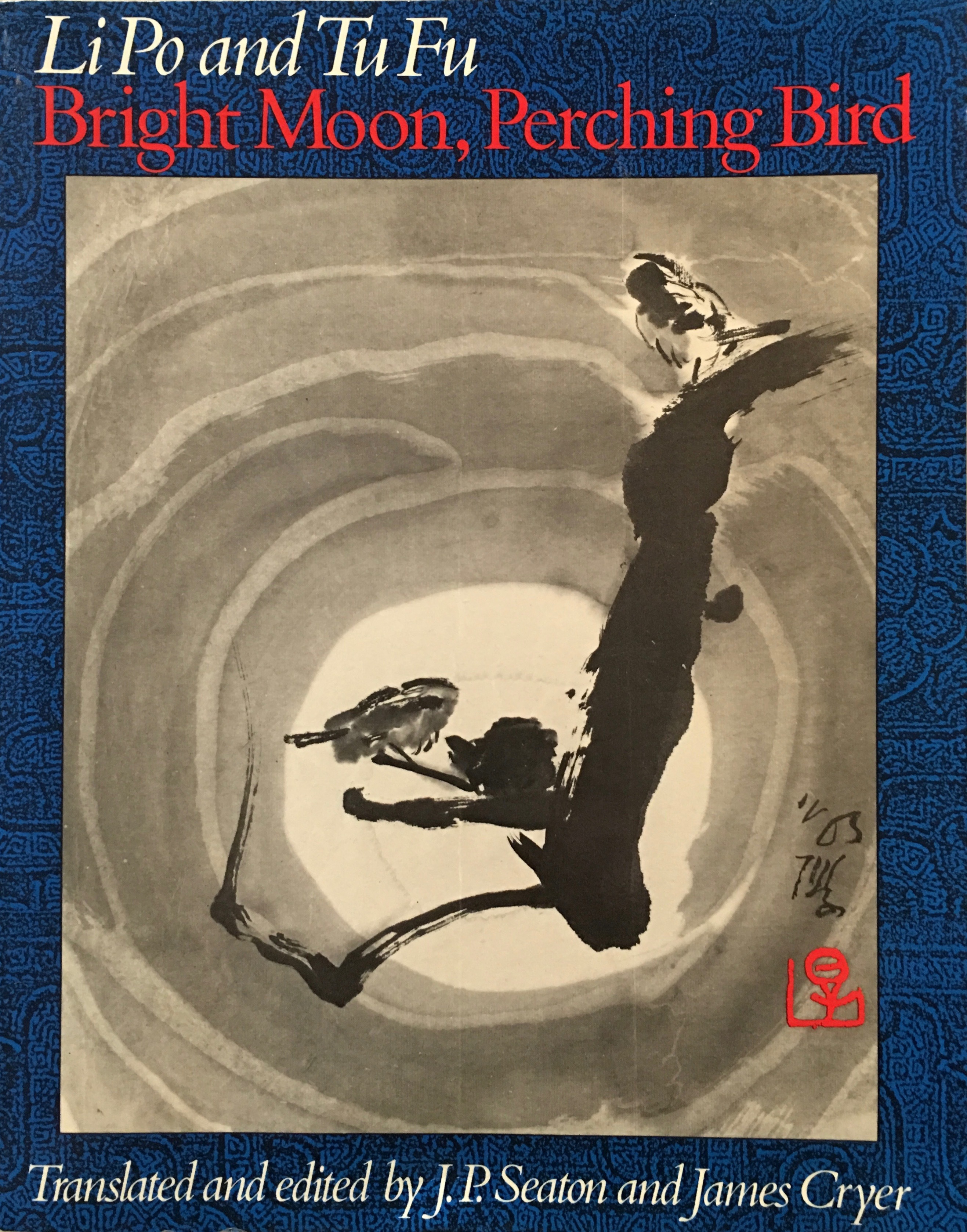
Bright Moon, Perching Birds book cover
Bright Moon, Perching Birds
Li Bai
1987
First Published
3.80
Average Rating
162
Number of Pages
Li Po and Tu Fu, who lived in the 8th century, are considered China’s greatest poets. When their paths crossed, for less than two years in the 740’s, a friendship was formed that has lasted, in the hearts of lovers of Chinese poetry, for over twelve hundred years. These poets, and the poems in this book, express two sides of humankind, two kinds of longing and two kinds of life. The real Li Po was more like Tu Fu than the legend, and the real Tu Fu was enough like Li Po to idolize and perhaps love him. They are presented here together, separate but side by side, because, as twelve centuries of Chinese readers and nearly a century of Western readers already know, they belong together; they show the qualities of humankind, expressed as purely as men of the greatest genius can express them. Each poem is presented with the original and the translation side by side—in the original Chinese with an appropriate style of calligraphy on the right side and its English translation on the left side of the page. Notes and suggestions for further reading appear at the end of the book.

Avg Rating
3.80
Number of Ratings
10
5 STARS
20%
4 STARS
60%
3 STARS
10%
2 STARS
0%
1 STARS
10%
goodreads

Author

Li Bai
Li Bai
Author · 10 books

Date of Birth: ca. 701 A.D. Date of Death: ca. 762 A.D. This is a Chinese name. The family name is Li. Li Bai (Li Pai; Chinese: 李白; pinyin: Lǐ Bái; Wade–Giles: Li Pai), also known as Li Bo (or Li Po; pinyin: Lǐ Bó; Wade–Giles: Li Po) was a Chinese poet. He was part of the group of Chinese scholars called the "Eight Immortals of the Wine Cup" in a poem by fellow poet Du Fu. Li Po is often regarded, along with Du Fu, as one of the two greatest poets in China's literary history. Approximately 1,100 of his poems remain today. The first translations in a Western language were published in 1862 by Marquis d'Hervey de Saint-Denys in his Poésies de l'Époque des Thang. The English-speaking world was introduced to Li Po's works by a Herbert Allen Giles publication History of Chinese Literature (1901) and through the liberal, but poetically influential, translations of Japanese versions of his poems made by Ezra Pound. Li Po is best known for the extravagant imagination and striking Taoist imagery in his poetry, as well as for his great love for liquor. Like Du Fu, he spent much of his life travelling, although in his case it was because his wealth allowed him to, rather than because his poverty forced him. He is said, famously but untruly, to have drowned in the Yangtze River, having fallen from his boat while drunkenly trying to embrace the reflection of the moon.

548 Market St PMB 65688, San Francisco California 94104-5401 USA
© 2026 Paratext Inc. All rights reserved