Books in series
#6
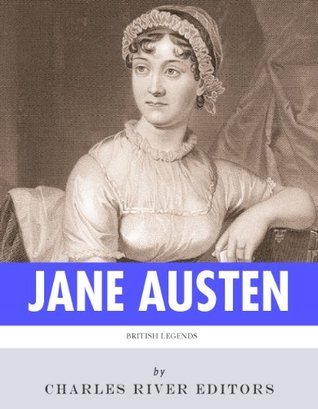
British Legends The Life and Legacy of Jane Austen
2012
\*Includes pictures of Austen and important people, places, and events in her life.
\*Includes quotes about Austen and her novels by some of her most famous contemporaries.
\*Includes a Bibliography of Austen's works and works about her.
\*Includes a Table of Contents.
“Which brings us again, after this long way about, to Jane Austen and her novels, and that troublesome question about them. She was great and they were beautiful, because she and they were honest, and dealt with nature nearly a hundred years ago as realism deals with it to-day. Realism is nothing more and nothing less than the truthful treatment of material, and Jane Austen was the first and the last of the English novelists to treat material with entire truthfulness. Because she did this, she remains the most artistic of the English novelists, and alone worthy to be matched with the great Scandinavian and Slavic and Latin artists.” – William Dean Howells
As has happened with many of history’s greatest writers, Jane Austen (1775-1817) did not earn the credit she was due until well after her death. Austen was an English novelist whose works of romantic fiction, set among the landed gentry, has earned her a place as one of the most widely read writers in English literature over the last 150 years.
Austen’s romantic fiction was an interesting genre that belied the fact her writing was laden with realism and a scathing critique on society and the role women played in it during her life. Austen tried several different types of literary styles before settling on writing novels from 1811-1817, releasing Sense and Sensibility (1811), Mansfield Park (1814) and Emma (1816). The novels highlighted the dependence of women on marrying high to reach a better social status and financial security, but given the controversial nature of her topics and her writing, there was a strong debate in the 19th century over the merits of Jane's writing and her works. While some like Sir Walter Scott praised her writing, others like Charlotte Bronte thought poorly of it.
British Legends: The Life and Legacy of Jane Austen looks at the life, works, and influence the famous British novelist had over her contemporaries and successors. Along with pictures of important people and places, you will learn about Jane Austen like you never have before, in no time at all.
#8
British Legends
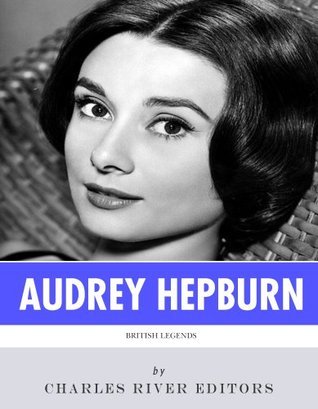
The Life and Legacy of Audrey Hepburn
2013
"One might guess this is Miss Hepburn's picture, since she has the title role and has come to it trailing her triumphs from last year's Roman Holiday. And, indeed, she is wonderful in it - a young lady of extraordinary range of sensitive and moving expressions within such a frail and slender frame. She is even more luminous as the daughter and pet of the servants' hall than she was as a princess last year, and no more than that can be said." (Bosley Crowther, movie critic for The New York Times, 1954)
A lot of ink has been spilled covering the lives of history's most influential figures, but how much of the forest is lost for the trees? In Charles River Editors' British Legends series, listeners can get caught up to speed on the lives of Britain's most important men and women in the time it takes to finish a commute, while learning interesting facts long forgotten or never known.
For someone whose career ended over 30 years ago, Audrey Hepburn continues to retain her popularity and exert a strong influence over how people view beauty and sophistication. She remains an American icon despite the fact that she did not even move to the United States until 1953 (at the age of 24) and spent the majority of her life living in Europe. Her characters in films such as Roman Holiday (1953) and Breakfast at Tiffany's (1961) are still held up as the paragon of delicate femininity and elegance. After undergoing a revival in popularity throughout the 1990s, her renewed popularity has refused to wane, and even though she acted in just 25 films, Hepburn is viewed in high regard by the entertainment establishment.
#14
British Legends
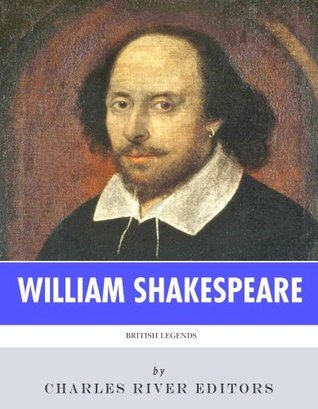
The Life and Legacy of William Shakespeare
2013
"Do not, as some ungracious pastors do, Show me the steep and thorny way to heaven, Whiles, like a puff'd and reckless libertine, Himself the primrose path of dalliance treads. And recks not his own rede." - Ophelia in Hamlet
Actor. Dramatist. Poet. Husband. Father. Producer. Businessman. Servant of the Crown. All of the above can be applied to William Shakespeare. Certainly England's greatest playwright, he is still considered to be the most influential writer in the English language. Leaving behind a nearly unprecedented body of work to his credit, he addressed the full spectrum of the human condition and achieved what few other writers have in becoming a part of a global consciousness. Shakespeare is so renowned and respected that the time period in which he lived is often known as the Age of Shakespeare. Indeed, his genius is questioned only by those who doubt the authenticity of his authorship of timeless classics like Romeo and Juliet. As Ben Jonson once put it, "He was not of an age, but for all time." No other writer, in English or in any other language, can rival the appeal that Shakespeare has enjoyed around the world. And nobody's had a bigger influence.
The "Bard of Avon" has a catalogue full of the best known plays and poetry in history. His surviving works, including some collaborations, consist of about 38 plays, 154 sonnets, two long narrative poems, and several other poems. His plays have been translated into every major living language, and are performed more often than those of any other playwright.
Author

Charles River Editors
Author · 1494 books
Charles River Editors is an independent publisher of thousands of ebooks on Kindle, Nook, Kobo, and Apple iBookstore & provider of original content for third parties.