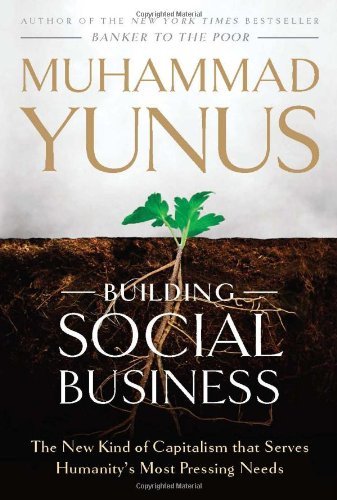
Building Social Business
The New Kind of Capitalism That Serves Humanity's Most Pressing Needs
1997
First Published
3.98
Average Rating
256
Number of Pages
Muhammad Yunus, the practical visionary who pioneered microcredit and, with his Grameen Bank, won the 2006 Nobel Peace Prize, has developed a visionary new dimension for capitalism which he calls “social business.” By harnessing the energy of profit-making to the objective of fulfilling human needs, social business creates self-supporting, viable commercial enterprises that generate economic growth even as they produce goods and services that make the world a better place.In this book, Yunus shows how social business has gone from being a theory to an inspiring practice, adopted by leading corporations, entrepreneurs, and social activists across Asia, South America, Europe and the US. He demonstrates how social business transforms lives; offers practical guidance for those who want to create social businesses of their own; explains how public and corporate policies must adapt to make room for the social business model; and shows why social business holds the potential to redeem the failed promise of free-market enterprise.

Avg Rating
3.98
Number of Ratings
1,893
5 STARS
32%
4 STARS
40%
3 STARS
23%
2 STARS
5%
1 STARS
1%
goodreads
Author

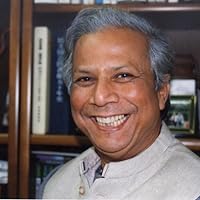
Muhammad Yunus
Author · 6 books
Dr. Muhammad Yunus is a Bangladeshi banker and economist. He previously was a professor of economics and is famous for his successful application of microcredit—the extension of small loans given to entrepreneurs too poor to qualify for traditional bank loans. Dr. Yunus is also the founder of Grameen Bank. In 2006, Yunus and the bank were jointly awarded the Nobel Peace Prize "for their efforts to create economic and social development from below." He has also received several other national and international honors. Dr. Yunus is one of the founding members of Global Elders, a group of public figures noted as elder statesmen, peace activists, and human rights advocates whose goal is to solve global problems by using "almost 1,000 years of collective experience" to work on solutions for seemingly insurmountable problems like climate change, HIV/AIDS, and poverty, and "use their political independence to help resolve some of the world's most intractable conflicts."