Margins
Margins
Sign in
Margins
Subscribe to our newsletter
548 Market St PMB 65688, San Francisco California 94104-5401 USA
hello@margins.app
·
+1 (650) 223-5283
Privacy Policy
·
Terms of Use
© 2026 Paratext Inc. All rights reserved
📚 Bungou Stray Dogs
📚
Bungou Stray Dogs
No Longer Human
1948
Osamu Dazai
Osamu Dazai's No Longer Human, this leading postwar Japanese writer's second novel, tells the poignant and fascinating story of a young man who is caught between the breakup of the traditions of a northern Japanese aristocratic family and the impact of Western ideas. In consequence, he feels himself "disqualified from being human" (a literal translation of the Japanese title). Donald Keene, who translated this and Dazai's first novel, The Setting Sun, has said of the author's work: "His world … suggests Chekhov or possibly postwar France, … but there is a Japanese sensibility in the choice and presentation of the material. A Dazai novel is at once immediately intelligible in Western terms and quite unlike any Western book." His writing is in some ways reminiscent of Rimbaud, while he himself has often been called a forerunner of Yukio Mishima. Cover painting by Noe Nojechowiz, from the collection of John and Barbara Duncan; design by Gertrude Huston
Rashomon and Other Stories
1915
Writing at the beginning of the twentieth century, Ryunosuke Akutagawa created disturbing stories out of Japan's cultural upheaval. Whether his fictions are set centuries past or close to the present, Akutagawa was a modernist, writing in polished, superbly nuanced prose subtly exposing human needs and flaws. "In a Grove," which was the basis for Kurosawa's classic film Rashomon, tells the chilling story of the killing of a samurai through the testimony of witnesses, including the spirit of the murdered man. The fable-like "Yam Gruel" is an account of desire and humiliation, but one in which the reader's sympathy is thoroughly unsettled. And in "The Martyr," a beloved orphan raised by Jesuit priests is exiled when he refuses to admit that he made a local girl pregnant. He regains their love and respect only at the price of his life. All six tales in the collection show Akutagawa as a master storyteller and an exciting voice of modern Japanese literature.
The Poems of Nakahara Chuya
1993
Chuya Nakahara
Born in 1907, Nakahara Chuya was one of the most gifted and colourful of Japan’s early modern poets. A bohemian romantic, his death at the early age of thirty, coupled with the delicacy of his imagery, have led to him being compared to the greatest of French symbolist poets. Since the Second World War Nakahara’s stature has risen, and his poetry is now ranked among the finest Japanese verse of the 20th century. Influenced by both Symbolism and Dada, he created lyrics renowned for their songlike eloquence, their personal imagery and their poignant charm. This selection of poems from throughout Nakahara’s creative life includes collected and uncollected work and draws on recent scholarship to give a full account of this extraordinary figure.
The Moon Over the Mountain
Stories
Atsushi Nakajima
Ancient China is illustriously brought to life in these folk tales, legends, and stories of historical figures that routinely rank alongside such Japanese literary classics as “Rashomon” by Ryunosuke Akutagawa and Kokoro by Natsume Soseki. When they first appeared in Japanese periodicals in 1942 and 1943, they sparked a potentially rich and long career for author Atsushi Nakajima, who tragically died of asthma complicated by severe pneumonia shortly thereafter, but whose work has continued to grow in Japanese regard ever since. This collection marks the first time these works have been translated into English.
Crime and Punishment
1866
Fyodor Dostoevsky
Raskolnikov, a destitute and desperate former student, wanders through the slums of St Petersburg and commits a random murder without remorse or regret. He imagines himself to be a great man, a Napoleon: acting for a higher purpose beyond conventional moral law. But as he embarks on a dangerous game of cat and mouse with a suspicious police investigator, Raskolnikov is pursued by the growing voice of his conscience and finds the noose of his own guilt tightening around his neck. Only Sonya, a downtrodden sex worker, can offer the chance of redemption.
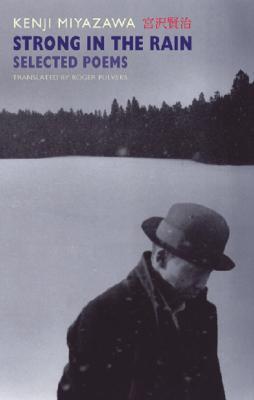
Strong in the Rain
2007
Kenji Miyazawa
Kenji Miyazawa's magical tales have been translated into many languages, adapted for the stage and turned into films and animations. 'Strong In the Rain', the title-poem of this collection, is now arguably the most memorised and quoted modern poem in Japan.
Yo, el gato
1906
Natsume Soseki
Del mundo literario japonés nace Yo, el gato, una obra del autor reconocido a nivel mundial Natsume Sōseki, quien fue un novelista japonés, profesor de literatura inglesa, poeta y creador de haikús. Esta es una auténtica obra maestra de la literatura nipona, donde un felino es el protagonista y narrador de sus aventuras junto a un grupo de grotescos personajes con los que cohabita de manera accidental; miembros todos de la bien-pensante clase media tokiota; convirtiéndose en una sátira descarnada de la burguesía Meiji. La novela está dotada de un ingenio a prueba de bombas y de un humos mordaz, donde un voluble filósofo gatuno no se cansa de hacer los comentarios más incisivos sobre la disparatada tropa de seres humanos con la que le ha tocado vivir.
Ranpo Edogawa Complete works
2016
Edogawa Rampo
【今後少しずつ、作品数を充実させていく予定です。改訂版の再ダウンロードは、無料です】大正から昭和期にかけて、おもに推理小説を得意とした作家、江戸川乱歩の作品を1冊に収録。ペンネーム(江戸川乱歩)は、アメリカの作家、エドガー・アラン・ポーに由来する。『江戸川乱歩作品』(人間椅子・D坂の殺人事件ほか)・収録作品一覧人間椅子D坂の殺人事件二銭銅貨押絵と旅する男随筆銭形平次(探偵小説このごろ)心理試験日記帳【第二版・2作品追加(2016/04/04)】 【江戸川乱歩作品・出版委員会】