Margins
Margins
Sign in
Margins
Subscribe to our newsletter
548 Market St PMB 65688, San Francisco California 94104-5401 USA
hello@margins.app
·
+1 (650) 223-5283
Privacy Policy
·
Terms of Use
© 2026 Paratext Inc. All rights reserved
Cambridge Solid State Science
Books in series
#1
Thermoluminescence of Solids
1985
McKeever gives us a comprehensive survey of thermoluminescence, an important, versatile, and widely-used experimental technique. Bringing together previously isolated specialized approaches, he stresses the importance of the solid state aspects of the phenomenon and links these to applications in dating, dosimetry, and geology. The book contains chapters on analysis and special properties, on instrumentation, and on the variety of defect reaction—using the alkali halides and SiO2 as examples—that can take place within a material to yield thermoluminescence. Three chapters concerning applications discuss the features of the solid state reactions to explain some of the properties observed in practice.
#2
Fatigue of Materials
1998
This revised and updated second edition of a highly successful book provides an authoritative, comprehensive and unified treatment of the mechanics and micromechanisms of fatigue in metals, nonmetals and composites. The author, a leading researcher in the field, discusses the principles of cyclic deformation, crack initiation and crack growth by fatigue, covering both microscopic and continuum aspects. The book begins with discussions of cyclic deformation and fatigue crack initiation in monocrystalline and polycrystalline ductile alloys as well as in brittle and semi-/non-crystalline solids. Total life and damage-tolerant approaches are then introduced in metals, nonmetals and composites. This will be an important reference for anyone studying fracture and fatigue in materials science and engineering, mechanical, civil, nuclear and aerospace engineering, and biomechanics.
#3
The Electrical Resistivity of Metals and Alloys
1987
Understanding the origin of electrical properties of alloys is critical to the development of new materials. Dr. Rossiter blends theoretical and experimental results without relying on detailed quantum mechanics. After introducing the basic concepts of atomic and magnetic correlations, he explains their microstructural consequences. Later chapters deal with the effects of such correlations on electrical resistivity. Examples and applications are given in discrete sections, which allow the uninterrupted development of theory for each specific problem.
#4
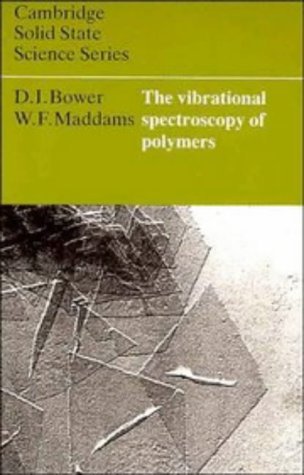
The Vibrational Spectroscopy of Polymers (Cambridge Solid State Science Series) by D. I. Bower
1989
Describes the theory and practice of infrared and Raman spectroscopy as applied to the study of the physical and chemical characteristics of polymers. Its purpose is to give the beginning researcher in the field a firm foundation and a starting point for the study of more advanced literature. To this end the book concentrates on the fundamentals of the theory and nomenclature, and on the discussion of well-documented illustrations of these fundamental principles, including many now-classic studies in the subject. No previous knowledge of either polymers or vibrational spectroscopy is assumed.
#5
Hydrogenated Amorphous Silicon (Cambridge Solid State Science Series) ( Paperback ) by Street, R. A. published by Cambridge University Press
1991
Divided roughly into two parts, the book describes the physical properties and device applications of hydrogenated amorphous silicon. The first section is concerned with the atomic and electronic structure, and covers growth defects and doping and defect reactions. The emphasis is on the optical and electronic properties that result from the disordered structure. The second part of the book describes electronic conduction, recombination, interfaces, and multilayers. The special attribute of which makes it useful is the ability to deposit the material inexpensively over large areas, while retaining good semiconducting properties, and the final chapter discusses various applications and devices.
#6
Microstructural Design of Fiber Composites
1992
This book addresses the issue of designing the microstructure of fiber composite materials in order to obtain optimum performance. Besides the systematic treatment of conventional continuous and discontinuous fiber composites, the book also presents the state-of-the-art of the development of textile structural composites as well as the nonlinear elastic finite deformation theory of flexible composites. The author's experience during twenty years of research and teaching on composite materials is reflected in the broad spectrum of topics covered, including laminated composites, statistical strength theories of continuous fiber composites, short fiber composites, hybrid composites, two- and three-dimensional textile structural composites and flexible composites. This book provides the first comprehensive analysis and modeling of the thermo-mechanical behavior of fiber composites with these distinct microstructures. Overall, the inter-relationships among the processing, microstructures and properties of these materials are emphasized throughout the book. The book is intended as a text for graduate or advanced undergraduate students, but will also be an excellent reference for all materials scientists and engineers who are researching or working with these materials.
#7
Fracture of Brittle Solids
1975
This is an advanced text for higher degree materials science students and researchers concerned with the strength of highly brittle covalent-ionic solids, principally ceramics. It is a reconstructed and greatly expanded edition of a book first published in 1975. The book presents a unified continuum, microstructural and atomistic treatment of modern day fracture mechanics from a materials perspective. Particular attention is directed to the basic elements of bonding and microstructure that govern the intrinsic toughness of ceramics. These elements hold the key to the future of ceramics as high-technology materials—to make brittle solids strong, we must first understand what makes them weak. The underlying theme of the book is the fundamental Griffith energy-balance concept of crack propagation. The early chapters develop fracture mechanics from the traditional continuum perspective, with attention to linear and nonlinear crack-tip fields, equilibrium and non-equilibrium crack states. It then describes the atomic structure of sharp cracks, the topical subject of crack-microstructure interactions in ceramics, with special focus on the concepts of crack-tip shielding and crack-resistance curves, and finally deals with indentation fracture, flaws and structural reliability.
#8
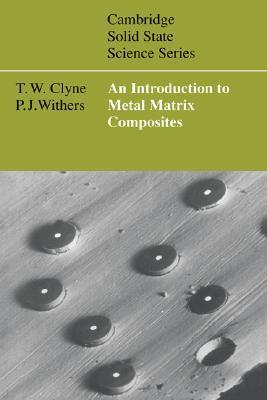
An Introduction to Metal Matrix Composites
1993
This book gives a comprehensive, integrated coverage of metal matrix composites, including the background to analytical-, experimental-, production-, and application-oriented aspects. Clear pictorial descriptions are given of the basic principles governing various properties and characteristics. These encompass mechanical, thermal, electrical, environmental, and wear behavior. Coverage also extends to material processing and component fabrication aspects and a survey of commercial usage.
#9
Nuclear Magnetic Resonance in Solid Polymers
1993
This book is an authoritative and comprehensive account of the principles and practice of modern NMR spectroscopy of solid polymers to determine their structure and dynamics at a molecular level. The book deals with the development of many new NMR capabilities, including high-resolution techniques for solids, multi-dimensional methods, deuterium NMR and others. All of these developments have contributed to a dramatic increase in the power and applicability of NMR for the characterization, at a molecular level, of the dynamics and structural organization of polymeric solids. A chapter on applications emphasizes polymer types and properties, and the authors include an introduction to all the main principles of NMR involved in its application to solid polymers.
#11
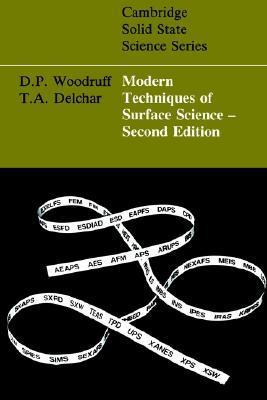
Modern Techniques of Surface Science
1986
The book describes the physical basis of all of the principal and the majority of the more specialized techniques used today in studies of well-characterized solid surfaces. The techniques are grouped according to the underlying physics and are described in nine chapters. The treatment of each technique concentrates on the basic physical principles, and illustrates its use with selected examples with an emphasis on understanding the concepts. Included in each of these discussions is a view of the strengths, the weaknesses, and the complementary aspects of the individual methods. Although some mention is included of the potential use of some of the methods to study technical surfaces, the emphasis of the examples is taken from studies of the basic chemistry and physics of well-characterized surfaces under ultra-high vacuum conditions, aimed at elucidating their structural, compositional, electronic, and vibrational properties. This edition includes new material on synchrotron radiation related techniques, scanning tunnelling microscopy and spectroscopy, and Raman spectroscopy.
Authors
S.W.S. McKeever
Author · 1 book
S. Suresh
Author · 1 book
Paul L. Rossiter
Author · 1 book
D.I. Bower
Author · 1 book
R.A. Street
Author · 1 book
Tsu-Wei Chou
Author · 1 book
Brian Lawn
Author · 1 book
T.W. Clyne
Author · 2 books
P. J. Withers
Author · 1 book
Vincent J. McBrierty
Author · 1 book
D.P. Woodruff
Author · 1 book
T.A. Delchar
Author · 1 book
J.S. Dugdale
Author · 1 book
Michael Nastasi
Author · 2 books
James Mayer
Author · 1 book
James K. Hirvonen
Author · 1 book
D. Hull
Author · 1 book
T.G. Nieh
Author · 1 book
J. Wadsworth
Author · 1 book
O. D. Sherby
Author · 1 book
John W. Martin
Author · 1 book
Lorna J. Gibson
Author · 1 book
Michael F. Ashby
Author · 5 books
Cambridge Solid State Science
Series ·
20
books · 1975-2000
By
S.W.S. McKeever
,
S. Suresh
,
Paul L. Rossiter
, and more
#12
The Electrical Properties of Disordered Metals
1995
The theory of metallic conduction has, until recently, been confined to crystalline metals with atoms in regular arrays. The discovery of solid amorphous alloys led to an explosion of measurements of their electronic properties, and the emergence of a range of interesting low temperature phenomena. The book describes in physical terms the theory of the electrical conductivity, Hall coefficient, magnetoresistance and thermopower of disordered metals and alloys. The author begins by showing how conventional Boltzmann theory can be extended and modified when the mean free path of the conduction electrons becomes comparable with their wavelength and interionic separation. Dugdale explores the consequences of this and tests the theory by applying it to experimental data on metallic glasses. Designed as a self-contained review, the book will appeal to nonspecialist physicists, metallurgists and chemists with an interest in disordered metals.
#13
Ion-Solid Interactions
1996
Modern technology depends on materials with precisely controlled properties. Ion beams are an excellent way to achieve controlled modification of surface and near-surface regions. In every integrated circuit production line, for example, there are ion implantation systems. In addition to integrated circuit technology, ion beams can modify the mechanical, tribological, and chemical properties of metal, intermetallic, and ceramic materials without altering their bulk properties. Ion-solid interactions are the foundation that underlies the broad application of ion beams to the modification of materials. This text covers the fundamentals and applications of ion-solid interactions, and is aimed at graduate students and researchers interested in electronic devices, surface engineering, reactor and nuclear engineering, and materials science issues associated with metastable phase synthesis.
#14
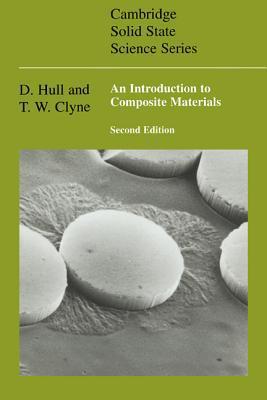
An Introduction to Composite Materials
1981
This new edition has been greatly enlarged and updated to provide both scientists and engineers with a clear and comprehensive understanding of composite materials. In describing both theoretical and practical aspects of their production, properties and usage, the book crosses the borders of many disciplines. Topics covered fibers, matrices, laminates and interfaces; elastic deformation, stress and strain, strength, fatigue crack propagation and creep resistance; toughness and thermal properties; fatigue and deterioration under environmental conditions; fabrication and applications. Coverage has been increased to include polymeric, metallic and ceramic matrices and reinforcement in the form of long fibers, short fibers and particles. Designed primarily as a teaching text for final year undergraduates in materials science and engineering, this book will also interest undergraduates and postgraduates in chemistry, physics, and mechanical engineering. In addition, it will be an excellent source book for academic and technological researchers on materials.
#15
Superplasticity in Metals and Ceramics
1997
This book describes advances in the field of superplasticity, the ability of certain materials to undergo very large tensile strains. This phenomenon has increasing commercial applications, but also presents a fascinating scientific challenge in attempts to understand the physical mechanisms that underpin it. The authors emphasize the materials aspects of superplasticity. Beginning with a brief history of the phenomenon, they describe the two major types of superplasticity—fine-structure and internal-stress superplasticity—and discuss their operative mechanisms. They also present microstructural factors controlling the ductility and fracture in superplastic materials. Observations of superplasticity in metals (including aluminum, magnesium, iron, titanium and nickel), ceramics (including monoliths and composites), intermetallics (including iron, nickel, and titanium base), and laminates are thoroughly described. This is a valuable text for graduate students and researchers in materials science and engineering.
#16
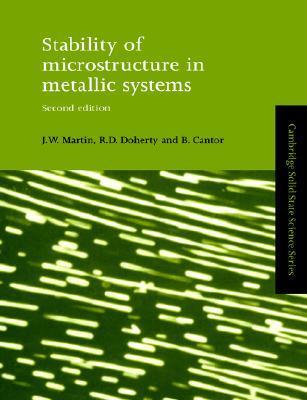
Stability of Microstructure in Metallic Systems
1976
The second edition of this textbook, popular among students and faculty alike, investigates the various causes of thermodynamic instability in metallic microstructures. It examines current experimental and theoretical understanding of the kinetics behind structural change in metals. The entire text has been updated in this new edition, including a completely new chapter on highly metastable alloys. A comprehensive and well-illustrated text, accompanied by ample references, this volume will allow final year undergraduates, graduate students and research workers to investigate in detail the stability of microstructure in metallic systems.
#17
Cellular Solids
1988
Cellular solids include engineering honeycombs and foams (which can now be made from polymers, metals, ceramics, and composites) as well as natural materials, such as wood, cork, and cancellous bone. This new edition of a classic work details current understanding of the structure and mechanical behavior of cellular materials, and the ways in which they can be exploited in engineering design. Gibson and Ashby have brought the book completely up to date, including new work on processing of metallic and ceramic foams and on the mechanical, electrical and acoustic properties of cellular solids. Data for commercially available foams are presented on material property charts; two new case studies show how the charts are used for selection of foams in engineering design. Over 150 references appearing in the literature since the publication of the first edition are cited. It will be of interest to graduate students and researchers in materials science and engineering.
#18
Fibrous Materials
1998
This book is about the processing, microstructure and properties of materials in fibrous form. The range of fibrous materials covered spans natural polymeric fibres such as silk, synthetic polymeric fibres such as aramid and polyethylene, metallic fibres such as steel and tungsten, and ceramic fibres such as alumina and silicon carbide. The author explains the fundamentals in a clear and concise manner and describes important advances in the production and control of microstructure in high stiffness and high strength fibres. The text contains large numbers of diagrams and micrographs to bring home to the reader the important principles and concepts. The book will be of value to senior undergraduates, beginning graduate students and researchers in the fields of materials science and engineering, metallurgy, ceramics, textile physics and engineering, mechanical engineering and chemical engineering.
#20
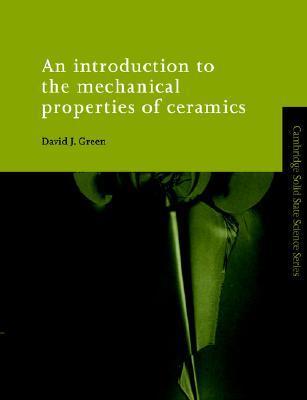
An Introduction to the Mechanical Properties of Ceramics
1998
Over the past twenty-five years ceramics have become key materials in the development of many new technologies as scientists have been able to design these materials with new structures and properties. An understanding of the factors that influence their mechanical behavior and reliability is essential. This book will introduce the reader to current concepts in the field. It contains problems and exercises to help readers develop their skills. This is a comprehensive introduction to the mechanical properties of ceramics, and is designed primarily as a textbook for advanced undergraduates in materials science and engineering. It will also be of value as a supplementary text for more general courses and to industrial scientists and engineers involved in the development of ceramic-based products, materials selection and mechanical design.
#21
Microhardness of Polymers
2000
This book deals with the micromechanical characterization of polymer materials. It emphasizes microhardness as a technique capable of detecting a variety of morphological and textural changes in polymers. The authors provide a comprehensive introduction to the microhardness of polymers, including descriptions of the various testing methods in materials science and engineering. They also discuss the micromechanical study of glassy polymers and the relevant aspects of microhardness of semicrystalline polymers. Numerous application examples of the microhardness technique for the characterization of polymeric materials help readers develop a solid understanding of the material. These real world examples include the influence of polymer processing, the use in weathering tests, the characterization of modified polymer surfaces, and others. This book will be of use to graduate level materials science students, as well as research workers in materials science, mechanical engineering and physics departments interested in the microindentation hardness of polymer materials.
#22
Mass Transport in Solids and Fluids
2000
The field of matter transport is central to understanding the processing of materials and their subsequent mechanical properties. This text gives a solid grounding in the principles of matter transport and their application to a range of engineering problems. The author develops a unified treatment of mass transport applicable to both solids and liquids. Traditionally, matter transport in fluids is considered as an extension of heat transfer and can appear to have little relationship to diffusion in solids. This unified approach clearly makes the connection between these important fields. Aimed at advanced undergraduate and beginning graduate students of materials science and engineering and related disciplines, the book contains numerous worked examples and unsolved problems.
Krishan Kumar Chawla
Author · 2 books
David J. Green
Author · 1 book
F.J. Baltá Calleja
Author · 1 book
S. Fakirov
Author · 1 book
David S. Wilkinson
Author · 1 book