Margins
Sign in
Margins
548 Market St PMB 65688, San Francisco California 94104-5401 USA
hello@margins.app
·
+1 (650) 223-5283
Privacy Policy
·
Terms of Use
© 2026 Paratext Inc. All rights reserved
Cambridge Studies in Nineteenth-Century Literature and Culture
Cambridge Studies in Nineteenth-Century Literature and Culture
Series · 5 books · 2006-2020
By
Jill Matus
,
Srdjan Smajic
,
Iain Ross
, and more
Books in series
#34
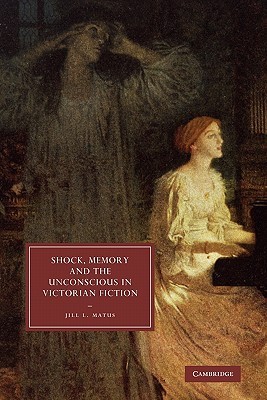
Shock, Memory and the Unconscious in Victorian Fiction
2009
Jill Matus explores shock in Victorian fiction and psychology with startling results that reconfigure the history of trauma theory. Central to Victorian thinking about consciousness and emotion, shock is a concept that challenged earlier ideas about the relationship between mind and body. Although the new materialist psychology of the mid-nineteenth century made possible the very concept of a wound to the psyche - the recognition, for example, that those who escaped physically unscathed from train crashes or other overwhelming experiences might still have been injured in some significant way - it was Victorian fiction, with its complex explorations of the inner life of the individual and accounts of upheavals in personal identity, that most fully articulated the idea of the haunted, possessed and traumatized subject. This wide-ranging book reshapes our understanding of Victorian theories of mind and memory and reveals the relevance of nineteenth-century culture to contemporary theories of trauma.
#35
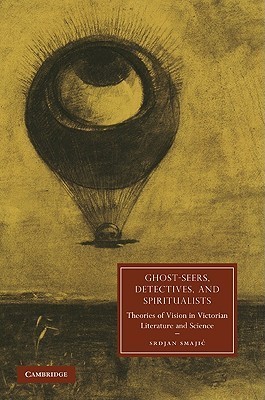
Ghost-Seers, Detectives, and Spiritualists
2006
This is an original study of the narrative techniques that developed for two very popular forms of fiction in the nineteenth century – ghost stories and detective stories – and the surprising similarities between them in the context of contemporary theories of vision and sight. Srdjan Smajić argues that to understand how writers represented ghost-seers and detectives, the views of contemporary scientists, philosophers, and spiritualists with which these writers engage have to be taken into these views raise questions such as whether seeing really is believing, how much of what we ‘see' is actually only inferred, and whether there may be other (intuitive or spiritual) ways of seeing that enable us to perceive objects and beings inaccessible to the bodily senses. This book will make a real contribution to the understanding of Victorian science in culture, and of the ways in which literature draws on all kinds of knowledge.
#43
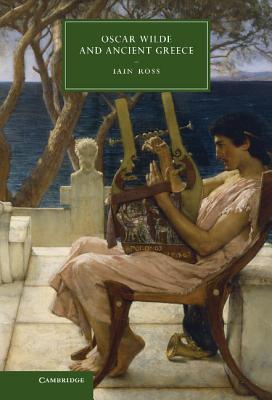
Oscar Wilde and Ancient Greece
2012
From his boyhood Oscar Wilde was haunted by the literature and culture of ancient Greece, but until now no full-length study has considered in detail the texts, institutions and landscapes through which he imagined Greece. The archaeology of Celtic Ireland, explored by the young Wilde on excavations with his father, informed both his encounter with the archaeology of Greece and his conviction that Celt and Greek shared a hereditary aesthetic sensibility, while major works such as The Picture of Dorian Gray and The Importance of Being Earnest maintain a dynamic, creative relationship with originary texts such as Aristotle's Ethics, Plato's dialogues and the then lost comedies of Menander. Drawing on unpublished archival material, Oscar Wilde and Ancient Greece offers a new portrait of a writer whose work embodies both the late nineteenth-century conflict between literary and material antiquity and his own contradictory impulses towards Hellenist form and the formlessness of desire.
#71
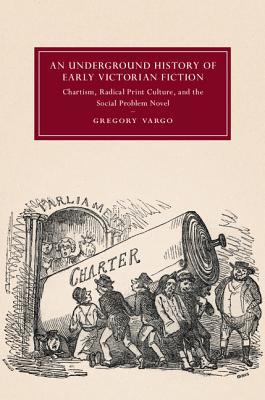
An Underground History of Early Victorian Fiction
2017
How does the literature and culture of early Victorian Britain look different if viewed from below? Exploring the interplay between canonical social problem novels and the journalism and fiction appearing in the periodical press associated with working-class protest movements, Gregory Vargo challenges long-held assumptions about the cultural separation between the 'two nations' of rich and poor in the Victorian era. The flourishing radical press was home to daring literary experiments that embraced themes including empire and economic inequality, helping to shape mainstream literature. Reconstructing social and institutional networks that connected middle-class writers to the world of working-class politics, this book reveals for the first time acknowledged and unacknowledged debts to the radical canon in the work of such authors as Charles Dickens, Thomas Carlyle, Harriet Martineau and Elizabeth Gaskell. What emerges is a new vision of Victorian social life, in which fierce debates and surprising exchanges spanned the class divide.
#86
The Victorian Cult of Shakespeare
2020
In the Victorian era, William Shakespeare's work was often celebrated as a sacred a sort of secular English Bible. Even today, Shakespeare remains a uniquely important literary figure. Yet Victorian criticism took on religious dimensions that now seem outlandish in retrospect. Ministers wrote sermons based upon Shakespearean texts and delivered them from pulpits in Christian churches. Some scholars crafted devotional volumes to compare his texts directly with the Bible's. Still others created Shakespearean societies in the faith that his inspiration was not like that of other playwrights. Charles LaPorte uses such examples from the Victorian cult of Shakespeare to illustrate the complex relationship between religion, literature and secularization. His work helps to illuminate a curious but crucial chapter in the history of modern literary studies in the West, as well as its connections with Biblical scholarship and textual criticism.
Authors
Jill Matus
Author · 3 books
Srdjan Smajic
Author · 2 books
Iain Ross
Author · 2 books
Greg Vargo
Author · 1 book
Charles LaPorte
Author · 1 book