Margins
Cambridge Studies in Religion, Philosophy, and Society book cover 1
Cambridge Studies in Religion, Philosophy, and Society book cover 2
Cambridge Studies in Religion, Philosophy, and Society book cover 3
Cambridge Studies in Religion, Philosophy, and Society
Series · 9 books · 1718-2020

Books in series

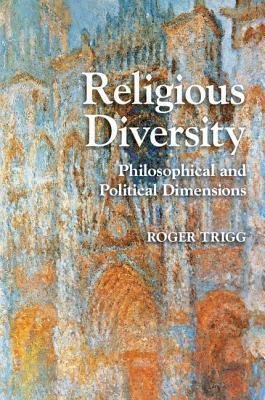
Religious Diversity book cover
#1

Religious Diversity

Philosophical and Political Dimensions

2014

Should we merely celebrate diversity in the sphere of religion? What of the social cohesion of a country? There is a constant tug between belief in religious truth and the need for respect for other religions. Religious Philosophical and Political Dimensions examines how far a firm faith can allow for toleration of difference and respect the need for religious freedom. It elucidates the philosophical credentials of different approaches to truth in religion, ranging from a dogmatic fundamentalism to a pluralism that shades into relativism. Must we resort to a secularism that treats all religion as a personal and private matter, with nothing to contribute to discussions about the common good? How should law approach the issue of religious freedom? Introducing the relevance of central discussions in modern philosophy of religion, the book goes on to examine the political implications of increasing religious diversity in a democracy.
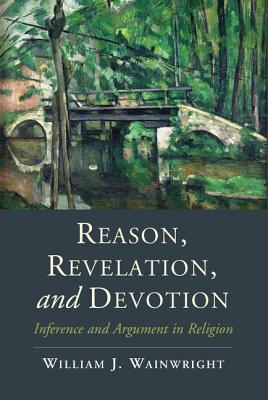
Reason, Revelation, and Devotion book cover
#3

Reason, Revelation, and Devotion

Inference and Argument in Religion

2015

Reason, Revelation, and Devotion argues that immersion in religious reading traditions and their associated spiritual practices significantly shapes our emotions, desires, intuitions, and volitional commitments; these in turn affect our construction and assessments of arguments for religious conclusions. But far from distorting the reasoning process, these emotions and volitional and cognitive dispositions can be essential for sound reasoning on religious and other value-laden subject matters. And so western philosophy must rethink its traditional antagonism toward rhetoric. The book concludes with discussions of the implications of the earlier chapters for the relation between reason and revelation, and for the role that the concept of mystery should play in philosophy in general, and in the philosophy of religion and philosophical theology in particular.
الأخلاق والدين book cover
#4

الأخلاق والدين

1718

ترى نظرية الأمر الإلهي أن إرادة اللّه هي التي تخلق النظام الأخلاقي والقانون الطبيعي الذي يقبل بالحقائق الأخلاقية تلك التي لا تعتمد على إرادة اللّه ولكنها تعتمد على منطقه وخلقه. يتناول هذا الكتاب أيضاً اعتراضات الملحدين على أسس الإيمان باللّه ويتناول رؤية الملاحدة للأخلاق أيضاً. الكتاب يدافع عن الإيمان باللّه انطلاقاً من اعتراضات الملحدين. يتناول قضايا تتعلق بالتفكير العملي والقاعدة الذهبية والأخلاق والنشوء والارتقاء ومشكلة الشر وحجة الموالفة الدقيقة. إن كل الأديان العالمية تأخذ بالقاعدة الذهبية سبيلاً لتعاليمها، ويقيناً، إن أفضل مثال على ذلك ما جاء في الحديث النبوي الشريف: (لا يؤمن أحدكم حتى يحب لأخيه ما يحب لنفسه). فالقاعدة الذهبية هي العامل المشترك لكل الأديان العالمية. هنا ينطلق الدين ليكون الخيمة الإنسانية الكبيرة التي تضم كل أطراف الجسد البشري والتي يتم تحتها تهذيب النفس وصقلها نحو السمو الإنساني ووضع البشر على الطريق الذي يرسمه لهم الخالق تبارك وتعالى اسمه. القاعدة الذهبية هي البوصلة التي توصلنا إلى إنسانيتنا. يا أيها الإنسان عامل الآخرين مثلما تحب أن تعامل فأنت جزء من الذات الإنسانية الكبيرة.
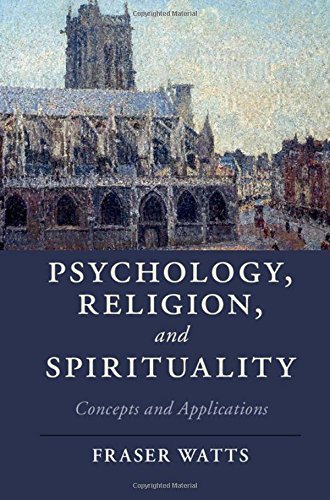
Psychology, Religion, and Spirituality book cover
#5

Psychology, Religion, and Spirituality

Concepts and Applications

2017

Psychology, Religion, and Spirituality provides readers with a critical overview of what psychology tells us about religion and spirituality. It is concise without being simplistic, and the first such broad overview to be published for some years. Fraser Watts recognizes that 'religion' is complex and multi-faceted, taking different forms in different people and contexts. The book presents a broad view of psychology; whatever kind of psychology you are interested in, you will find it covered here, from biological to social, and from experimental to psychoanalytic. It focuses particularly on the varied concepts that psychologists have employed to make sense of religion and subjects them to critical examination. The book is also concerned with practical applications, helping those engaged in religious ministry. It will be of interest to undergraduates and general readers, as well as specialists in religious studies, psychology, and philosophy of religion.
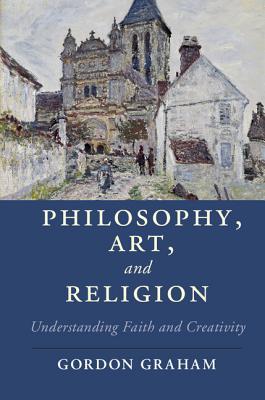
Philosophy, Art, and Religion book cover
#6

Philosophy, Art, and Religion

Understanding Faith and Creativity

2017

At a time when religion and science are thought to be at loggerheads, art is widely hailed as religion's natural spiritual ally. Philosophy, Art, and Religion investigates the extent to which this is true. It charts the way in which modern conceptions of 'Art' often marginalize the sacred arts, construing choral and instrumental music, painting and iconography, poetry, drama, and architecture as 'applied' arts that necessarily fall short of the ideal of 'art for art's sake'. Drawing on both history of art and philosophical aesthetics, Graham sets out the historical context in which the arts came to free themselves from religious patronage, in order to conceptualize the cultural context in which religious art currently finds itself. The book then relocates religious art within the aesthetics of everyday life. Subsequent chapters systematically explore each of the sacred arts, using a wide range of illustrative examples to uncover the ways in which artworks can illuminate religious faith, and religious content can lend artworks a deeper dimension.
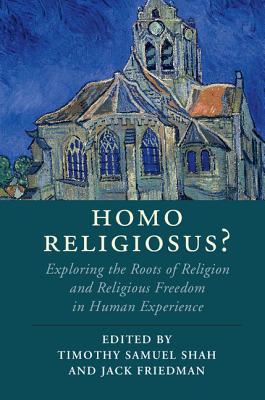
Homo Religiosus? book cover
#8

Homo Religiosus?

Exploring the Roots of Religion and Religious Freedom in Human Experience

2017

Are humans naturally predisposed to religion and supernatural beliefs? If so, does this naturalness provide a moral foundation for religious freedom? This volume offers a cross-disciplinary approach to these questions, engaging in a range of contemporary debates at the intersection of religion, cognitive science, sociology, anthropology, political science, epistemology, and moral philosophy. The contributors to this original and important volume present individual, sometimes opposing points of view on the naturalness of religion thesis and its implications for religious freedom. Topics include the epistemological foundations of religion, the relationship between religion and health, and a discussion of the philosophical foundations of religious freedom as a natural, universal right, drawing implications for the normative role of religion in public life. By challenging dominant intellectual paradigms, such as the secularization thesis and the Enlightenment view of religion, the volume opens the door to a powerful and provocative reconceptualization of religious freedom.

#11

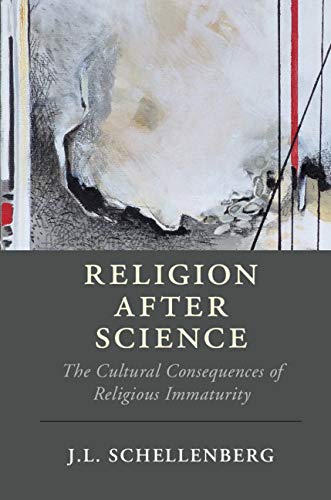
Religion after Science

The Cultural Consequences of Religious Immaturity

2019

In this provocative work, J. L. Schellenberg addresses those who, influenced by science, take a negative view of religion, thinking of it as outmoded if not decadent. He promotes the view that transcendently oriented religion is developmentally immature, showing the consilience of scientific thinking about deep time with his view. From this unique perspective, he responds to a number of influential cultural factors commonly thought to spell ill for religion, showing the changes - changes favorable to religion - that are now called for in how we understand them and their proper impact. Finally, he provides a defense for a new and attractive religious humanism that benefits from, rather than being hindered by, religious immaturity. In Schellenberg's view, religion can and should become a human project as monumental as science.
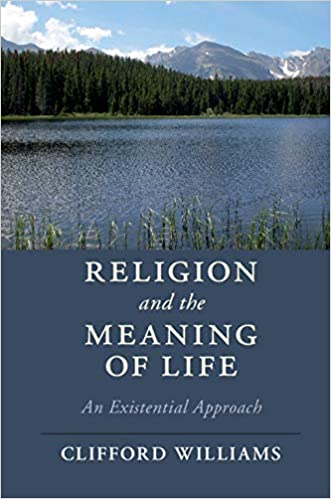
Religion and the Meaning of Life book cover
#12

Religion and the Meaning of Life

An Existential Approach

2020

As humans, we want to live meaningfully, yet we are often driven by impulse. In Religion and the Meaning of Life, Williams investigates this paradox – one with profound implications. Delving into felt realities pertinent to meaning, such as boredom, trauma, suicide, denial of death, and indifference, Williams describes ways to acquire meaning and potential obstacles to its acquisition. This book is unique in its willingness to transcend a more secular stance and explore how one's belief in God may be relevant to life's meaning. Religion and the Meaning of Life's interdisciplinary approach makes it useful to philosophers, religious studies scholars, psychologists, students, and general readers alike. The insights from this book have profound real-world applications – they can transform how readers search for meaning and, consequently, how readers see and exist in the world.
Kant and Religion book cover
#13

Kant and Religion

2020

This masterful work on Kant's Religion within the Boundaries of Mere Reason explores Kant's treatment of the Idea of God, his views concerning evil, and the moral grounds for faith in God. Kant and Religion works to deepen our understanding of religion's place and meaning within the history of human culture, touching on Kant's philosophical stance regarding theoretical, moral, political, and religious matters. Wood's breadth of knowledge of Kant's corpus, philosophical sharpness, and depth of reflection sheds light not only on Kant, but also on the fate of religion and its relation to philosophy in the modern world.

Authors

J.L. Schellenberg
Author · 5 books

J. L. Schellenberg (born 1959) is a Canadian philosopher best known for his work in philosophy of religion. He has a DPhil in Philosophy from the University of Oxford, and is Professor of Philosophy at Mount Saint Vincent University and Adjunct Professor in the Faculty of Graduate Studies at Dalhousie University, both in Halifax, Nova Scotia. Schellenberg’s early development of an argument from divine hiddenness for atheism has been influential.[2] In a subsequent series of books he has arrived at a form of religion called ‘skeptical religion’ which he regards as being compatible with atheism.[3] In 2013 the Cambridge University Press journal Religious Studies published a special issue devoted to critical discussion of Schellenberg’s philosophy of religion.

Allen W. Wood
Author · 8 books

Allen Wood's interests are in the history of modern philosophy, especially Kant and German idealism, and in ethics and social philosophy. He was born and grew up in Seattle, Washington. His B. A. is from Reed College in Portland, Oregon, his Ph.D. at Yale University. Wood has held regular professorships at Cornell University, Yale University, and Stanford University, where he is Ward W. and Priscilla B. Woods Professor emeritus. He has also held visiting appointments at the University of Michigan, University of California at San Diego and Oxford University, where he was Isaiah Berlin Visiting Professor in 2005. During year-long periods of research, he has been affiliated with the Freie Universität Berlin in 1983-84 and the Rheinische-Friedrich-Wilhelms-Universität Bonn in 1991-1992. He is a member of the American Academy of Arts and Sciences. Allen Wood is author of many articles and chapters in philosophical journals and anthologies. The book-length publications he has authored include: Kant's Moral Religion (1970, reissued 2009), Kant's Rational Theology (1978, reissued 2009), Karl Marx (1981, second expanded edition 2004), Hegel's Ethical Thought (1990), Kant's Ethical Thought (1999), Unsettling Obligations (2002), Kant (2004) and Kantian Ethics (2008), The Free Development of Each: (2014), and co-authored with Dieter Schönecker, Kant's Groundwork for the Metaphysics of Morals: A Commentary (Harvard University Press, 2015). (A German language version of this commentary has gone through four editions since 2002.) His most recent book is Fichte's Ethical Thought (Oxford University Press, 2016). Books by Wood have appeared in Hebrew, Turkish, Portuguese, Iranian and Chinese translation. With Paul Guyer, Wood is co-general editor of the Cambridge Edition of Kant's Writings, for which he has edited, translated or otherwise contributed to six volumes. Among the other books Wood has edited are Self and Nature in Kant's Philosophy (1984), Hegel: Elements of the Philosophy of Right (1991), Kant: Groundwork for the Metaphysics of Morals (2002), Fichte: Attempt at a Critique of All Revelation (2010), and, with Songsuk Susan Hahn, the Cambridge History of Philosophy in the Nineteenth Century (1790-1870) (2012). He is on the editorial board of eight philosophy journals, six book series and the Stanford Encyclopedia of Philosophy. At Indiana University Allen Wood has taught courses on the history of modern philosophy, modern political philosophy, Kant, Fichte and existentialism.

Clifford Williams
Clifford Williams
Author · 5 books
Clifford Williams is Emeritus Professor of Philosophy at Trinity College in Deerfield, Illinois. His blog on death, suicide, and the meaning of life is at http://www.cliffordwilliams.net/thoughts
548 Market St PMB 65688, San Francisco California 94104-5401 USA
© 2025 Paratext Inc. All rights reserved
Cambridge Studies in Religion, Philosophy, and Society