Margins
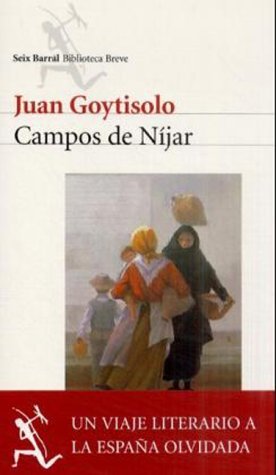
Campos de Níjar book cover
Campos de Níjar
1960
First Published
4.06
Average Rating
132
Number of Pages
"Juan Goytisolo is one of the most rigorous and original contemporary writers."—Mario Vargas Llosa "One of the most brilliant of living writers."— Los Angeles Times An intimate account of travel in Andalusia during the 1950s, Juan Goytisolo's early, short narrative grimly revisits the province of Almería, still under Franco's rule. The critic Ramón Fernández Palmeral "More than a mere travelog, Goytisolo bravely chose to report the social and economic life in the Almería of those Franquista years." He "Brave, most of all, because by publishing it, even at first in France, Goytisolo risked being sent to jail." To this day, the Andalusian tourist bureau highly recommends Níjar Country for its keenness and accuracy of observation—human, botanical, linguistic, geographical—so tourists on site and in armchairs may superimpose those still haunting walls graffitied FRANCO, FRANCO, FRANCO on what Níjar Country also indicts as "postcard Spain." Juan Goytisolo, Spanish novelist and essayist, was born in Barcelona in 1931. He now lives in Marrakech, Morocco. His most famous novels are Marks of Identity (1966), Count Julian (1970), and Juan the Landless (1975), each of which was banned in Spain until after Franco's death.

Avg Rating
4.06
Number of Ratings
360
5 STARS
33%
4 STARS
44%
3 STARS
20%
2 STARS
3%
1 STARS
1%
goodreads

Author

Juan Goytisolo
Juan Goytisolo
Author · 30 books

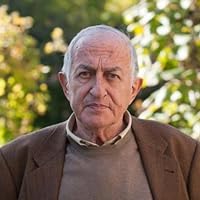
Desde la trilogía formada por Señas de identidad, Don Julián y Juan sin tierra, que le situó entre los mejores autores de la literatura española contemporánea, la obra narrativa de Juan Goytisolo (Barcelona, 1931) ha derivado en cada nueva singladura hacia territorios inexplorados que cuestionan siempre el género de la ficción. Esta voluntad de ir a contracorriente ha propiciado la gestación de textos tan singulares como Makbara (1980), Las virtudes del pájaro solitario (1988), La cuarentena (1991), La saga de los Marx (1993), El sitio de los sitios (1995), Las semanas del jardín (1997), Carajicomedia (2000), Telón de boca (2003) o El exiliado de aquí y allá (2008). No obstante, Juan Goytisolo no destaca sólo como autor de ficción, sino que también cultiva con maestría el género del ensayo, con obras como Contra las sagradas formas (2007) o Genet en el Raval (2009). En 2014 se le ha otorgado el Premio Cervantes de las Letras. ==== Juan Goytisolo Gay was born in Barcelona at 1931. A vocal opponent of Franco, he left Spain for France in 1956. In Paris, he worked as a consultant for the publisher Gallimard while he was also working on his own oeuvre. There he met his future wife, Monique Langue, and Jean Genet, who influenced his vision of literature. While living in Paris, he started the most experimental side of his books. Mixing poetry with painting and fiction with non-fiction, he explored the possibilities of language, leaving behind the social commentary of his first novels. "Marks of Identity" was the start, but then he turned even more radical with "Count Julian" and "Juan the Landless", where he rejected definitely, because of a lack of identification, his Spanish identity in favor of adopting a "cervantina" nationality. In the 1970s he visited Marrakech often. In 1981 he bought a house there. In 1996, after the death of his wife, he moved there and adopted Morocco as his main residence. He is widely considered one of the most important Spanish authors of his time. His brothers, José Agustín Goytisolo and Luis Goytisolo, are also writers. In 2008 he won Spain's Premio Nacional de las Letras and in 2014 the Cervantes Prize. See also http://en.wikipedia.org/wiki/Juan\_Goy...

548 Market St PMB 65688, San Francisco California 94104-5401 USA
© 2026 Paratext Inc. All rights reserved