Margins
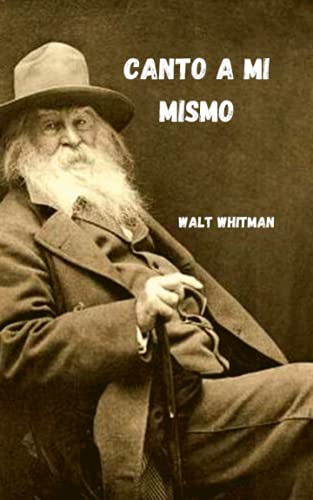
Canto a mi mismo book cover
Canto a mi mismo
1970
First Published
3.67
Average Rating
88
Number of Pages
Canto a Mí Mismo, un hombre pone su destino en la mesa y nos “Yo soy el que riega las raíces de todo lo que crece, y la prueba de quién soy la llevo yo en mi rostro; lo que diga sobre mí, debes tú señalarlo como tuyo, porque sólo lo que nadie puede negar existe”. Ese hombre, Walt Whitman (1819-1892), y su destino, llegan a confundirse tanto que éste siempre es aquél, y ambos somos nosotros mismos, porque, a la larga, lo que constituye este poemario es una declaración de todo lo que vive. Es considerado como una de las grandes obras de la poesía norteamericana contemporánea.

Avg Rating
3.67
Number of Ratings
6
5 STARS
33%
4 STARS
17%
3 STARS
33%
2 STARS
17%
1 STARS
0%
goodreads

Author

Walt Whitman
Walt Whitman
Author · 104 books

Walter Whitman (1819-1892) was an American poet, essayist, journalist, and humanist. He was a part of the transition between Transcendentalism and realism, incorporating both views in his works. Whitman is among the most influential poets in the American canon, often called the father of free verse. Born on Long Island, Whitman worked as a journalist, a teacher, a government clerk, and a volunteer nurse during the American Civil War in addition to publishing his poetry. Early in his career, he also produced a temperance novel, Franklin Evans (1842). After working as clerk, teacher, journalist and laborer, Whitman wrote his masterpiece, Leaves of Grass, pioneering free verse poetry in a humanistic celebration of humanity, in 1855. Emerson, whom Whitman revered, said of Leaves of Grass that it held "incomparable things incomparably said." During the Civil War, Whitman worked as an army nurse, later writing Drum Taps (1865) and Memoranda During the War (1867). His health compromised by the experience, he was given work at the Treasury Department in Washington, D.C. After a stroke in 1873, which left him partially paralyzed, Whitman lived his next 20 years with his brother, writing mainly prose, such as Democratic Vistas (1870). Leaves of Grass was published in nine editions, with Whitman elaborating on it in each successive edition. In 1881, the book had the compliment of being banned by the commonwealth of Massachusetts on charges of immorality. A good friend of Robert Ingersoll, Whitman was at most a Deist who scorned religion. D. 1892. More: http://www.whitmanarchive.org/ http://philosopedia.org/index.php/Wal... http://www.poets.org/poet.php/prmPID/126 http://www.poetryfoundation.org/bio/w... http://en.wikipedia.org/wiki/Walt\_Whi... http://www.poemhunter.com/walt-whitman/

548 Market St PMB 65688, San Francisco California 94104-5401 USA
© 2026 Paratext Inc. All rights reserved