Margins
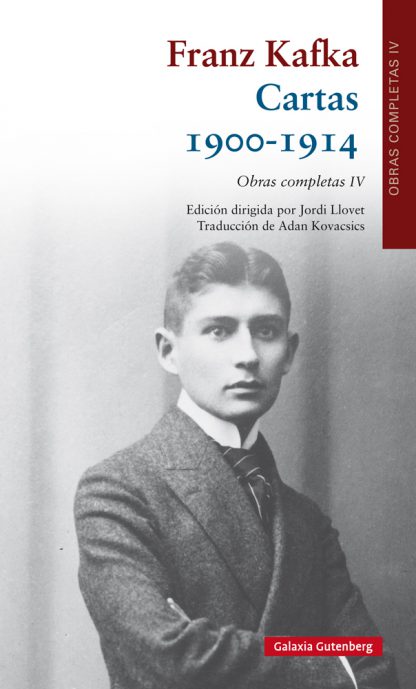
Cartas 1900-1914 book cover
Cartas 1900-1914
2018
First Published
4.00
Average Rating
1320
Number of Pages
Por primera vez se emprende la publicación en castellano de la totalidad de las cartas de Kafka que se han conservado. Se entiende aquí por cartas todas las misivas que Kafka escribió a lo largo de su vida, ya se trate de postales, de telegramas o de cartas propiamente dichas, sin excluir las de carácter oficial, comercial o profesional. Cerca de un centenar y medio de las reunidas en este volumen nunca habían sido traducidas. Pero tanto o más destacable que esta novedad es el que todas las cartas se dan en una nueva traducción realizada a partir del texto y la secuencia cronológica establecidos por la exigentísima edición crítica alemana de Hans-Gerd Koch. Los años que comprenden las cartas aquí reunidas son los que transcurren desde la adolescencia de Kafka hasta su madurez temprana. La primera carta está escrita cuando Kafka acababa de cumplir los diecisiete años; la última, cumplidos ya los treinta y uno, cuando se hallaba resuelto a emprender una vida independiente de su familia, ya fuera en pareja, ya en solitario. Hasta finales del año 1912, los corresponsales de estas cartas son sobre todo familiares de Kafka, amigos de infancia y de juventud -muy en particular, Max Brod-, su primera 'novia', sus superiores en el trabajo y sus primeros editores. Pero el 20 de septiembre de ese mismo año Kafka escribe por primera vez a Felice Bauer, a quien había conocido poco antes, y el caudal de su correspondencia se intensifica vertiginosamente, al ritmo a veces de una carta diaria, en ocasiones dos, y se focaliza casi en exclusiva en la que no tardará en convertirse en su prometida. Antes, durante y después de la procelosa correspondencia con su novia berlinesa, sin embargo, la lectura en secuencia de todas las cartas permite captar la 'polifonía' de las voces de Kafka, los muy variados registros de su personalidad, la multiplicidad de sus 'tonalidades', que se alternan a veces con sorprendente simultaneidad. Y no sólo eso: permite además percatarse de cómo todos sus mecanismos psicológicos obedecen a una fundamental obsesión: encontrar el momento en que ponerse a escribir.

Avg Rating
4.00
Number of Ratings
9
5 STARS
44%
4 STARS
11%
3 STARS
44%
2 STARS
0%
1 STARS
0%
goodreads

Author

Franz Kafka
Franz Kafka
Author · 347 books

Prague-born writer Franz Kafka wrote in German, and his stories, such as " The Metamorphosis " (1916), and posthumously published novels, including The Trial (1925), concern troubled individuals in a nightmarishly impersonal world. Jewish middle-class family of this major fiction writer of the 20th century spoke German. People consider his unique body of much incomplete writing, mainly published posthumously, among the most influential in European literature. His stories include "The Metamorphosis" (1912) and " In the Penal Colony " (1914), whereas his posthumous novels include The Trial (1925), The Castle (1926) and Amerika (1927). Despite first language, Kafka also spoke fluent Czech. Later, Kafka acquired some knowledge of the French language and culture from Flaubert, one of his favorite authors. Kafka first studied chemistry at the Charles-Ferdinand University of Prague but after two weeks switched to law. This study offered a range of career possibilities, which pleased his father, and required a longer course of study that gave Kafka time to take classes in German studies and art history. At the university, he joined a student club, named Lese- und Redehalle der Deutschen Studenten, which organized literary events, readings, and other activities. In the end of his first year of studies, he met Max Brod, a close friend of his throughout his life, together with the journalist Felix Weltsch, who also studied law. Kafka obtained the degree of doctor of law on 18 June 1906 and performed an obligatory year of unpaid service as law clerk for the civil and criminal courts. Writing of Kafka attracted little attention before his death. During his lifetime, he published only a few short stories and never finished any of his novels except the very short "The Metamorphosis." Kafka wrote to Max Brod, his friend and literary executor: "Dearest Max, my last request: Everything I leave behind me ... in the way of diaries, manuscripts, letters (my own and others'), sketches, and so on, [is] to be burned unread." Brod told Kafka that he intended not to honor these wishes, but Kafka, so knowing, nevertheless consequently gave these directions specifically to Brod, who, so reasoning, overrode these wishes. Brod in fact oversaw the publication of most of work of Kafka in his possession; these works quickly began to attract attention and high critical regard. Max Brod encountered significant difficulty in compiling notebooks of Kafka into any chronological order as Kafka started writing in the middle of notebooks, from the last towards the first, et cetera. Kafka wrote all his published works in German except several letters in Czech to Milena Jesenská.

548 Market St PMB 65688, San Francisco California 94104-5401 USA
© 2026 Paratext Inc. All rights reserved