Margins




548 Market St PMB 65688, San Francisco California 94104-5401 USA
© 2026 Paratext Inc. All rights reserved
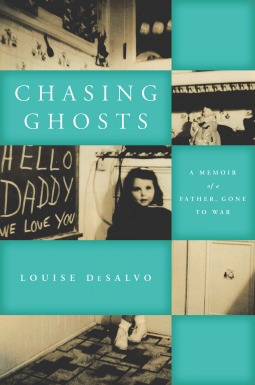
Chasing Ghosts is a gripping narrative about a daughter's quest to achieve reconciliation with her father during the last years of his life when he finally broke his silence about his military experience before and during World War II. When literary biographer and memoirist Louise DeSalvo embarked upon a journey to learn why her father came home from World War II a changed man, she didn't realize her quest would take ten years or that it would yield more revelations about the man—and herself—and the effect of his military service upon their family than she'd ever imagined. During his last years, as he told her about his life, DeSalvo began to understand that her obsession with war novels and military history wasn't merely academic but rooted in her desire to understand this complex father whom she both adored and reviled because of his mistreatment of her. Although she at first believes she wants to uncover his story, the story of a man who was no hero and who was adversely affected by his military service, she learns that what she really wants is to recover the man he was before he went away. As DeSalvo and her father uncover his past piece by piece, bit by bit, she learns about the dreams of a working-class man who entered the military in the late 1930s during peacetime to better himself, a man who wanted to become a pilot. She learns about what it was like for him to participate in war games in the Pacific prior to the war, and the war's devastating toll. She learns about what it was like for her parents to fall in love, set up house, marry, and have children during this cataclysmic time. And as the pieces of her father's life fall into place as DeSalvo works to piece together the puzzle of everything she's learned about this time, she finds herself finally able to understand him. Chasing Ghosts is an original contribution to the understanding of workingclass World War II veterans who did not conventionally distinguish themselves through "heroic" actions and whose lives were not until recently considered worthy of historical or cultural attention. It personalizes the history of those sailors who served in the Navy aboard aircraft carriers and on islands in the Pacific prior to and during World War II and contributes to the current vital conversation about the often-unrecognized effects of war and its traumas upon those men and their families. It reveals the lifelong devastating consequences of military service on those men and women who fell in love, married, and set up house. And it reveals the complexity of what it is like to be the daughter of a father who has gone to war.