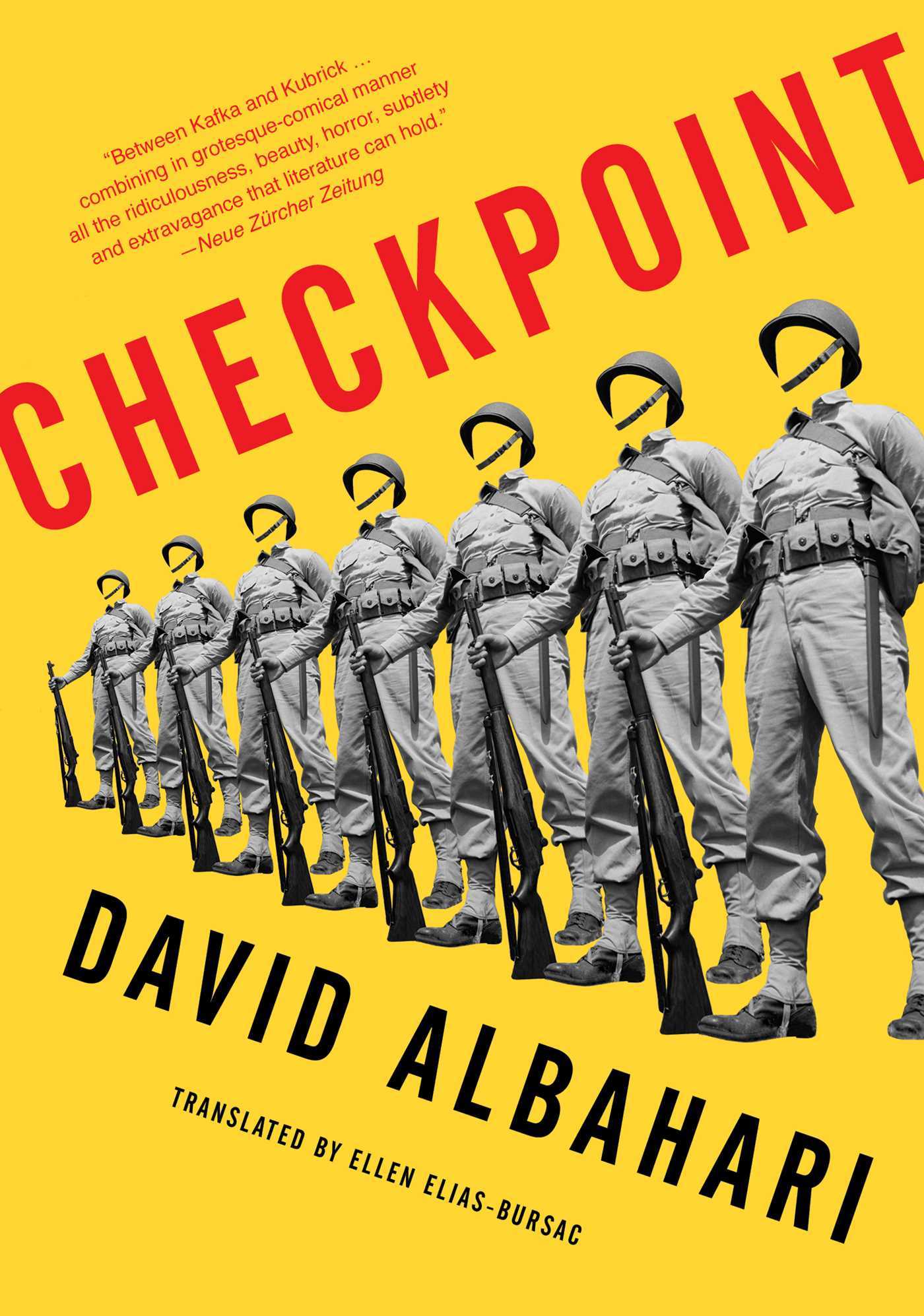



From the award-winning Serbian author David Albahari comes a devastating and Kafkaesque war fable about an army unit sent to guard a military checkpoint with no idea where they are or who the enemy might be. Atop a hill, deep in the forest, an army unit is assigned to a checkpoint. The commander doesn’t know where they are, what border they’re protecting, or why. Their map is useless and the radio crackles with a language no one can recognize. A soldier is found dead in a latrine and the unit vows vengeance—but the enemy is unknown. Refugees arrive seeking safe passage to the other side of the checkpoint, however the biggest threat might be the soldiers themselves. As the commander struggles to maintain order and keep his soldiers alive, he isn’t sure whether he’s fighting a war or caught in a bizarre military experiment. Equal parts Waiting for Godot and Catch-22, Checkpoint is a haunting and hysterical confrontation with the absurdity of war.
Author

David Albahari is a Serbian writer of Jewish origin from Kosovo, residing in Calgary, Alberta, Canada. Albahari writes mainly novels and short stories. He is also an established translator from English into Serbian. He is a member of the Serbian Academy of Sciences and Arts. He graduated from the University of Belgrade. He published the first collection of short stories Porodično vreme (Family Time) in 1973. He became better known to wider audience in 1982 with a volume Opis smrti (Description of Death) for which he got Ivo Andric's award. In 1991 he became the chair of the Federation of Jewish Communes of Yugoslavia, and worked on evacuation of the Jewish population from Sarajevo. In 1994, he moved with his family to Calgary in the Canadian province of Alberta, where he still lives. He continues to write and publish in the Serbian language. In the late eighties, Albahari initiated the first formal petition to legalize marijuana in Yugoslavia. His books were translated into several languages and five of them are available in English: Words Are Something Else (1996), Tsing (1997), Bait (2001), Gotz and Meyer (2003, UK) (2005, US) and Snow Man (2005). He has been contributing to Geist magazine.